
Apple Files Patent for One Shared Soundtrack Across Every Camera Angle
When you switch camera angles during a live game, this Apple patent application describes sound that follows the view, without sending a brand-new soundtrack for every angle.
What Apple's one-soundtrack camera setup does
A live game is being filmed from the sideline, from behind the goal, and from high above the crowd. Each camera sees something different, but there is only one game happening and only one set of sounds.
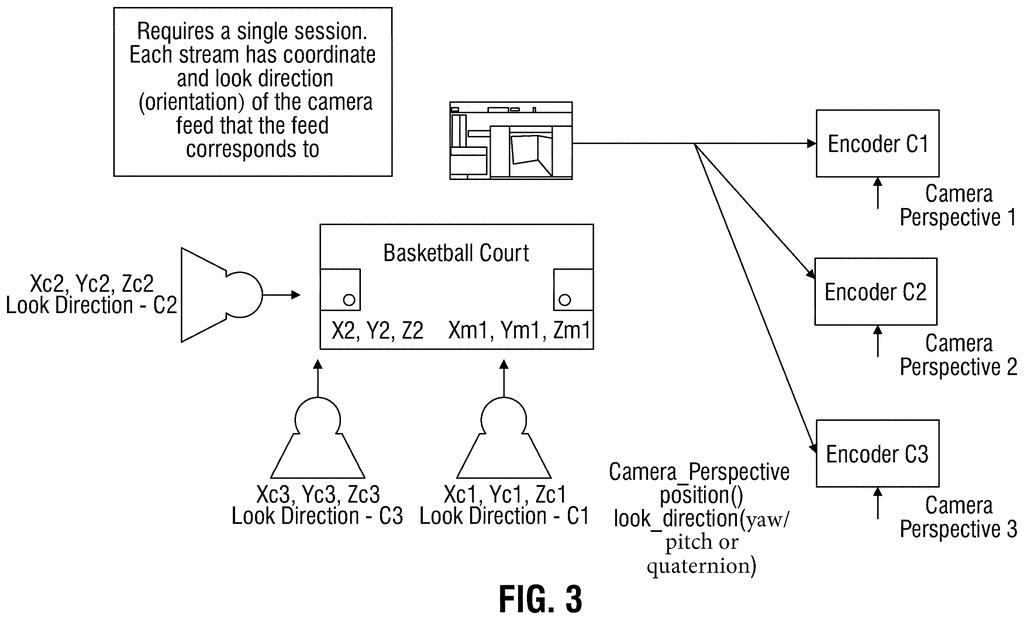
This Apple patent application describes a way to send all those camera views to your device while sharing a single soundtrack between them. One camera is picked as the reference. The sound of the scene (the crowd, the players, the voices on the field) is described once, based on where everything is relative to that camera. Every other camera only sends a note about where it sits compared with the reference.
When you switch angles, your device shifts the sounds around to match the new view, so a voice on your left can move to your right as the picture swings around. Nobody has to mix and ship a fresh soundtrack for every angle.
… selecting one of the plurality of cameras as a reference camera, and encoding the respective video feed of the reference camera as a reference feed into a bitstream along with a reference feed metadata …
Translation: The system designates one camera as the main source to anchor the shared audio track.
How the reference camera shares its audio
The claims cover both ends of the pipeline: the encoding side (the studio or broadcaster packaging the video) and the decoding side (your playback device unpacking it). Each camera aimed at the scene sends a video feed plus metadata (extra labeling data) giving the camera's position and which way it is pointing. The filing says orientation can be stored as quaternions, a compact math format for describing direction.
The encoder then does three things:
- Picks one camera as the reference camera.
- Sends that camera's video with a single audio scene, stored either as audio objects (individual sounds, each with a position) or as HOA (higher order ambisonics, a full 360 degree recording of the sound field), all measured from the reference camera.
- Sends every other camera's video with only its position relative to the reference camera.
On playback, the device reuses that one audio scene for every camera. Per the dependent claims, it repositions the audio objects or the HOA so the sound matches the camera you are watching. Live sporting events are named in the dependent claims.
The filing also describes a separate idea: metadata that marks a three dimensional "masking zone" where sounds are muffled or dropped, such as a coach and a referee arguing. The claims here focus on the cameras.
… enable a content creation side to control how a sound program is spatial audio rendered by a decoding side, so that an audio scene component in a metadata-specified three dimensional acoustic masking zone is not heard while another audio scene component in an un-masked zone of the sound program is heard by a listener of the playback.
Translation: Creators can precisely silence certain audio zones while keeping others audible during playback.
Why multi-angle sports streams could sound better
If you stream a game with switchable camera angles, the sound has to follow the view or the picture and audio feel disconnected. Sharing one audio scene across all the angles means a broadcaster sends less audio data, and your device handles the repositioning. The description contrasts this with requiring a new audio session for each camera even though the positions of the sounds stay the same.
The filing lists playback devices such as a media player, smartphone or tablet, and its examples lean on live sports and concerts. It does not name an Apple product, so treat it as a building block for how multi-angle video and spatial audio could travel together, with no product attached. That keeps a viewer's sense of place intact when they hop between views.
Apple's 539th filing in our Apple coverage since May joins patents like the shared-room video call sound and the cycle-predicting watch.
Claim 1 covers a specific bookkeeping trick. Several cameras film one scene, one camera is named the reference, and its feed carries the only sound description, either a set of positioned sounds or a full 360 degree sound recording. Every other camera sends just its location relative to the reference.
The wording is fairly broad on content. The claim names no sport, no camera count and no particular device; the live sporting event appears only in later, narrower claims. The firm requirements are the structure itself: a reference camera, a single shared audio scene, and relative positions for the rest.
If granted, that structure would matter to anyone building multi-angle video that reuses one audio mix instead of shipping a new one per camera. It is a modest, practical idea, and the more eye-catching masking-zone material in the description appears nowhere in these claims.
Get our take in your Top Stories
Liked this breakdown? Add Patentlyze as a preferred source on Google, and our plain-English take shows up more often in your Top Stories the next time Apple patent news breaks.
There are more where this came from
We read every patent application Big Tech publishes and send you the ones worth knowing. Plain English, free, every week.
The drawings
3 drawing sheets from US 2026/0323233 A1 · click any drawing to enlarge


Want this weekly breakdown for a company we don't cover? Patentlyze Pro →
Be the first to weigh in