
Qualcomm Patents Store Shelf Price Tags That Point You to the Product You Want
Those little digital price tags on store shelves could double as a trail of arrows leading you to the exact item you came for. Qualcomm's patent also has them guiding stocking robots with QR codes.
What Qualcomm's shelf-label directions do
Ever wandered a giant warehouse store hunting for one item? You know the drill: down one aisle, back up the next, squinting at signs. Qualcomm's patent describes a fix that uses something already mounted on the shelves, the digital price tags.
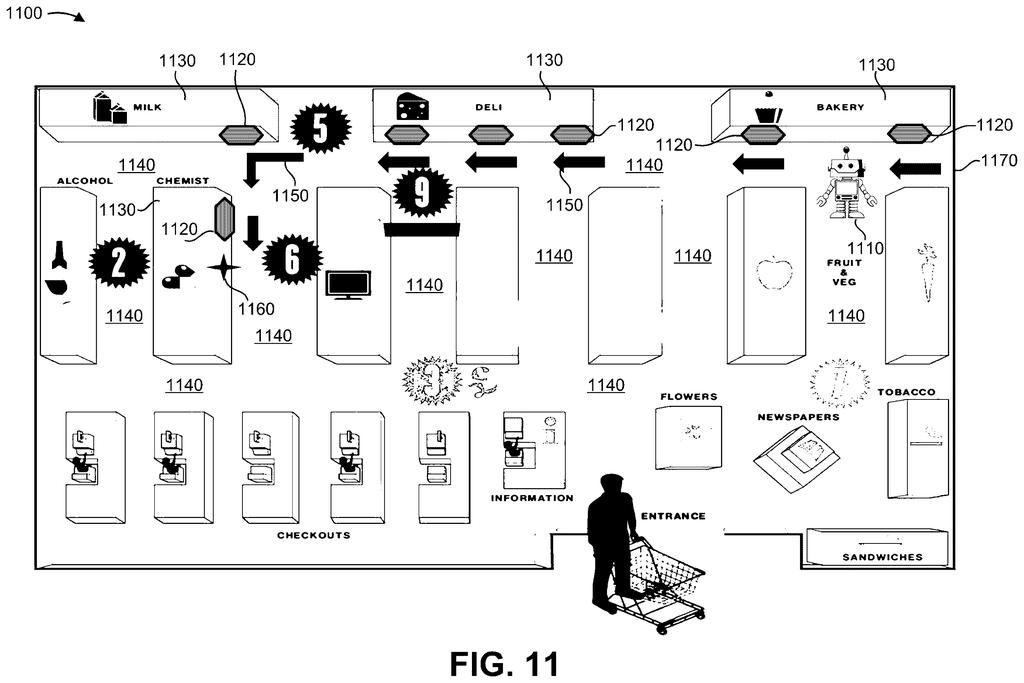
Here's the idea. You tell a store app what you want. The store's computer works out where you are, then tells the price tags near you to show arrows pointing the right way. As you walk, the arrows follow you, and they switch off once you arrive. If several shoppers are using it at once, each person gets a different arrow style or color so nobody gets confused.
The filing also covers robots. A tag can show a QR code (a square barcode a camera can read) that tells a stocking robot where to go next, so the robot doesn't need its own expensive navigation gear.
receive, from a network entity, instructions to display a navigation image associated with a path for a user to follow to arrive at a destination associated with one or more items in an environment; and based on the instructions and movement of the user, cause the display to display the navigation image.
Translation: The device gets directions from a server and updates the map on your screen as you walk toward what you want to buy.
How the store server picks which labels light up
The core claim covers a small display device, such as an electronic shelf label (ESL, the digital price tag on a store shelf). It receives instructions from a network entity, which in the filing is usually cloud software called a management entity. Those instructions tell it to show a navigation image for a path to a destination, based on how the user is moving.
In the main example, a shopper picks an item in an app. The management entity works out where the shopper is, using GPS, sensors around the store, or a barcode on a nearby label that the shopper scans (the label's position is already known). It then tells labels near the shopper, through an access point using Bluetooth Low Energy (a low-power form of Bluetooth), to show arrows. The labels stop once the shopper arrives.
The filing adds several details:
- Labels can show arrows longer when you walk slowly and shorter when you walk fast.
- Arrow images can be preloaded, so nothing has to download mid-trip.
- With several shoppers at once, each gets an assigned arrow style or color.
- Routes can avoid crowded aisles or pass sale items instead of taking the shortest path.
For robots, labels show QR codes carrying movement commands such as 'move 10 units, rotate 30 units, and move 5 units.' The robot only needs a camera to read them.
What this means for store robots and shoppers
If you have ever circled a big-box store looking for one product, this would put directions right where you are already looking: the shelf. Your end needs little more than a phone app, since the labels many stores already use do the pointing. For a retailer, that could mean fewer frustrated customers and a chance to steer people past items on sale.
The robot angle may carry the bigger business case. The filing says a robot would need only a camera to read the codes, not costly built-in location systems, which lowers the price of automating overnight restocking. Both uses run on labels and software stores already operate, so the pitch is cheap to add.
It is one of five store-technology filings Qualcomm published the same day. The others cover battery-free tags that help your phone find products, tags that map how radio signals move through a store, shelf labels that decode data from those tags and spotting price tags that have been moved.
Qualcomm's ninth filing in the robotics space we've tracked since June adds to a run that includes AI grading its own moves and vehicles negotiating shared paths.
A store could switch this on with surprisingly little new equipment. The labels already have screens and a wireless link, and the store already runs cloud software that changes prices. Most of the work is one new command and some new software on the store's side.
What has to exist first is a store with this kind of label system and a way to know where you are standing. The filing offers GPS, in-store sensors, or scanning a label's barcode with your phone, and the barcode scan is the easiest to picture working in a crowded aisle. You would also need a store app, and you would be sharing your location with the store while you shop.
The shortest route to a product is a 'find this item' button in a retailer's existing app. The robot version asks for more, since a store must trust camera-guided machines to follow codes on a shelf, so that piece looks further out.
Get our take in your Top Stories
Liked this breakdown? Add Patentlyze as a preferred source on Google, and our plain-English take shows up more often in your Top Stories the next time Qualcomm patent news breaks.
There are more where this came from
We read every patent application Big Tech publishes and send you the ones worth knowing. Plain English, free, every week.
The drawings
14 drawing sheets from US 2026/0313316 A1 · click any drawing to enlarge


Want this weekly breakdown for a company we don't cover? Patentlyze Pro →
Be the first to weigh in