
Samsung Patents Satellite-Aware Handover System for 5G and 6G NTN
Satellites don't sit still — they race across the sky at thousands of miles per hour. Samsung's new patent tackles the messy handover problem that creates, by teaching devices to reason about where they are relative to a satellite's direction of travel before switching connections.
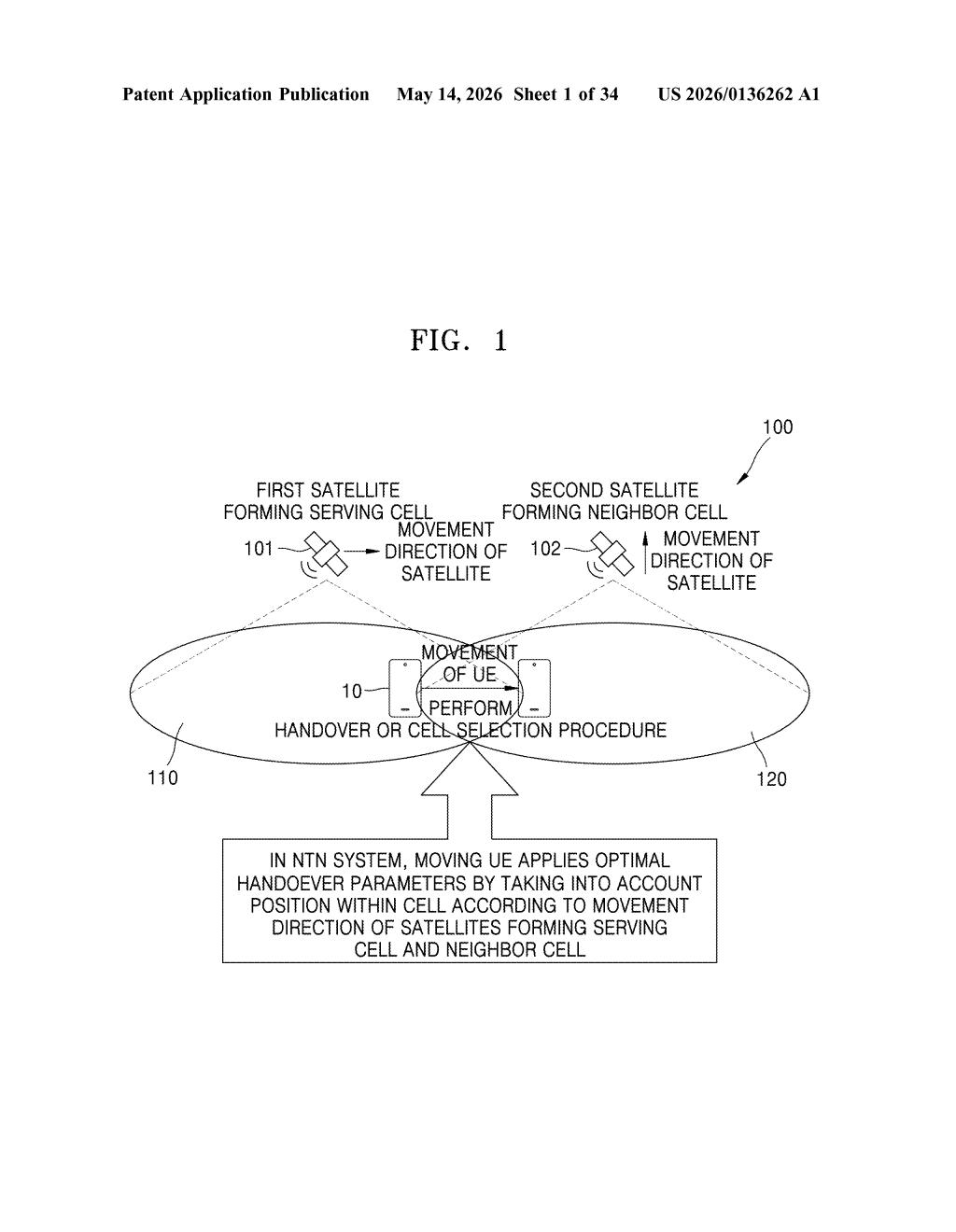
How Samsung's satellite handover actually works for your device
Imagine you're on a phone call and the cell tower serving you is actually a low-Earth-orbit satellite zooming overhead. Unlike a fixed tower, that satellite will cross your entire sky in minutes — which means the network constantly has to hand your connection off to the next satellite. Get the timing wrong, and your call drops or your data stalls.
Samsung's patent describes a smarter way for your device (the UE, or "user equipment" in carrier-speak) to handle that switch. Instead of using generic handover rules, the device figures out whether it's near the center of the satellite's coverage footprint — where signal conditions are more stable — or near the edge, where things are about to get choppy as the satellite moves away.
Based on that self-assessment, the device picks the right handover settings for the situation. It's a bit like knowing whether you're in the middle of a Wi-Fi router's range or about to walk out of it — and adjusting your streaming quality accordingly before the connection degrades.
How the UE maps its position to a satellite's movement direction
The patent defines a procedure for a device operating in a Non-Terrestrial Network (NTN) — meaning a network where base stations are satellites rather than ground towers — to classify its own position relative to the satellite's direction of movement.
Specifically, the device determines whether it sits in a satellite directional cell center area or a satellite directional cell edge area. Think of the satellite's coverage footprint as an elongated oval moving across the ground: the center zone (ahead of or behind the satellite along its track) behaves very differently from the edge zones (to the sides of the track) in terms of how quickly signal conditions change.
Once that classification is made, the device configures its handover-related parameters — things like signal thresholds for triggering a handover, timing offsets, and measurement gaps — to match the geometry. Key technical components include:
- Position estimation relative to serving-cell satellite movement direction
- Simultaneous classification against the neighbor cell satellite's movement direction
- Dynamic parameter configuration based on the combined positional assessment
The patent covers both the UE-side method and the apparatus (i.e., the chipset or modem logic), and it's framed for both 5G NR NTN and emerging 6G architectures.
What this means for 5G and 6G satellite connectivity
Satellite-based cellular — think direct-to-device LEO connectivity from constellations like Starlink, AST SpaceMobile, or the kind of NTN layer being standardized in 3GPP Release 17 and beyond — lives or dies by handover performance. A satellite crosses the sky in roughly 10 minutes; if your device uses the same handover logic designed for stationary towers, it will either switch too early, too late, or too aggressively, burning battery and dropping connections.
For Samsung, this matters on two levels. First, Samsung is one of the world's largest smartphone makers and a major 5G chipset player — optimized NTN handover logic would flow directly into its Exynos modems and Galaxy devices. Second, Samsung is also a network infrastructure vendor, so the same IP could apply to base station software. If satellite-to-phone connectivity becomes a mainstream feature in the next few years, patents covering the handover mechanics will have real leverage in standards bodies and licensing discussions.
This is solidly useful infrastructure work rather than a headline-grabber, but it's exactly the kind of low-level optimization that determines whether satellite phone service actually feels reliable in practice. Samsung is clearly investing in the 3GPP NTN standards race, and a portfolio of handover-procedure patents is a legitimate competitive asset in that arena. Worth tracking if you follow the satellite-cellular convergence story.
There are more where this came from
We read every patent application Big Tech publishes and send you the ones worth knowing. Plain English, free, every week.
Want this weekly breakdown for a company we don't cover? Patentlyze Pro →