
Google Files Patent for an AI Analyst That Researches How News Will Hit a Company
Google's new patent describes an AI that reads a headline and works out what it means for a company, the way a research analyst would: guesses first, then fact-finding and math, then a verdict.
What Google's four-model news analyst does
A sales analyst at a chip company reads a headline saying a new rival is entering the graphics chip market. Now she has the rest of the day, and probably the next one, to work out what it means for her customers. She reads articles, guesses at the damage, hunts for facts, and writes it all up.
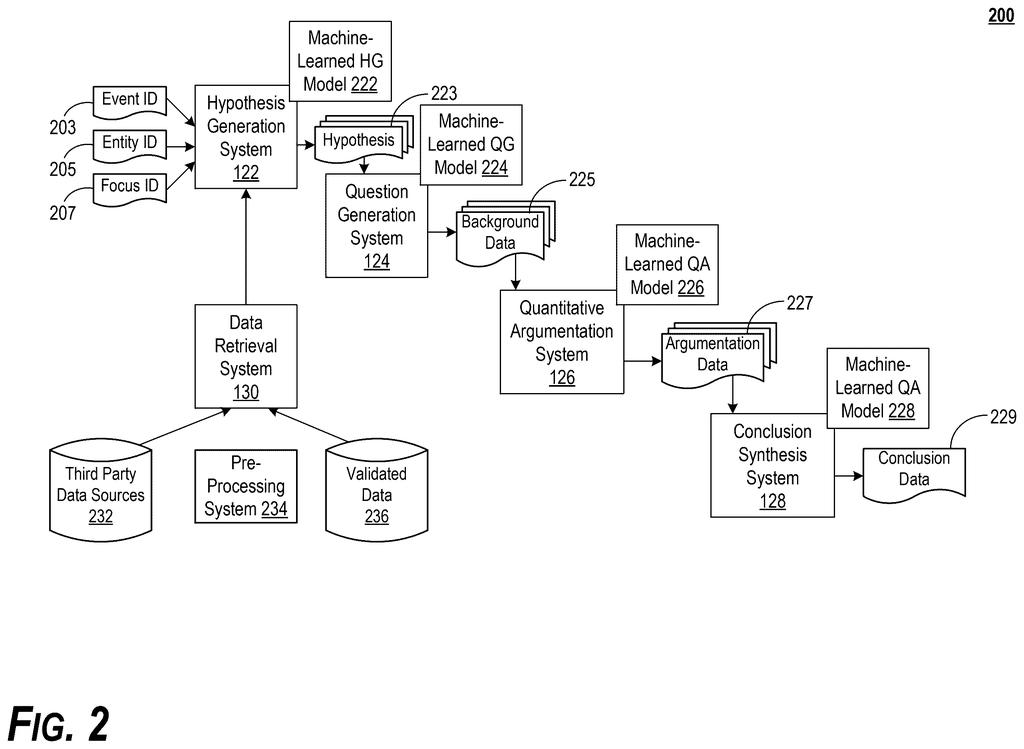
Google's patent describes software that does that whole routine for you. You give it a news event and a company. Four AI models then take turns: one guesses what the event could mean, one asks the research questions that would prove or disprove each guess, one crunches the numbers, and one writes the verdict.
The filing says ordinary chatbots tend to give short, hedged answers and don't dig deep. This setup is built to commit to a conclusion. You can also tell it who you are and what you care about, so the answer fits your job.
How the four models hand off their work
The patent covers a pipeline of four specialized machine-learned models (large language models, the same family of AI behind modern chatbots) that run one after another. The input is an event and an entity, such as a company, plus optional focus areas like the user's job title or research goals.
- Hypothesis model: takes the event, the company, and background information retrieved about that company, then produces a list of hypotheses (educated guesses about the impact).
- Question generation model: writes evidence-gathering questions for each hypothesis, then pulls answers from sources like the web and government filings. The result is called background data.
- Quantitative argumentation model: turns those facts into numbers, including projections that indicate how confident to be in each hypothesis.
- Conclusion synthesis model: combines the hypotheses, background data, and numbers into a final report.
One claim covers picking the most likely hypothesis based on the projections.
Each model is trained with supervised fine-tuning (showing it human-written examples of its task) and optionally reinforcement learning from human feedback (people rate its outputs and it learns from the scores). The description also adds a separate critique model that acts as an automatic grader, improving or throwing out training examples.
Why this matters for anyone who reads news for work
If you work in sales, strategy, or consulting, a big part of the job is turning a headline into a judgment about what it means for a client or a rival. The filing is aimed squarely at that work, and it names roles like business-to-business sales, product strategy, and consulting. A tool built this way could hand you a researched first draft, with the guesses, the facts, and the numbers laid out so you can check each step.
The design choice matters too. Splitting the job into four narrow models, each trained on its own task, lets the system show its work in stages instead of handing over one vague answer. The filing's own complaint about general chatbots is that they hedge. Whether Google's version actually reaches sound conclusions is something a patent can't tell you.
Google's 51st filing we've tracked since May on AI agents acting for you builds on earlier work like plain-English to step-by-step plan and hold icon and speak.
This one is almost entirely software, which puts it closer to a shippable feature than most patents. There is no new chip, sensor, or device in it. The pieces it names, language models, web and filing lookups, and a way to train and grade them, are things Google already runs at scale.
What has to exist first is the hard part: reliable access to good data. The filing itself says ordinary chatbots lack access to paid data sources, so the research step is only as good as what the system can pull in. Then comes the question of whether the numbers it produces can be trusted, since a confident wrong forecast about a company does more damage than a hedged one.
The shortest route to a product is a research tool for business users, where a person reviews the output before acting. Nothing in the document says that is planned, but the design points that way.
Get our take in your Top Stories
Liked this breakdown? Add Patentlyze as a preferred source on Google, and our plain-English take shows up more often in your Top Stories the next time Google patent news breaks.
There are more where this came from
We read every patent application Big Tech publishes and send you the ones worth knowing. Plain English, free, every week.
The drawings
14 drawing sheets from US 2026/0320474 A1 · click any drawing to enlarge


Show the other 6 sheets


Want this weekly breakdown for a company we don't cover? Patentlyze Pro →
Be the first to weigh in