
Nvidia Files Patent for Using Maps to Find Rare Road Signs in Driving Footage
Teaching a car to recognize a rare road sign means finding a handful of useful frames in thousands of hours of driving video. Nvidia's patent uses a map to jump straight to the stretches of road where that sign should be.
What Nvidia's map-guided training patent does
Ever tried to find one specific photo in a camera roll with tens of thousands of pictures? That is the chore facing the people who teach self-driving cars to read the road, except the pile is thousands of hours of driving video and the thing they want is a rare sign.
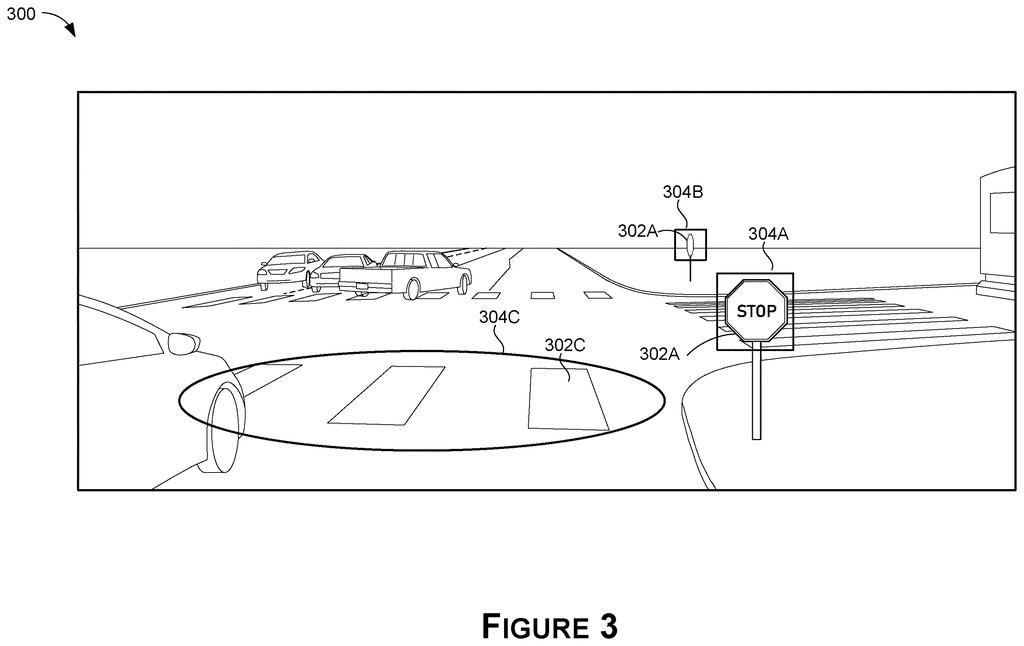
Nvidia's patent skips the scrolling. It first checks a map to see where that kind of sign is likely to be, such as a four-way intersection for a stop sign. Then it pulls only the footage that other vehicles recorded while driving near those spots, using the cameras that were pointed the right way.
A second check compares the leftover frames with a reference picture of the sign. The best matches become the lessons the car's vision software learns from, and your car then uses that software to decide how to steer, brake or slow down.
… map data or geospatial data is used to identify a subset of sensor data having a higher likelihood of including representations of a target object of interest from a larger set of sensor data.
Translation: Geographic maps help filter through massive amounts of driving footage to find the rare road signs you actually care about.
How maps and sign templates pick the frames
The patent describes a way to build training data for the vision software in self-driving cars and robots. It starts with a map. If the goal is to find stop signs, the system queries the map for places where they are likely to be, such as four-way intersections. If the goal is yield signs, it searches for spots like overpasses and highway entry points.
Next, it matches those map locations against recordings made by other vehicles that drove within a set distance of them. Each recording carries GPS and orientation data, so the system can estimate which way each camera was pointing and what it could see at each moment. At a stop-sign intersection, forward and side cameras get picked and rear cameras get skipped.
The shortlisted frames can then go through a second filter. An object detector draws a box around each candidate, and a neural network (software trained on examples) turns the crop into a feature vector, a list of numbers summarizing what the image looks like. That list is compared with one from a template, such as a drawing of a 'One Way' sign, and each frame gets a similarity score. In one example, the system keeps the top 1,000 frames.
The best frames are labeled and used to train the vision model. Claim 1 then covers a machine using that trained model for planning or control, such as setting a speed, steering, or braking.
Why rare road signs matter for self-driving
If you drive or ride in a car with driver-assist features, rare signs and unusual intersections are where the software is most likely to have seen too few examples. The filing's own background says that finding enough of them by hand costs a lot of time and labor. Finding them cheaper could mean better recognition of the odd stuff, though the patent gives no accuracy figures.
The filing describes this running on in-car chips (CPUs, GPUs and accelerators) and on data center servers that train the models. It also describes the same trick for robots, warehouse vehicles and drones, so the idea reaches beyond passenger cars. Training data prep is rarely glamorous, but it decides how well the final product handles the real world.
Nvidia's 93rd filing since May in our self-driving sensing race watchlist follows earlier applications on rare scenario generation and traffic pattern learning, adding another layer to how the company handles perception.
Claim 1 reads wider than the abstract. It covers a machine that drives using a vision model whose training frames were found by looking up where an object type sits on a map, then pulling footage that other machines recorded nearby. The reference-image check described in the abstract is not required by that claim, and appears only in the description.
On the object side the claim is broad: any 'target object type' counts, from stop signs to highway ramps. On the method side it is tighter, since both the map lookup and the nearby recording machines have to be present. Claims 6 and 17 repeat the idea for a computer system and for a machine with chips and sensors, and claim 19 stretches it to robots, drones and boats.
If granted, it would reach any self-driving or robot team that lets a map point at the footage it trains on. That is a sensible, practical idea, and the open question is how much of it one company can own.
Get our take in your Top Stories
Liked this breakdown? Add Patentlyze as a preferred source on Google, and our plain-English take shows up more often in your Top Stories the next time Nvidia patent news breaks.
There are more where this came from
We read every patent application Big Tech publishes and send you the ones worth knowing. Plain English, free, every week.
The drawings
12 drawing sheets from US 2026/0316785 A1 · click any drawing to enlarge


Show the other 4 sheets


Want this weekly breakdown for a company we don't cover? Patentlyze Pro →
Be the first to weigh in