
Samsung Files Patent for Subtitle Translation That Doesn't Wait for Sentences to End
Samsung's patent has your TV translate foreign subtitles while the speaker is still mid-sentence, then show only the words it has stopped second-guessing.
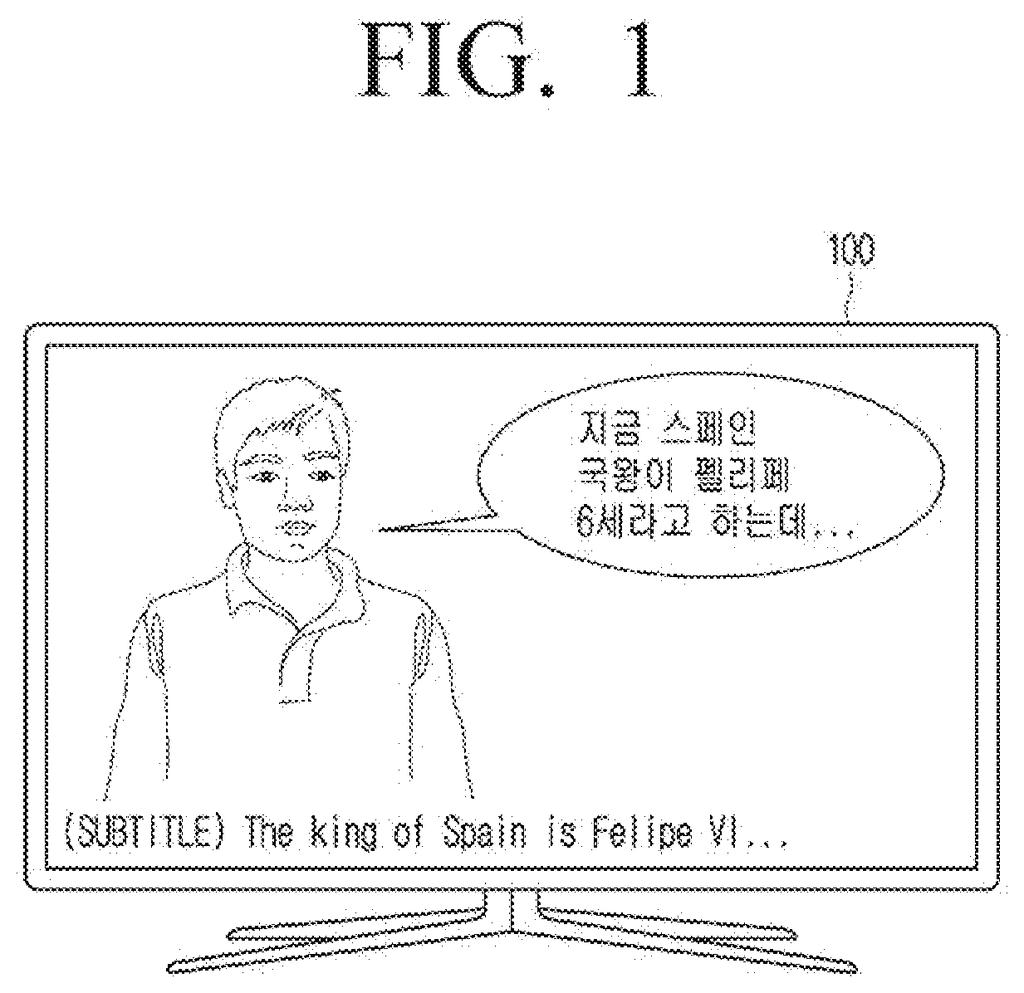
What Samsung's live-translation patent does
Imagine you're watching a Korean news broadcast on your TV, with English subtitles running along the bottom. Too often those subtitles show up late, because the software waits for each speaker to finish a whole sentence before it starts translating.
Samsung's patent describes a different approach. Instead of waiting, the TV keeps a short rolling window of the most recent words and translates that chunk again and again as new words arrive. When the same opening words of the English translation keep coming out, the TV treats them as settled and puts them on screen.
Words that haven't proven themselves yet stay in the background, where they can still change. Older words slide out of the window to make room for new ones, so the system never has to hold an entire sentence in its head.
… obtain a second token of a second language through an artificial intelligence model based on a plurality of tokens stored in a window corresponding to the updated window corresponding to the first language …
Translation: The system translates words piece by piece using artificial intelligence as they arrive.
How the two sliding windows confirm words
The system works on tokens, the small chunks (usually whole words, sometimes word pieces or single characters) that AI models split text into. Each token is stored as a whole number, such as 23525. In the filing's example, a TV reads Korean subtitle text and turns it into tokens.
It then juggles two sliding windows:
- Source window: holds the latest tokens of the original language. If a new batch is longer than the window, the oldest tokens at the front are dropped and the rear ones are kept. In the example, a 16-token sentence loses its first seven tokens.
- Translation step: whatever sits in the source window goes into a translation AI model (the filing describes a transformer, the common design behind modern language models), which produces tokens in the target language.
- Target window and buffers: new output tokens are compared with tokens already stored in the target-language window. Tokens that match at least a preset number of times are copied to a third buffer and treated as confirmed. Unconfirmed ones wait in a second buffer.
Confirmed tokens are converted back into text and shown on screen or spoken through a speaker. In the example, 'The king of Spain is Felipe VI' appears this way. The example confirms a match after one repeat, but the filing says requiring two or more is also possible, and each window's length can be set per language. When the buffers overflow, the front tokens are removed and the window shifts forward.
Why live captions on your TV could lag less
The everyday payoff is live subtitles that show up sooner and flicker less. Anyone who watches foreign-language shows, news or video calls with automatic captions knows the two common failures: captions that trail the speaker by several seconds, and captions that rewrite themselves as the sentence develops. This filing aims at both by showing words early but only after the translation has repeated itself enough to trust.
The filing's main example is a TV, which fits Samsung's home turf, though it also lists smartphones, tablets, laptops and cameras. It gives no speed or accuracy figures, so the benefit stays a stated goal. The stated problem, though, is easy to recognize: translation that begins only once a sentence has ended.
Samsung's 26th entry in the language AI work we've tracked since May builds on one letting users pick summary styles and one on blending AI skills for handling complex requests.
If you've ever watched live captions rewrite themselves mid-sentence, you know the annoyance this targets. Subtitles that arrive late make you miss the joke, and subtitles that keep changing make you read everything twice.
Samsung's approach tries to cut both problems: show words early, but only once the translation has repeated itself enough to be trusted. You would notice it as captions that appear a beat sooner and stay put once they appear.
The filing gives no figures for how much faster or more accurate it gets, so treat the benefit as a promise until someone measures it. Still, it is a sensible fix for a daily irritation on any screen that handles foreign-language video.
Get our take in your Top Stories
Liked this breakdown? Add Patentlyze as a preferred source on Google, and our plain-English take shows up more often in your Top Stories the next time Samsung patent news breaks.
There are more where this came from
We read every patent application Big Tech publishes and send you the ones worth knowing. Plain English, free, every week.
The drawings
9 drawing sheets from US 2026/0320316 A1 · click any drawing to enlarge


Show the other 1 sheets

Want this weekly breakdown for a company we don't cover? Patentlyze Pro →
Be the first to weigh in