
Samsung Patents a Display That Balances Brightness Across Mixed Refresh-Rate Zones
When part of your screen is showing a video and the rest is showing a static calendar widget, they're running at very different refresh rates — and that mismatch quietly causes brightness differences you might not notice consciously but your eyes definitely do. Samsung's new patent is specifically about fixing that.
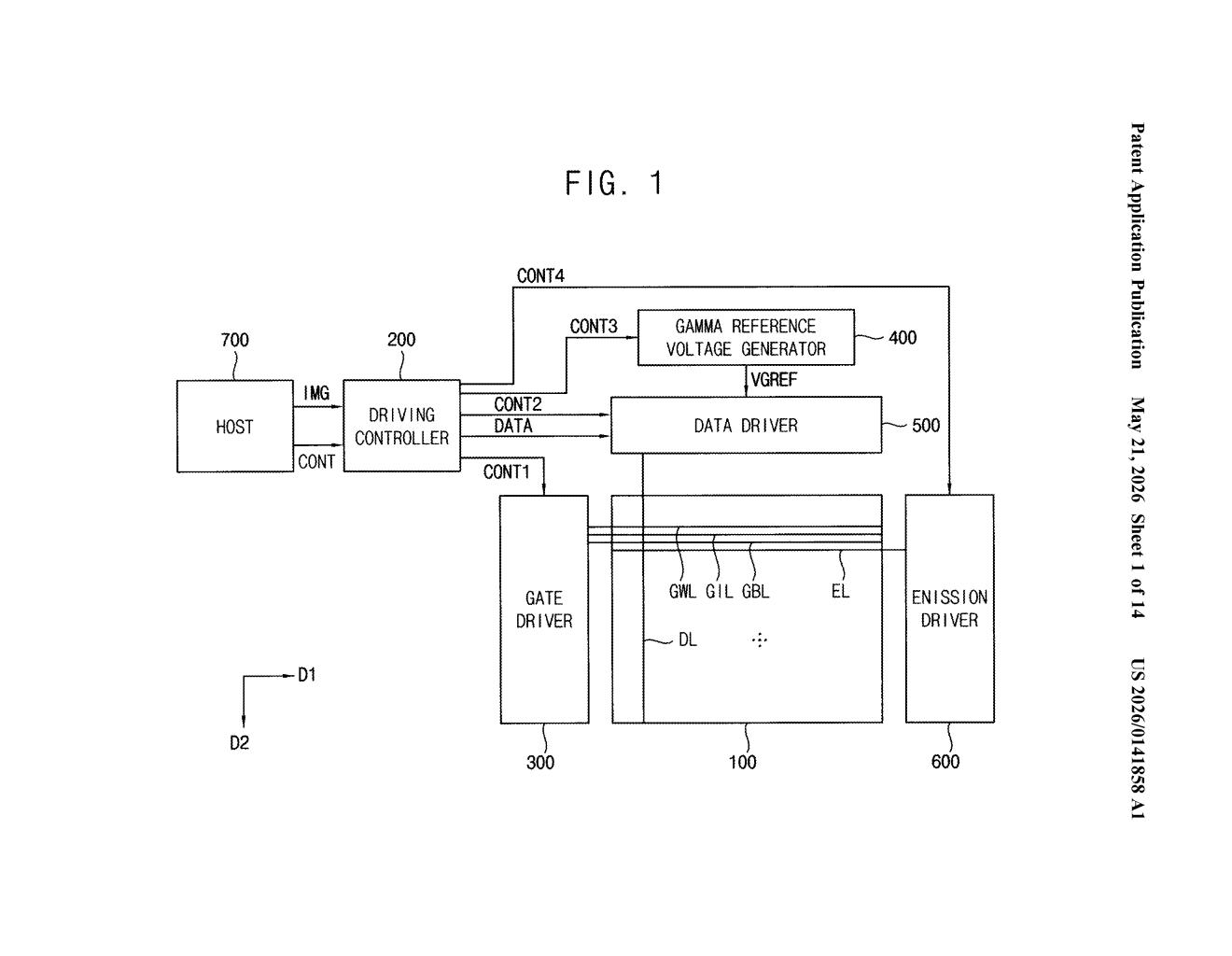
What Samsung's dual-zone refresh rate fix actually does
Imagine your phone screen split between a video playing on one side and a static notification panel on the other. The video side updates 120 times per second to look smooth; the static side only needs to update a handful of times per second to save battery. That's great for efficiency — but there's a hidden problem: the two zones end up looking like they have different brightness levels, even if the content is the same shade of white.
Samsung's patent tackles this by adjusting how long each zone's pixels are actually lit up during each refresh cycle. The lower-refresh zone gets a longer "off" period per cycle, so the system compensates by tuning the emission signal to keep the perceived brightness matching the higher-refresh zone. Think of it like a ceiling fan on slow speed — each blade passes less often, but you tweak the angle to move the same amount of air.
The goal is a display where moving images and still images coexist on the same panel without the still area looking dimmer or washed out compared to the active zone. It's a quality-of-life fix baked into the display controller itself.
How emission signal width controls per-zone luminance
The patent describes a display apparatus with a split-frequency driving architecture. A driving controller assigns a first driving frequency (higher, for moving image areas) and a second driving frequency (lower, for still image areas) to different regions of the same physical display panel simultaneously.
The key mechanism is an emission driver that outputs separate emission signals to each zone. An emission signal controls when pixels are actually lit versus dark within each refresh cycle — the "non-emission period" is the gap where the pixel is off. The patent's core claim is that the width of this non-emission period is actively adjusted based on the driving frequency of that zone, so that the time-averaged luminance perceived by a viewer stays consistent across both zones.
- High-frequency zone (e.g., 120Hz for video): shorter non-emission periods per cycle
- Low-frequency zone (e.g., 1Hz or 30Hz for static content): wider non-emission periods per cycle, calibrated to compensate
- A gamma reference voltage generator and data driver round out the signal chain
This is distinct from simply boosting pixel drive current in the low-frequency zone — the patent specifically controls the timing width of emission signals, which is a more power-neutral approach to luminance matching.
What this means for variable-rate OLED displays
Variable refresh rate (VRR) displays — including the LTPO OLED panels Samsung makes for Galaxy phones and high-end TVs — already switch refresh rates dynamically to save power. But doing that per zone simultaneously on a single panel introduces a brightness uniformity problem that becomes very visible on large displays or when content is side by side.
This patent suggests Samsung is building the compensation logic directly into the emission driver hardware, which means it could apply to any panel using this architecture — phones, tablets, monitors, or foldables. For you as a user, the practical payoff is a display that can aggressively throttle static areas of the screen to save battery without producing a patchwork of mismatched brightness zones. That's a real usability win, especially as split-screen and always-on display modes become more common.
This is a legitimate engineering problem that anyone who's used a split-screen OLED device has probably noticed without being able to name it. Samsung's solution — compensating via emission signal width rather than just cranking up pixel voltage — is a clean approach that fits naturally into existing LTPO panel architectures. It's not flashy IP, but it's the kind of precise display engineering Samsung's panel division is genuinely good at.
There are more where this came from
We read every patent application Big Tech publishes and send you the ones worth knowing. Plain English, free, every week.
Want this weekly breakdown for a company we don't cover? Patentlyze Pro →