
Samsung Patents a Gesture-Based Fallback for Unresponsive Smart Home Controllers
What happens when your smart home controller goes offline mid-use? Samsung is patenting a camera-based gesture system that steps in automatically — so you can still control a device even when its normal interface has failed.
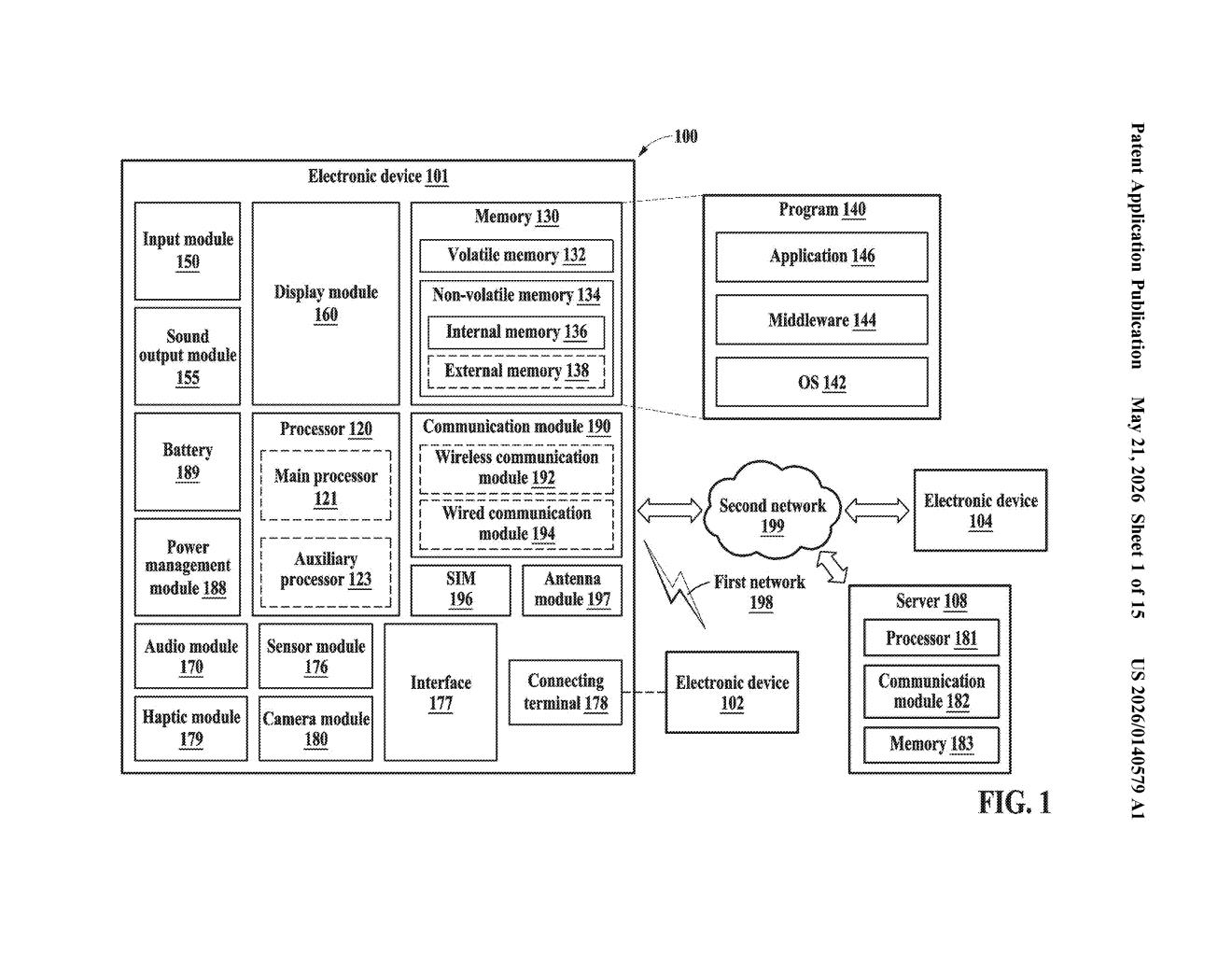
What Samsung's gesture-fallback system actually does
Imagine you're watching TV and your smart remote suddenly becomes unresponsive. Normally, you'd be stuck hunting for the physical remote or rebooting the app. Samsung's patent describes a different approach: the moment your device detects that a controller has gone into an abnormal state — meaning it's offline, glitching, or otherwise unreachable — it pops up a visual cue on screen tied to that specific controller.
You then use your hand gestures, captured by the device's camera, to interact with that on-screen cue. The system reads your gesture and translates it into an operation command for the failed controller — like telling it to turn off, restart, or switch modes.
It's essentially a camera-based emergency remote, automatically offered to you when your usual control method breaks down. The whole thing is triggered by the failure itself, so you don't have to go digging through settings to find a backup option.
How the device detects failure and maps gestures to commands
The patent describes an electronic device — likely a smart TV, tablet, or hub — that monitors the health of multiple registered controllers simultaneously. When it identifies that one has entered an abnormal state (a catch-all for connectivity failures, hardware faults, or unresponsiveness), it doesn't just log the error.
Instead, it surfaces a graphic affordance — a visual UI element — on screen that corresponds specifically to the troubled controller. Think of it as a placeholder icon or overlay that represents the device you can no longer control the normal way.
The device's camera then watches for hand gestures directed at that affordance. The gesture recognition pipeline interprets what you do — a swipe, a tap in the air, a hold — and maps it to an operation command for the target controller. The claim doesn't pin down specific gestures, leaving the mapping flexible.
Key components the patent relies on:
- A camera capable of real-time gesture capture
- Logic to detect and classify controller abnormality
- A context-aware UI layer that generates affordances per-controller
- A gesture-to-command translation layer that fires instructions at the failed target
What this means for smart home reliability gaps
Smart home ecosystems are notoriously fragile — a dropped Wi-Fi signal, a dead battery, or a firmware hiccup can leave a device completely unreachable through its normal interface. Samsung's approach here is interesting because it bakes a fallback control method directly into the device, triggered automatically rather than requiring you to dig through a settings menu to find a backup option.
For Samsung's broader smart home ambitions — including its SmartThings platform and a growing lineup of connected appliances and displays — this kind of graceful degradation could reduce the "it just stopped working" frustration that drives users away from connected ecosystems entirely. It's a reliability-layer patent as much as a gesture-control one.
This is a quietly practical patent rather than a flashy one. Gesture control as a primary interface is a hard sell, but as an automatic fallback that appears only when something breaks, it actually makes a lot of sense. Samsung's smart home platform has a real reliability perception problem, and patents like this suggest the company is thinking about the recovery experience — not just the initial setup.
There are more where this came from
We read every patent application Big Tech publishes and send you the ones worth knowing. Plain English, free, every week.
Want this weekly breakdown for a company we don't cover? Patentlyze Pro →