
Apple Patents an Optical Sensing System That Tracks Stylus Tilt, Hover, and Rotation via Light
Apple is exploring a way to track a stylus using light rather than traditional capacitive touch — and the system can detect not just where the pen is, but how it's tilted, how far it's hovering, and even how it's rotated.
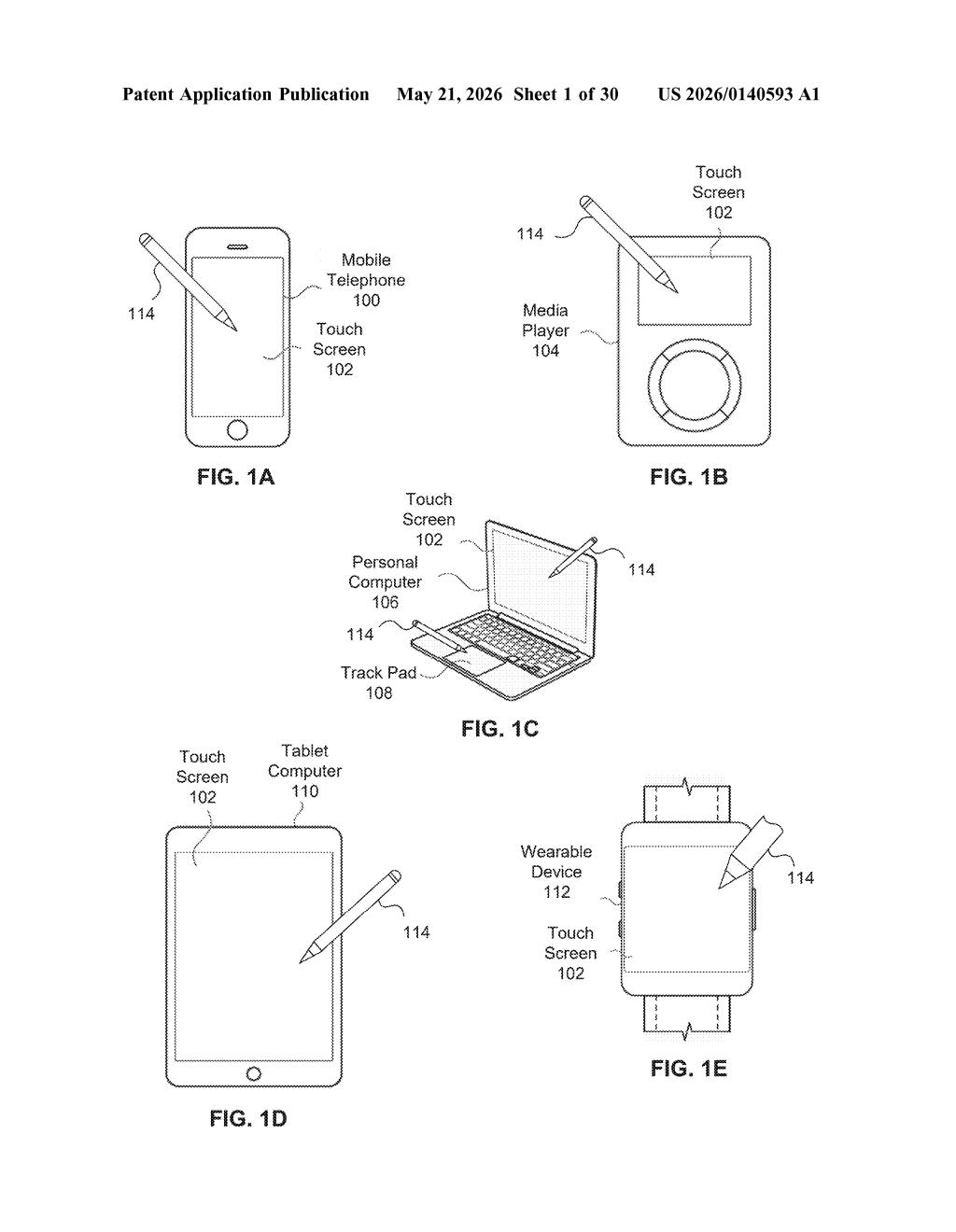
What Apple's light-based stylus tracking actually does
Imagine your iPad knowing not just that your Apple Pencil is touching the screen, but exactly how you're holding it — the angle, the rotation, even how far above the glass it's floating. That's the goal of this patent.
Right now, stylus tracking relies heavily on electrical signals from the display's capacitive layer. Apple's optical approach instead uses light emitters and detectors built into or near the display to figure out where the pen is and how it's oriented. The stylus either reflects light back in a predictable pattern or emits its own light, and the system reads those signals to build a precise picture of position and posture.
There's also a clever anti-noise trick: angular filters limit which angles of light count, so random objects near the screen don't confuse the system into thinking a stylus is present. The result is a more spatially aware, interference-resistant input system.
How light emitters and angular filters locate the stylus
The patent describes an optical stylus system made up of two cooperating parts: a stylus (pen) and a photo-sensing display system. Together they can determine a remarkably rich set of parameters:
- Touch and hover location — where on the screen the tip is, even before it makes contact
- Centroid — the precise center point of the stylus footprint
- Hover distance — how far above the glass the tip is floating
- Tilt angle and azimuth — the lean and compass direction of the pen
- Orientation and rotation — which way the pen is twisted around its own axis
Two design approaches are outlined. In the passive stylus variant, the pen has a specially shaped reflective tip that bounces light back with a consistent angular pattern regardless of how steeply it's tilted — meaning the system gets reliable data even at extreme writing angles.
In an active stylus variant, the pen can either detect modulated light (think of it like different radio stations, but with light frequencies) emitted from an array of display-embedded emitters, or it can emit its own light and read the reflected patterns across the display to triangulate its position.
Angular filters on both the illuminators and detectors act like blinders — they restrict which light directions are accepted, cutting down false positives from hands, fingers, or other objects near the screen.
What this means for the next generation of Apple Pencil
For creative professionals and note-takers, richer stylus data means software can do more expressive things: a drawing app could automatically adjust brush pressure and rotation simultaneously, or a note app could render handwriting that looks genuinely pen-like based on real grip angle. These are things current capacitive systems approximate rather than measure directly.
For Apple, moving stylus sensing into the optical domain could also mean less reliance on the display's capacitive layer — potentially enabling thinner displays, better palm rejection, or stylus support on surfaces that aren't traditional touch screens. It's a foundational infrastructure bet, and if it ships, it would likely appear first in a premium Apple Pencil and iPad Pro combination.
This is a meaningful patent for anyone who cares about precision input. Optical sensing could give Apple significantly more data per stylus interaction than capacitive systems — and the angular-filter approach to false-object rejection shows real engineering thought, not just a wish list. Whether this makes it into a product soon is anyone's guess, but it's clearly not a throwaway filing.
There are more where this came from
We read every patent application Big Tech publishes and send you the ones worth knowing. Plain English, free, every week.
Want this weekly breakdown for a company we don't cover? Patentlyze Pro →