
Apple Patents a Way to Build 3D Models from Cameras That See Differently
Your phone's wide-angle lens and its telephoto lens don't see the world the same way. Apple is filing patents on a system that reconciles those differences to build accurate 3D models of the space around you.
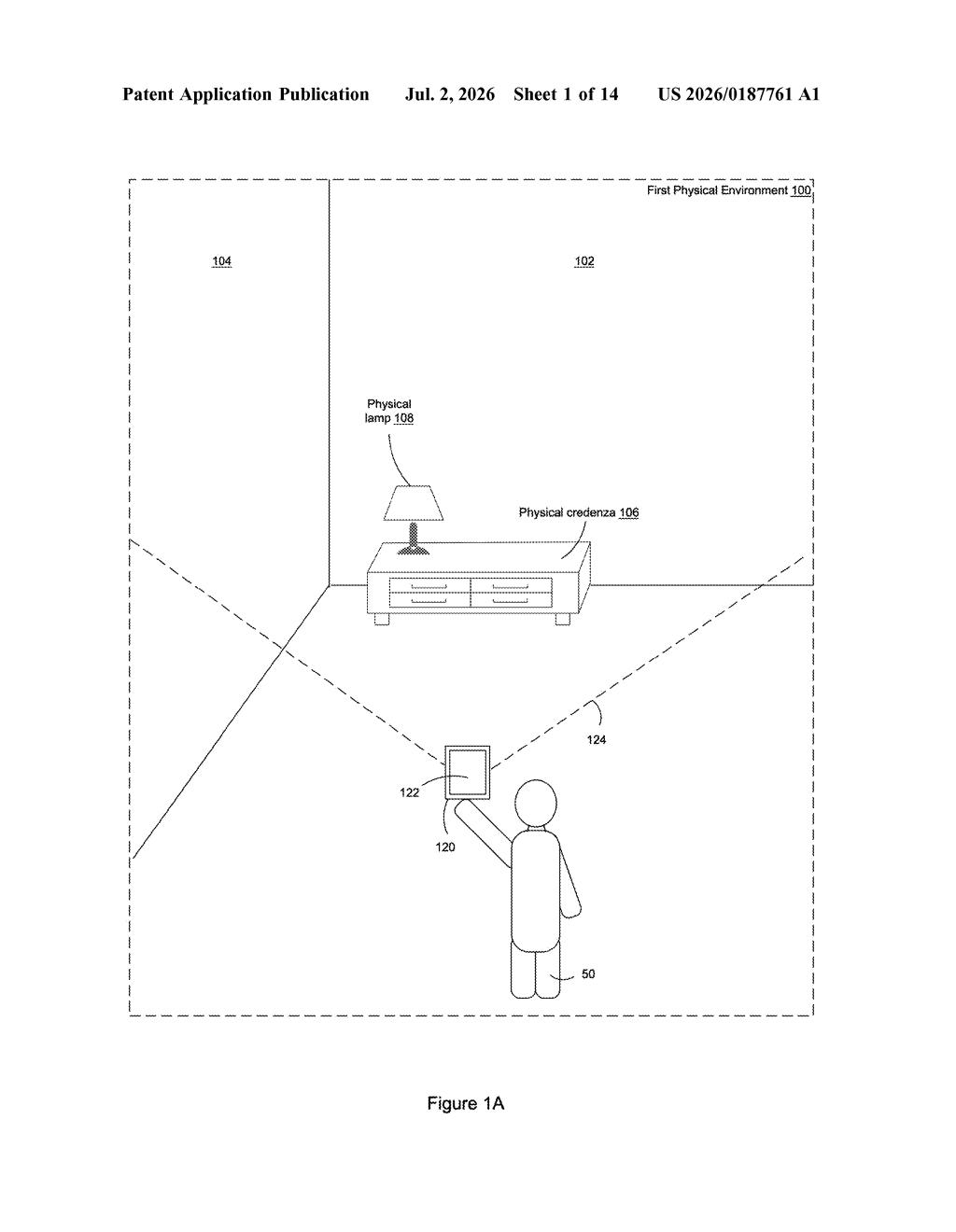
What Apple's mixed-camera 3D reconstruction actually does
Imagine trying to assemble a 3D puzzle from two photos taken by cameras with completely different perspectives. One might capture a wide, curved view; the other a narrow, zoomed-in slice. Matching them up is messy because a straight wall in one image might appear curved or skewed in the other.
Apple's patent describes a system that automatically corrects for those differences before attempting to stitch images together. It takes the distorted geometry from one camera type and mathematically "translates" it so it can be compared directly with what another camera captured. The result is a pair of corrected images that a device can use to calculate depth and build a 3D map of the physical environment.
This matters because modern Apple devices carry multiple cameras with different lenses, and the Vision Pro headset uses an array of sensors with very different fields of view. Getting all those inputs to agree on the shape of the world is a foundational step for anything from accurate AR overlays to room scanning.
How Apple remaps coordinates to align mismatched camera views
The patent describes a two-stage process for generating a 3D reconstruction (a digital depth map or spatial model) from two images captured by cameras with different fields of view.
First, the device takes the pixel coordinates from one image and transforms them into what the patent calls curvilinear space (a coordinate system that accounts for lens distortion and projection differences, essentially "un-warping" the image geometry). The second image's coordinates are left in their native form for comparison.
With both sets of coordinates now expressed in compatible terms, the system calculates an image modification parameter (a mathematical correction value) that describes how the two images need to be adjusted to align with each other. It then generates two modified images using both the originals and this correction value.
- Transform coordinates of image one into a common geometric space
- Compare against coordinates of image two's partially overlapping view
- Compute a correction parameter bridging the two perspectives
- Output two adjusted images suitable for stereo depth calculation
Finally, those two modified images feed into a standard stereo 3D reconstruction pipeline (the same class of technique used in depth cameras and AR headsets to judge how far away surfaces are).
What this means for Apple's spatial computing ambitions
Apple's device lineup now includes cameras with very different optical characteristics, from the ultra-wide on an iPhone to the multiple inward- and outward-facing sensors on Vision Pro. Any serious spatial computing feature, whether room mapping, object placement in AR, or hand tracking, depends on those cameras agreeing on where surfaces actually are. A patent like this tackles the plumbing that makes that agreement possible.
For you as a user, the payoff would show up indirectly: more accurate AR furniture placement, tighter depth measurements in apps like Measure, or crisper 3D captures in spatial video. It won't be a feature you toggle on; it would be the invisible layer that makes other features less wrong.
This is infrastructure-level work, not a headline feature. Apple is essentially patenting a calibration bridge between mismatched cameras, which is unglamorous but genuinely necessary for any device that relies on multiple sensors to understand 3D space. If Vision Pro or its successors are going to do reliable spatial mapping, something like this has to exist under the hood.
There are more where this came from
We read every patent application Big Tech publishes and send you the ones worth knowing. Plain English, free, every week.
Want this weekly breakdown for a company we don't cover? Patentlyze Pro →
Be the first to weigh in