
Tesla Files Patent for a Camera System That Reads Hills, Curbs and Road Materials
Tesla's patent application teaches a car to look at the road and tell a gentle slope from a curb, or asphalt from dirt, using nothing but its cameras. The description even says it should work on roads the car has never seen.
What Tesla's camera-based ground reading does
Ever crested a steep hill and had no idea whether the road bends, dips or turns to dirt on the other side? You use your eyes and a lifetime of habit to guess. A self-driving car has to make the same guess, only with numbers.
Tesla's filing describes an AI model that looks at camera images from around a vehicle and works out what the ground is like. It estimates how high each patch of ground sits, whether you can drive on it, whether it is a curb, and what it is made of, such as asphalt, concrete, grass or dirt. All of that goes into a searchable record that the car's driving software can ask questions of.
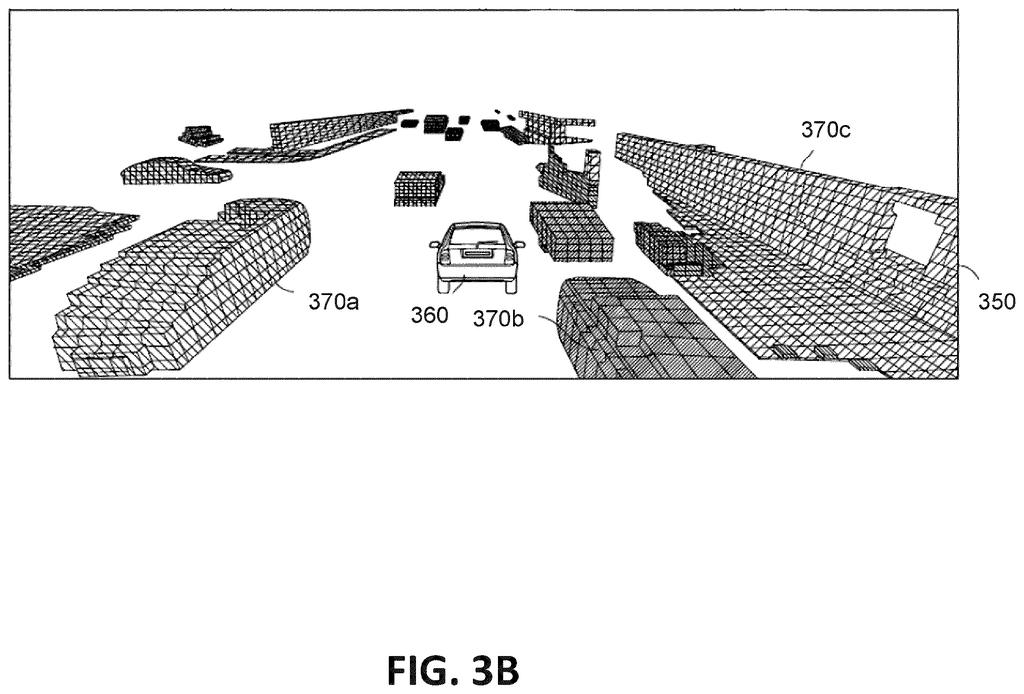
According to the description, once the model is trained it needs only camera images at driving time, with no radar or LiDAR, and it can read roads it has never seen before. The results can also be shown on a screen, with each type of surface in a different color.
… predicting, by the processor executing the artificial intelligence model, a surface attribute of one or more surfaces of the space around the ego object; and generating, by the processor, a dataset based on the one or more surfaces and their corresponding surface attribute.
Translation: An AI program figures out what the ground is made of and builds a map of the surroundings.
How the AI learns hills, curbs and materials
The patent covers a method where a vehicle's cameras feed images into an AI model, which predicts a surface attribute for the ground around the vehicle. Those predictions are bundled into a queryable dataset, meaning a stored record that driving software can ask about any spot nearby.
The description fills in the details. The model starts from a flat, top-down grid of the surroundings and predicts a height for each point, then labels each point:
- Whether it is a surface the car can drive on
- What it is made of, such as grass, dirt, asphalt or concrete
- Whether it is a road, a sidewalk or a curb, partly using paint lines
To train it, Tesla describes using LiDAR (laser distance sensing) or camera-based 3D point clouds as the answer key, plus a second model that labels pixels. A smooth mesh is then fitted over the points to clean up noise. Heights are measured against the ground itself rather than the car, so driving over a speed bump does not skew them.
The filing also pairs this with a separate method that detects objects in 3D. A traffic cone on a steep hill can be measured by subtracting the hill's height, which stretches the range where the car can spot objects (the example range runs from 3 meters below to 3 meters above the car).
Disclosed herein are methods and systems for using artificial intelligence modeling techniques to train and execute an artificial intelligence model to analyze camera feed received from an ego to predict surface data for various surfaces surrounding the ego.
Translation: The system uses cameras and machine learning to understand the terrain around a vehicle.
What this means for cars on unfamiliar roads
If you ride in a car that uses this, the payoff is a better sense of the ground ahead: hills, speed bumps, potholes, curbs and road shoulders. The filing says the car can navigate without first locating itself on a stored map, because the model reads each scene fresh, even on roads it never saw in training. The description also names robots, including a humanoid one, as machines that could use the same idea.
The filing says the trained model needs only camera images at driving time. For now this is a patent application, and the examiner's first review rejected the claims as filed, which is routine at this stage and usually followed by amendments.
Tesla's 13th filing we've tracked since May in our self-driving sensing race watchlist follows work like its running map of still objects and its camera blind-spot safety system.
Claim 1 is wide open. It asks for three steps: feed camera images to an AI model, have the model predict some property of the ground, and save the results as a dataset. It never says which property, which kind of model, or even that the machine has to be a car.
The specifics sit in the later claims: height, whether a surface is drivable, what it is made of, and whether it is a curb. Those are the details a reader can actually picture. If granted as written, the broad first claim would reach any camera-based system that labels the ground and stores the answer, from cars to robots.
A claim this wide usually gets narrowed during review, and the first round has already gone against it. The final version will likely lean on the specific ground details.
Get our take in your Top Stories
Liked this breakdown? Add Patentlyze as a preferred source on Google, and our plain-English take shows up more often in your Top Stories the next time Tesla patent news breaks.
There are more where this came from
We read every patent application Big Tech publishes and send you the ones worth knowing. Plain English, free, every week.
The drawings
11 drawing sheets from US 2026/0330841 A1 · click any drawing to enlarge


Show the other 3 sheets


Want this weekly breakdown for a company we don't cover? Patentlyze Pro →
Be the first to weigh in