
Microsoft Files Patent to Schedule Around Double-Booked Jobs Instead of Giving Up
Most scheduling software gives up when a customer locks in two appointments that cannot both happen. Microsoft's filing describes software that boxes in the clash and plans everything else around it.
What Microsoft's double-booking fix does
Imagine you run a plumbing company, and a dispatcher has locked in two do not move appointments for the same plumber at the same hour, on opposite sides of town. Many scheduling tools either choke on that or refuse to build any schedule at all.
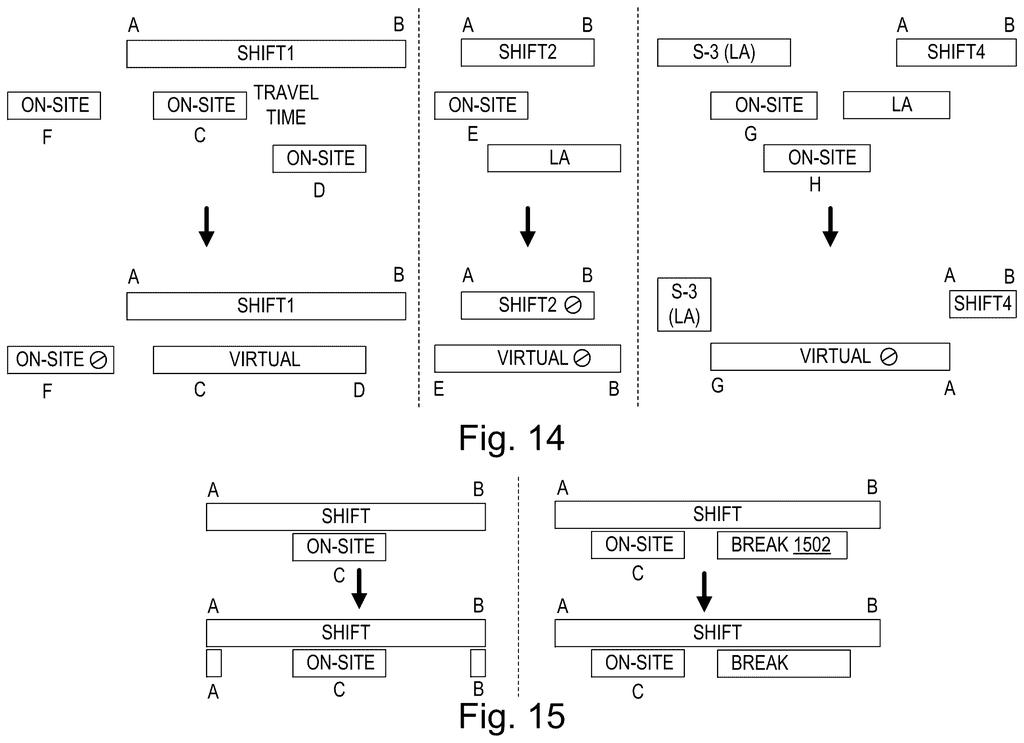
Microsoft's patent application describes a way around it. The software spots the clash, wraps the conflicting appointments into one placeholder block of time, and plans the rest of the day around it. Your plumber still gets a workable schedule, and the clash goes back to a human instead of breaking the whole plan.
The filing also tackles size. When a company has a thousand jobs and dozens of workers, the software first sorts jobs into geographic groups, gives each group some work shifts, and solves the small pieces separately.
Some embodiments utilize virtual bookings to produce a partial schedule instead of declining to produce any schedule which involves conflicts.
Translation: The system makes tentative placeholder bookings to build a workable partial schedule when conflicts arise instead of giving up.
How jobs get sorted into location groups
The filing covers scheduling software for companies that send workers to jobs, such as plumbers or field technicians. The main claim is about splitting a huge scheduling problem into smaller ones by location. That matters because solving a schedule slows down fast as jobs pile up. In the filing's own test, 50 shifts and 1,300 requirements took about 219 seconds, while a problem half that size took about 46.
The location-based steps work like this:
- Cluster the jobs by where they are, using standard grouping methods (algorithms that bunch nearby points together).
- Size each cluster's workload from job time plus travel time, then give it a matching share of the available work shifts.
- Score coverage, meaning how many jobs in a cluster have at least one eligible shift in the same cluster, and swap shifts between clusters to raise that score.
The second idea handles bad input. Customers sometimes lock in appointments that cannot all happen, such as overlaps or too little travel time between sites. The software finds these, merges them into one virtual booking (a placeholder block of time), and keeps other jobs out of that window. Bookings outside any work shift are marked unschedulable and handed back unchanged.
The filing also describes a chat feature where a language model explains why two bookings overlap, plus a summary of the most frequent data conflicts.
Why messy customer data matters for dispatch
If you have ever had a repair visit shuffled for no clear reason, you have met this problem. Customers and dispatchers edit schedules by hand, and those edits can create impossible plans. Software that refuses to schedule anything leaves a dispatcher stuck, while software that plans around the clash keeps technicians moving. The filing ties the work to an internal scheduling agent in Microsoft's Frontline business software, so the audience is companies, not consumers.
The application is early in the process. The examiner's first review rejected the claims as filed, which is routine and usually followed by amendments, so the final scope may look different. The feature you would most likely notice is the chat helper that answers why is my schedule like this? in plain language.
Microsoft's 543rd filing in our Microsoft coverage since May adds to a security run that includes dual AI server checks and plain-language database search.
The problem here is costly. Scheduling gets slower as jobs pile up, and every company that sends out workers has customers or dispatchers who book things that cannot happen. A system that stops cold on one bad appointment burns working hours, so boxing in the mess and scheduling around it fits the size of the problem well.
The location grouping is the more ambitious half. Splitting a big job list into neighborhoods will sometimes cost a slightly worse schedule, and the filing admits as much. Trading a little quality for a plan that arrives in seconds is a fair deal for a company managing hundreds of visits a day.
Most of this is careful engineering for businesses, with little for everyday users to notice. Still, a plan that handles human error gracefully beats one that demands perfect input.
Get our take in your Top Stories
Liked this breakdown? Add Patentlyze as a preferred source on Google, and our plain-English take shows up more often in your Top Stories the next time Microsoft patent news breaks.
There are more where this came from
We read every patent application Big Tech publishes and send you the ones worth knowing. Plain English, free, every week.
The drawings
14 drawing sheets from US 2026/0330346 A1 · click any drawing to enlarge


Show the other 6 sheets


Want this weekly breakdown for a company we don't cover? Patentlyze Pro →
Be the first to weigh in