
Sony Files Patent to Let You Change Camera Settings After the Photo Is Taken
Photographers have always had to decide focus and blur before pressing the shutter. A new Sony patent application describes a camera that lets you decide afterward.
What Sony's edit-after-you-shoot camera does
Every time you press the shutter, you lock in a few choices you can't undo: what's sharp, what's blurry, and how much light gets in. If you guessed wrong, that's the photo you're stuck with.
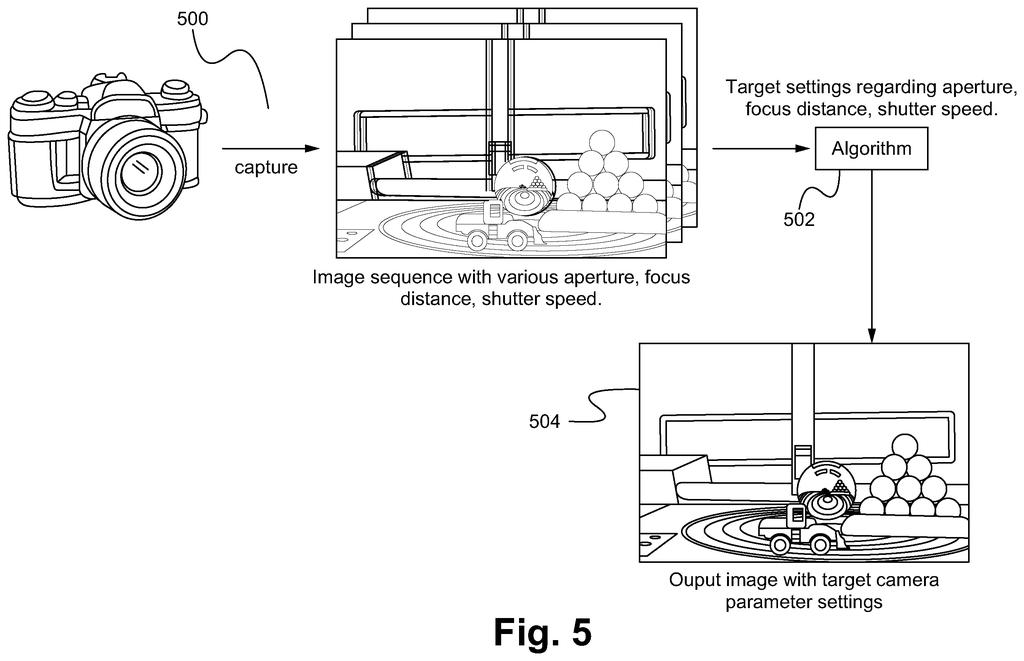
Sony's patent application describes a way around that. Your camera quickly fires off a burst of shots, changing its settings a little with each one. Later, you say what you wanted instead, and software builds a new image that looks as if it had been taken that way.
The filing's own example: you shot with the lens opened wide (F1.8) and now want the look of a slightly narrower opening (F2.4), without going back to reshoot. It also describes asking in everyday language, like "focus on the tree in the middle."
capturing a series of images with a set of initial parameter settings; selecting a set of target parameter settings; and outputting an image based on the series of images captured and the set of target parameter settings.
Translation: The camera takes multiple shots first so you can apply your preferred settings later.
How a burst of varied shots becomes one new photo
The core idea is simple. The camera captures a series of images using one set of starting settings, you pick a set of target settings, and software outputs one image that looks as if it was shot with those targets. The settings named are aperture (how wide the lens opens), focus, shutter speed, ISO (how sensitive the sensor is to light) and focal length (zoom).
The series comes from burst shooting, where a camera snaps many frames in a split second. The filing points to the Sony Alpha 9 III, which can reach up to 120 frames per second, as an example. The camera varies its settings from frame to frame, so the software has a spread of looks to learn from.
The filing describes three ways to build the final image:
- Gaussian splatting: the scene is modeled as many small learned blobs, with each camera setting added as an extra dimension.
- Implicit representation network: a neural network (software that learns patterns from examples) is trained on that one scene to predict how each point would look at new settings.
- Deep learning: a model trained ahead of time on example bursts is applied to your new burst.
The order of the burst can be random, fixed before shooting, or adaptive, meaning it changes mid-burst. A large language model (the AI type behind chatbots) can also turn a request like "emphasize the speed of the water's flow" into settings.
The method allows the photographer to change the settings without having to reshoot the scene.
Translation: You can fix the shot after the fact instead of taking another picture.
What this could change for Sony cameras and studios
If this ever reaches a camera or phone, the biggest change is that the moment of shooting gets less stressful. Focusing on the wrong thing, or picking a blur you don't like, becomes a fixable choice instead of a lost shot. And because the filing describes asking in plain words, you could skip the menus and just say what you want.
The filing also names a business use: virtual production, where a pre-made background is blended with a live camera feed for broadcasts. When the two are shot at different settings, the result looks unnatural. Adjusting the background to match the live camera could make the blend look more believable. For a company that makes cameras, that spans casual shooters and broadcast crews.
Sony's 18th filing we've tracked since July in our AI photo editing watchlist follows one on cutting subjects out and one on consistent video frames.
You would notice this the first time a photo you thought was ruined turns out to be fixable. A shot where the focus landed on the fence instead of your friend becomes something you can repair on the couch, not a memory that never quite worked.
The price is that the camera has to shoot a burst of frames at varied settings for every picture, which means more data to store and a scene that has to hold still for a moment. The filing gives little detail on how fast-moving people or objects would be handled, and that is the test of whether this feels like a rescue or a party trick.
The plain-language option is the part most people would actually use. Saying "focus on the tree" beats learning what F2.4 means, and it is the difference between a feature for photo hobbyists and one for everyone with a phone.
Get our take in your Top Stories
Liked this breakdown? Add Patentlyze as a preferred source on Google, and our plain-English take shows up more often in your Top Stories the next time Sony patent news breaks.
There are more where this came from
We read every patent application Big Tech publishes and send you the ones worth knowing. Plain English, free, every week.
The drawings
10 drawing sheets from US 2026/0332890 A1 · click any drawing to enlarge


Show the other 2 sheets


Want this weekly breakdown for a company we don't cover? Patentlyze Pro →
Be the first to weigh in