
Adobe Files Patent to Have AI Models Grade Each Other's Answers
Adobe's filing has several AI models answer the same question about a photo, then grade one another's work and learn from the winners.
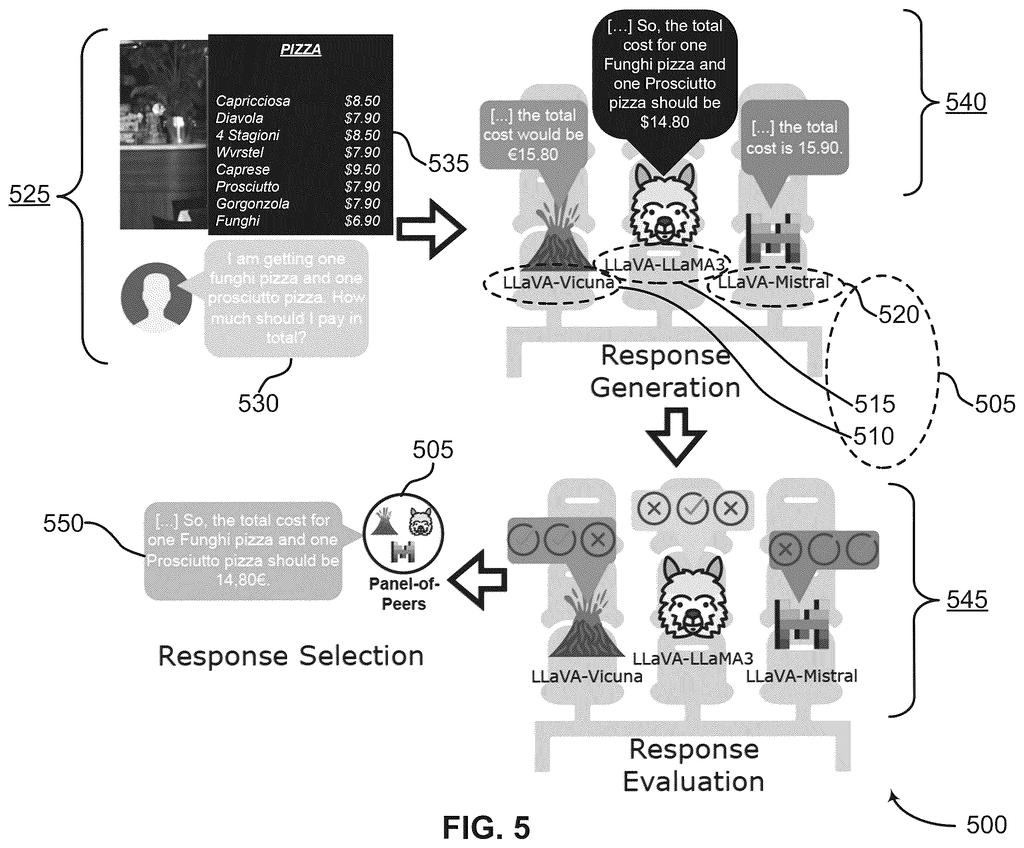
What Adobe's AI peer-grading setup does
Today, teaching an AI to answer questions about pictures usually leans on people who review and rate huge piles of its answers. That is slow and costly, and the filing says the results can still miss what a user actually wanted.
Adobe's idea is to let several similar AI models do the grading. Say you snap a photo of a pizza menu and ask what two pizzas will cost. One model answers $15.80, another $14.80, a third $15.90. Each model then rates the other two answers, and the best-rated one becomes a lesson for all of them.
Repeat that over a big set of questions and, the filing says, each model gets better without a person ever writing the correct answer.
… generating, using a panel-of-peers model, response data based on the input prompt, wherein the response data includes a first response generated by a first language generation model of the panel-of-peers model and a second response generated by a second language generation model of the panel-of-peers model that is different from the first language generation model; …
Translation: Different AI models create separate answers for the exact same prompt.
How the models score each other's answers
The filing describes a panel of peers: two or more AI models that read an image and a text question together (called vision-language models). In the main example there are three, built from the same starting point and trained on the same data. The training questions come with no answer key.
Each model writes several answers to every question. Then each model grades the answers written by the others on five qualities: helpfulness, correctness, verbosity (is the level of detail right), coherence (does it make sense) and complexity. Scores run from 1 to 5, get added up, and are divided by 25 to land between 0 and 1.
The grades from all the judges are combined in one of three ways:
- Average of all the judges' scores.
- Lowest score, which guards against over-rosy grades.
- Uncertainty-weighted, which marks down answers the judges disagree about.
Answers that clear a cutoff (the filing gives 0.85 as an example) are kept, and the top answer for each question becomes training material.
Each model is then fine-tuned (given extra training) on those winning answers, and the cycle repeats from the saved result of the last round. The described test ran three rounds on 8 GPUs, with the grading data gathered in about 80 hours and the self-improvement step taking about 10.
… wherein the evaluation data includes a first evaluation of the first response and a second evaluation of the second response, wherein the first evaluation is generated by the second language generation model and the second evaluation is generated by the first language generation model.
Translation: The models grade each other's work to help improve their overall performance.
Why Adobe wants fewer human-graded answers
The practical payoff is cheaper, faster improvement for AI that answers questions about images, like reading a menu or working out which spot a red car is parked in. Fewer human reviewers are needed, and a model that is weak at one skill, such as reading text in photos, can pick it up from peers that are better at it.
For Adobe, which builds tools around images and documents, a cheaper way to improve image-reading AI is an obvious fit. The filing says the method beat existing alignment approaches in its tests, though it names no product, and you would not see this step directly. You would only notice answers that miss less often.
Adobe's fifth filing we've tracked since July in our AI teams watchlist adds to a pattern that includes a page-from-description patent and one routing image questions.
Nothing here needs new hardware. It is a training recipe that runs on ordinary AI servers, and the filing's own test used a modest setup of 8 GPUs over three rounds.
The shortest route to a product is short: take a vision-language model that already exists, run the grading loop on a pile of image questions, and use the improved version. What has to exist first is the models and the questions, and a company working on image AI would need those either way.
You would never see this feature itself. You would see an assistant that misreads fewer menus and photos. The open question is whether models grading models can catch shared blind spots, since all the judges start from the same training. The filing mentions panels with different designs as an option, and that looks like the sensible choice.
Get our take in your Top Stories
Liked this breakdown? Add Patentlyze as a preferred source on Google, and our plain-English take shows up more often in your Top Stories the next time Adobe patent news breaks.
There are more where this came from
We read every patent application Big Tech publishes and send you the ones worth knowing. Plain English, free, every week.
The drawings
12 drawing sheets from US 2026/0330150 A1 · click any drawing to enlarge


Show the other 4 sheets


Want this weekly breakdown for a company we don't cover? Patentlyze Pro →
Be the first to weigh in