
Samsung Files Patent for Glasses That Decide When the Outside World Interrupts You
Samsung's latest filing describes glasses that add up points for who is talking, what they say and where you are. They then choose whether to speak in your ear, show a line of text, or wait until later.
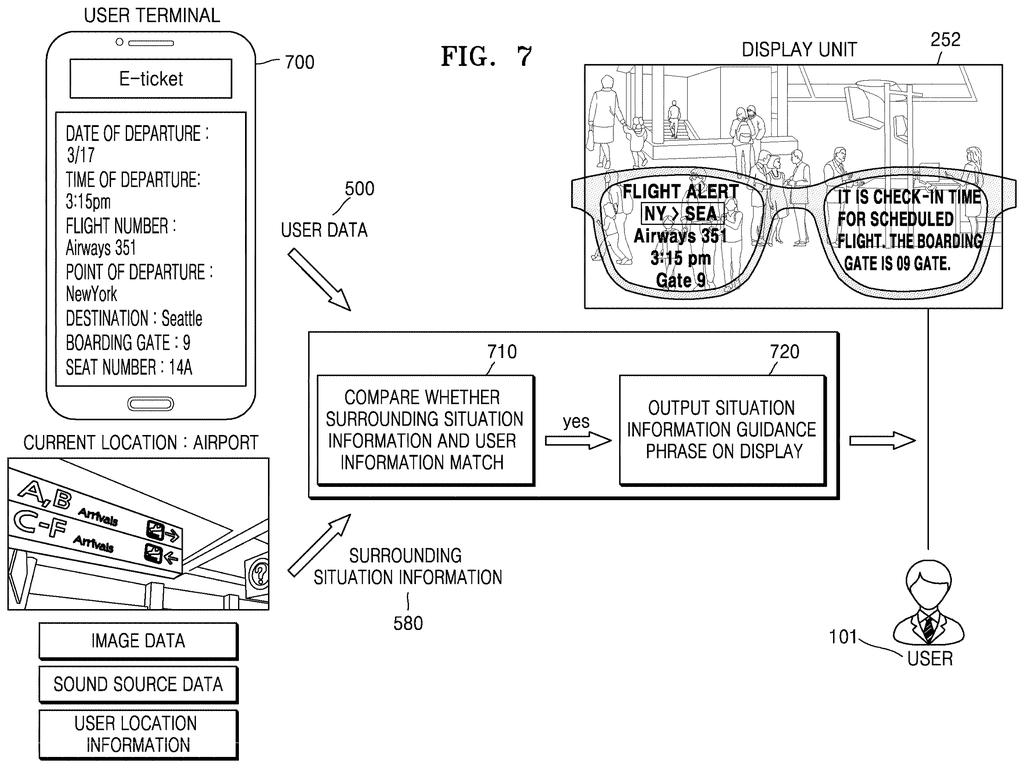
What Samsung's interruption-scoring glasses do
A woman walks through an airport in noise-canceling headphones, deep in a podcast. A friend waves from ten feet away, and she never looks up.
Samsung's patent application tries to fix that. A device such as a pair of smart glasses uses a camera, a microphone and a location sensor to watch and listen to what is happening around you. Each of those gets a score based on what the device already knows about you: who your friends and family are, which words you care about (your name, say), and which places you spend time. Add the scores up and you get one number for how much the moment matters.
That number picks the response. A low score gets saved and shown to you later, when you take a break. A middle score puts a short line of text in front of your eyes. A high score goes straight into your ears. The filing also describes lowering the volume of a nearby TV.
… determine an importance score of surrounding situation information, wherein the surrounding situation information comprises the at least two of the sound source data, the image data or the user location information, by: assigning a first score to the sound source data based on comparison with usage history of the user …
Translation: It scores what is happening around you by checking past habits.
How the sight, sound and place scores add up
The claims describe a device with a microphone, a camera, a location sensor (a GPS chip in the description) and at least one output, such as a speaker or a display. It collects at least two of the three kinds of input. The filing calls the bundle "surrounding situation information."
Each input is compared with your usage history and scored:
- Sound: what people are saying is checked against your name and keywords you picked.
- Image: the face of the speaker is sorted into family and friends, coworkers, or strangers.
- Location: home, a familiar spot like the office, or somewhere unknown.
The filing's example gives 10 points to the top group, 5 to the middle and 2 to the bottom, then adds them. A coworker talking about work in your office totals 15. A family member chatting at home totals 22.
The total is checked against two cutoffs. Below the first, the moment is stored in memory for later. Between the two, it shows as text. Above the second, it plays as audio. The description adds that high scores can pause music and switch off noise canceling.
The device can also use ultra-wideband (a short-range radio that senses direction and distance) to find a nearby appliance and send it a command, such as turning a TV down.
… determine an importance of the surrounding situation information by using at least one of usage history or a conversation record of a user …
Translation: It figures out how urgent an event is by looking at past chats and habits.
Why Samsung's scoring matters if you wear headphones
If you live in headphones, you know the problem: the better they block the world, the easier it is to miss someone talking to you. Today's noise canceling reacts to sound alone. This filing adds what the camera sees, where you are, and what you've told the device matters, so the response can be a pause, a text line or a note for later instead of one blunt setting.
The approach also depends on a device that keeps watching and listening, and keeps a stored list of faces and keywords. The filing says that data can live on the device or come from a server. The practical payoff, if it ever shipped, is fewer missed hellos and flight calls, with less interruption when nothing important is going on.
Samsung's 70th filing we've tracked since May in the AR glasses race builds on head-gesture accuracy and smaller display pixels to keep refining how AR glasses might work.
Every alert system has to pick a failure mode: interrupt too often and you take the glasses off, interrupt too rarely and you miss something that matters. Samsung's answer is to score each moment by your history and relationships, which is easy to explain and cheap to run.
The cost shows up at the edges. The filing's examples reward family, coworkers, your name, and familiar places, but say nothing about danger words. A stranger's warning in an unfamiliar location could land in the lowest tier and get saved for later review, which is fine for gossip and bad for a warning.
The other price is constant watching: a camera and microphone that never rest, plus a stored list of faces and keywords. That is a real ask, but the filing notes the scoring can shift as you use the device, which makes the trade feel reasonable for people who already live with headphones in and need something to bridge the gap.
Get our take in your Top Stories
Liked this breakdown? Add Patentlyze as a preferred source on Google, and our plain-English take shows up more often in your Top Stories the next time Samsung patent news breaks.
There are more where this came from
We read every patent application Big Tech publishes and send you the ones worth knowing. Plain English, free, every week.
The drawings
11 drawing sheets from US 2026/0330830 A1 · click any drawing to enlarge


Show the other 3 sheets


Want this weekly breakdown for a company we don't cover? Patentlyze Pro →
Be the first to weigh in