
Samsung Patents a System That Stops AR Glasses from Running the Same Sensor Twice
Every app on your AR glasses wants to see the world through the same camera, but right now each one might be running its own separate feed. Samsung's new patent describes a coordinator that checks whether a sensor is already in use before firing it up again.
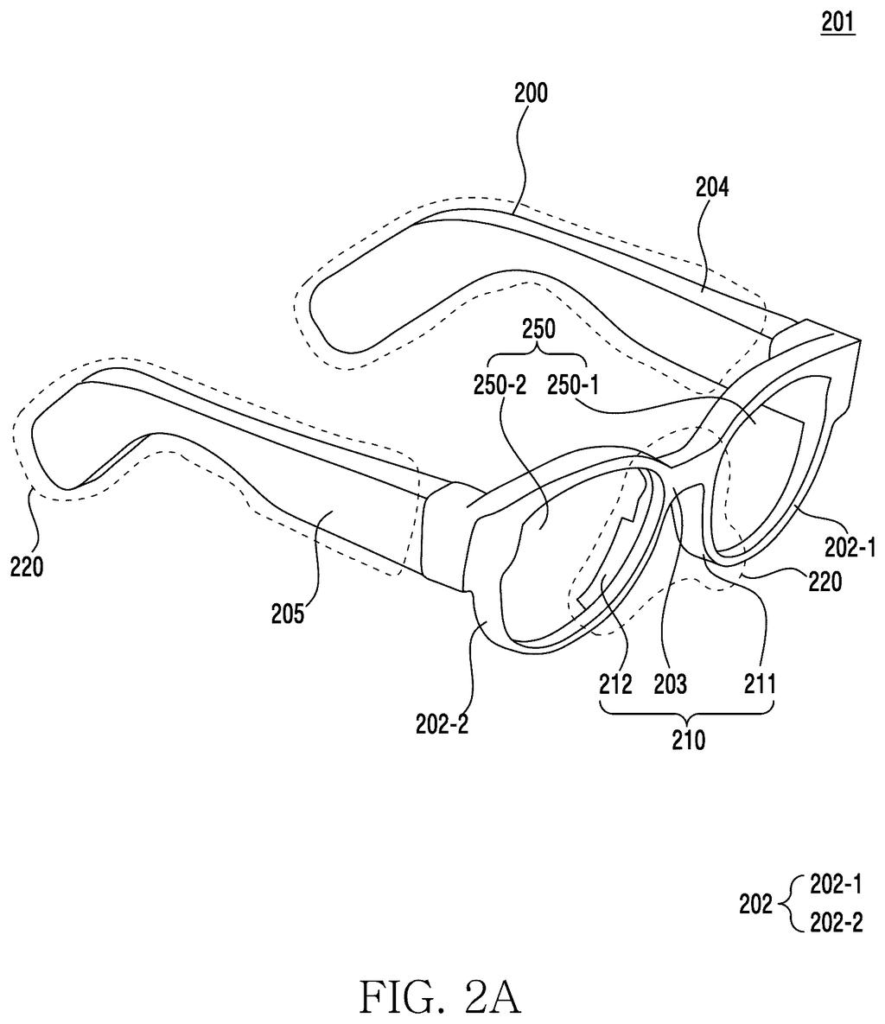
How Samsung's glasses share sensor data between apps
A security camera stares at an empty hallway all night, burning power even when nothing moves. Your AR headset does something similar: each app or function that needs the camera, depth sensor, or microphone might be spinning up its own private copy of that feed, wasting battery on duplicated work.
Samsung's patent describes a smarter traffic cop. When something on the device needs sensor data, a central coordinator checks whether any other part of the system is already pulling from that same sensor. If it is, the new request simply taps into the existing stream instead of starting a fresh one. If nothing is using the sensor yet, the coordinator fires it up cleanly.
The goal is to cut the redundant sensor work that drains a headset's battery and heats it up. For a device you wear on your face, both of those things matter quite a lot.
… obtain the requested perception data through the system resource utilized by the one or more of the perception modules …
Translation: The device reuses existing sensor data instead of running the same sensor again.
How the control module checks and routes sensor streams
The patent covers a head-worn device (think AR or mixed-reality glasses) that manages its perception modules through a shared resource pool. Perception modules are the individual functions that need real-world input: hand tracking, eye tracking, pass-through video, voice recognition, and so on. Each of them depends on an underlying system resource, such as a camera, IMU (motion sensor), or microphone.
A dedicated control module, separate from any individual perception module, acts as the gatekeeper. When an event triggers a request for perception data, the control module queries the current operation state of every perception module already running.
- If a perception module is already using the needed sensor, the requesting function gets routed to that live stream rather than launching a new one.
- If no perception module is currently using the sensor, the control module starts the resource fresh on behalf of the new request.
- This check-before-activate loop repeats whenever a new event comes in, keeping resource usage as lean as possible.
The design is essentially a real-time scheduler for sensor hardware, ensuring that a camera or depth sensor is never running more instances than necessary at any given moment.
… start utilizing the system resource, based on identifying that the system resource for generating the requested perception data is not utilized by the perception modules …
Translation: The device only turns on a new sensor if no other active module is already providing that data.
What this means for battery life in Samsung's AR hardware
Head-worn devices run on small batteries and sit centimeters from your skin, so thermal and power efficiency are not optional features. If four different apps each spin up the front camera independently, the device burns four times the power and generates heat you can feel. A central arbitrator that shares one active stream across all four requesters could meaningfully extend how long the headset stays comfortable to wear.
Samsung is pushing hard into AR and mixed-reality hardware, and the architecture described here is the kind of foundational plumbing those products need before the user-facing features can really shine. The sensor-sharing approach sits alongside many other interesting tech patents in the AR space that tackle the same basic constraint: making a powerful computer palatable to wear for more than thirty minutes.
Samsung's 32nd filing we've tracked since May in the AR glasses race adds to a run that includes floating app controls and a thin sharpening VR optic.
Putting one gatekeeper in charge of all the sensors saves power and keeps the device cooler. But if that gatekeeper makes a mistake or hesitates, features that need to react in an instant, like following your hands or knowing where your eyes are looking, can stumble and feel sluggish at the worst possible moment.
Samsung is betting the savings in battery life and heat are worth the added coordination. That bet seems reasonable for everyday use. The real test comes when many parts of the headset fight over the same sensor at the same time.
Get our take in your Top Stories
Liked this breakdown? Add Patentlyze as a preferred source on Google, and our plain-English take shows up more often in your Top Stories the next time Samsung patent news breaks.
There are more where this came from
We read every patent application Big Tech publishes and send you the ones worth knowing. Plain English, free, every week.
The drawings
15 drawing sheets from US 2026/0244015 A1 · click any drawing to enlarge


Want this weekly breakdown for a company we don't cover? Patentlyze Pro →
Be the first to weigh in