
Samsung Files Patent for a Phone That Learns Which Apps Belong Together
Samsung has filed a patent for a phone that remembers which apps usually run together, so it can start the helpers you need and shut down the freeloaders.
What Samsung's app-chaining patent does
Every time you open your calendar, your phone has to decide which other apps get to stay awake behind the scenes. Keep too many running and your memory and battery take a hit. Shut the wrong one down and it has to start over from scratch later.
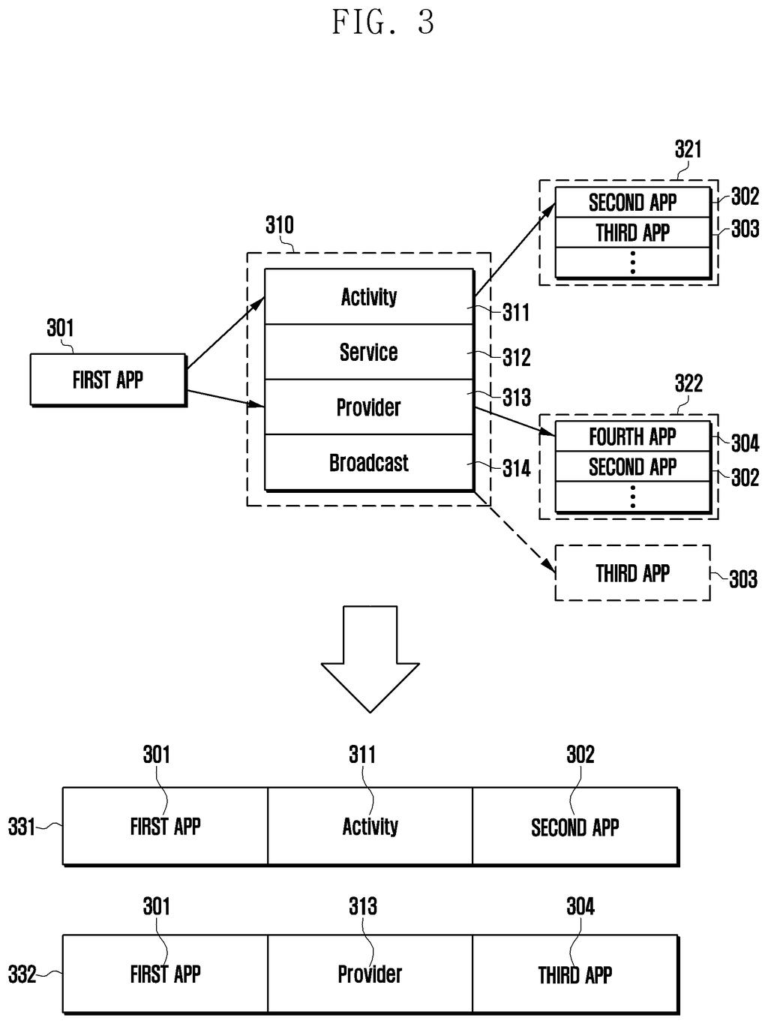
Samsung's patent has the phone learn from habit. It watches which apps start shortly after another app opens, and writes the pairing into a small record the filing calls chain information. The next time you open that first app, the phone starts its usual partner in the background, and can even do some of the prep work early so the partner is ready faster.
The same record works in reverse. Background apps with no link to what you're using become candidates to be shut down, while linked ones are protected from being closed.
… store, in the memory ( 130 ), chain information ( 432 ) indicating an associative relationship between the first application ( 301 ) and the second application ( 302 ) …
Translation: The phone saves a record of how apps are linked together based on your usage habits.
How the phone builds its app link list
The core idea is a chain record stored in the phone's memory. When you open a first app, the phone notes which other apps start within a set time window. It then estimates an execution probability for each one (basically, how often that app shows up alongside the first). In the filing's example, an app that launches every single time scores about 100%.
The records are tied to what the filing calls a component, an Android-style label for what the app is doing when it starts. The four types are:
- Activity: the app is showing a screen to you.
- Service: the app is running in the background.
- Provider: the app is sharing data, such as account details after a log-in.
- Broadcast: the app is performing a specific configured operation.
Once records exist, opening the first app triggers its linked partner automatically. If several partners qualify, the phone ranks them by importance and picks the top one, the top n, or all above a threshold. It can also run part of the partner's start-up work in advance (the filing calls this preloading).
The record also guards the phone's housekeeping. Background apps with no chain record, or a low priority, can be stopped, and if something asks to close an app that is linked to the one on screen, the phone can keep it running. The filing also describes delaying a component that has no link to the foreground app until that app finishes its work.
… execute the second application corresponding to the component of the first application based on the chain information stored in the memory in response to the execution of the first application …
Translation: When you open the first app, the device automatically launches the connected second app.
Why this matters for phone memory and battery
If this ended up in a phone, the practical payoff is an operating system that makes fewer blind guesses about what to keep alive. Apps you tend to use together would be ready sooner, and apps unrelated to what you're doing would stop draining memory and battery. Samsung's own pitch in the filing is better memory use, better battery efficiency and faster start-up times, though it gives no measured numbers.
The patent is written around Android-style app components and describes the logic living in the phone's app framework, so it reads as plumbing inside the operating system rather than a feature you would tap. You would most likely notice it as apps reopening less often from scratch and a phone that holds up a bit better with many apps open.
Samsung's 1529th filing in our Samsung coverage since May follows patents like the heartbeat-reading ring and the hacker-detection idea.
Watching an app reload from scratch after you briefly checked something else is a small annoyance, but it happens dozens of times a day across hundreds of millions of phones. The cumulative drag on time and patience adds up, and it stems from phones having no memory of which apps you tend to use together.
A habit-based record of which apps travel together is a proportionate answer to that problem. The phone learns your patterns and keeps the right things warm before you ask, rather than scrambling to catch up after you do.
The weak spot is accuracy. Predict wrong and the phone wakes up apps you never needed, burning the battery it meant to protect. The filing offers no measured results, so how well the prediction holds in practice remains an open question.
Get our take in your Top Stories
Liked this breakdown? Add Patentlyze as a preferred source on Google, and our plain-English take shows up more often in your Top Stories the next time Samsung patent news breaks.
There are more where this came from
We read every patent application Big Tech publishes and send you the ones worth knowing. Plain English, free, every week.
The drawings
7 drawing sheets from US 2026/0329676 A1 · click any drawing to enlarge


Want this weekly breakdown for a company we don't cover? Patentlyze Pro →
Be the first to weigh in