
Sony Files Patent to Fix Cameras That Lose Track of What's on Screen
Modern film sets often shoot actors in front of a giant video wall, and one wrong camera angle can show the bare studio behind it. Sony's new patent application draws an invisible-to-the-audience safety border around that wall so software can patch the mistake.
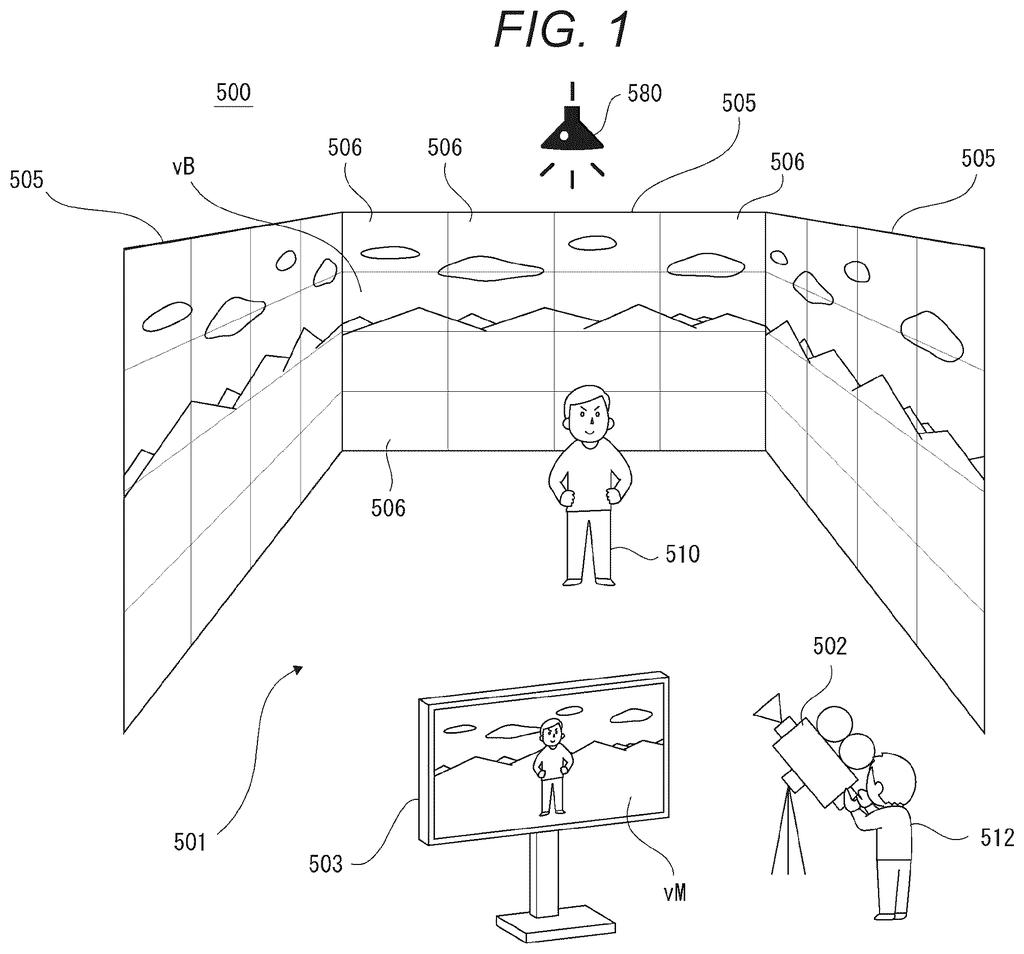
What Sony's screen-edge marker actually does
Ever pointed a camera at a TV and swung it a little too far, so the wall behind the screen sneaks into the shot? Film crews who shoot in front of giant LED screens (walls of video panels that show the scene's backdrop) run into the same thing.
Sony's patent application adds a thin border pattern to the edge of the picture on that screen. Software can then spot the border in each frame of the footage, work out exactly where the screen ends, and swap everything beyond it for the digital backdrop.
The result is that the camera operator doesn't have to keep the lens inside the screen's edges, and editors skip a painful cleanup job afterward. The border can also be used to measure the lens's quirks, such as slight warping and darker corners, so the patched area blends in with the real footage.
a captured video processing unit that performs determination processing of determining a position of a boundary marker in a target frame of a captured video …
Translation: The system tracks specific reference marks placed near the edges of a screen to see where they appear in the camera footage.
How the footage and marker get compared
The filing covers two linked pieces. The first is a marker unit that adds a boundary marker (a thin frame-shaped line plus a grid pattern) to the edge of the video playing on the big display. Its brightness and color are picked to stand out from the scene: darker over a bright scene, brighter over a dark one. The system also records those settings so the marker can be found again later.
The second piece is a captured video processing unit that checks each frame of the camera's footage. It runs two checks:
- It extracts the marker from the footage using the recorded brightness and color settings.
- It estimates where the marker should appear, using the camera's position, direction and angle of view plus the display's position.
Comparing the two reveals how much the lens warps the picture (distortion) and how much the corners darken (peripheral light drop). The system tries several candidate amounts and keeps the one that matches best.
Next it builds a mask: footage inside the marker is kept, and everything outside is replaced with the digital backdrop. Along the seam, the mix shifts in steps so the join is hard to see. Warping and darkening can be added to the backdrop to match the lens, or removed from the footage. The filing says this can run live, in editing afterward, or partly in advance during pre-visualization (a rehearsal on a simulated version of the shoot).
… a display that displays a video including the boundary marker displayed at a peripheral edge portion in a display area of the display.
Translation: A monitor shows visual guides right along its outer borders so the camera always knows its exact framing.
Why this matters for LED-wall film sets
For film crews, the practical payoff is freedom. A camera operator wouldn't have to keep the lens inside the edges of the screen, and editors wouldn't have to find and patch stray frames by hand. The filing says the aim is to avoid wasted shooting time and to widen how shots can be framed.
The application is aimed at LED-wall studios, where a large display shows the backdrop behind the actors. It also says the method could work when the screen shows real footage instead of computer-made scenes. The examiner's first review rejected the claims as filed, which is routine and usually followed by amendments.
Sony's 599th filing in our Sony coverage since May adds to a run that includes lag-aware game streams and AI-driven settings from plain text.
Claim 1 is short and wide. It covers a unit that finds where a border marker sits in a frame of footage, when the camera is filming a screen that shows that marker around its edge. It says nothing about LED walls, lens correction or filling in the missing background, so the claim reaches any setup that locates a screen's edge this way.
The detailed engineering sits in later claims: measuring lens warping and corner darkening (claims 4 and 5), and the mask and gradual blend (claims 6 and 9). Claim 16 stands on its own and covers only adding the marker to the video shown on the display, so it would reach a studio that never processes the footage itself.
If granted as written, that breadth would put a lot of marker-at-the-screen-edge methods in its path. The examiner's rejection of the claims as filed suggests they may be narrowed toward those later details before anything is granted.
Get our take in your Top Stories
Liked this breakdown? Add Patentlyze as a preferred source on Google, and our plain-English take shows up more often in your Top Stories the next time Sony patent news breaks.
There are more where this came from
We read every patent application Big Tech publishes and send you the ones worth knowing. Plain English, free, every week.
The drawings
24 drawing sheets from US 2026/0323154 A1 · click any drawing to enlarge


Show the other 16 sheets


Want this weekly breakdown for a company we don't cover? Patentlyze Pro →
Be the first to weigh in