
Samsung Files Patent for a Ring That Recognizes You by Your Heartbeat
Samsung's latest filing describes a screenless ring that figures out who is wearing it from the electrical pattern of their heartbeat. How it recognized you then decides whether it will pay for things or open your door.
What Samsung's heartbeat-checking ring actually does
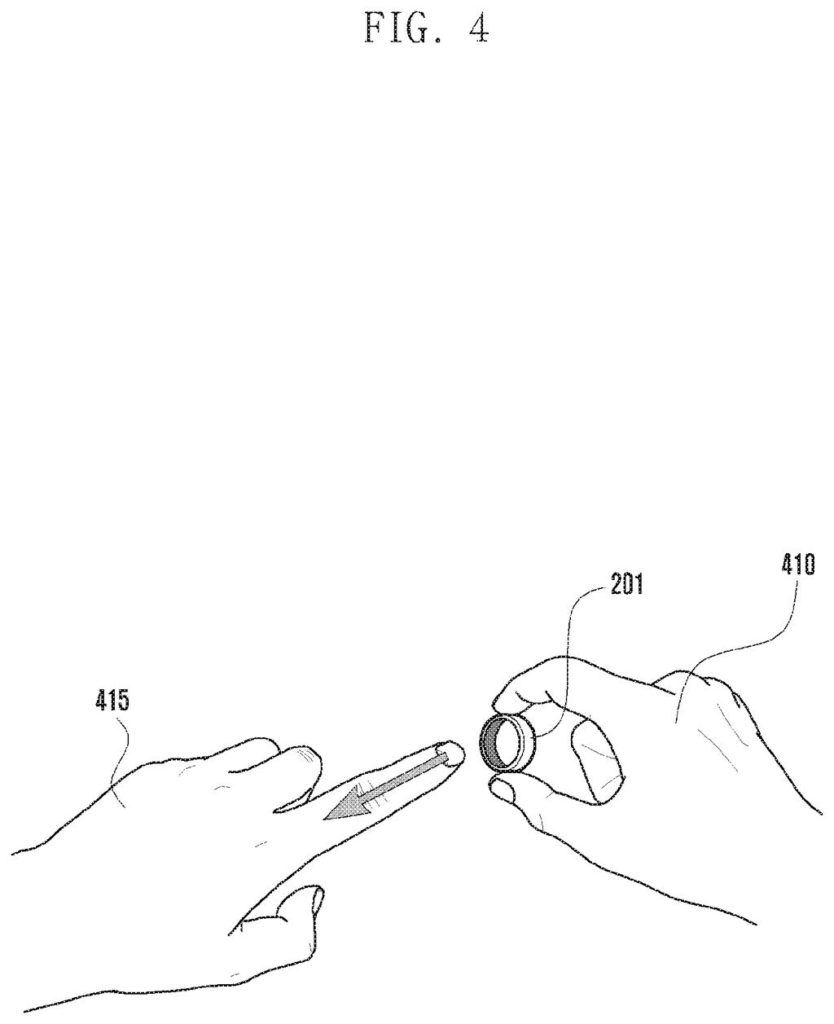
You're sliding a ring onto your finger while your other hand pinches the band. In that one second, the ring reads the electrical rhythm of your heartbeat and checks it against the pattern it saved for you.
That matters because this ring has no screen, so it can't ask for a PIN or a fingerprint scan. Samsung's filing describes a ring that also decides how much to trust the match. If your heartbeat and your paired phone both check out, the ring can handle sensitive jobs like payments, door locks and car keys. If only your heartbeat checks out, it keeps those locked but still shares your health readings.
Take the ring off and it locks again. Put it back on and it releases the lock after the same quick check. Let someone else wear it, and they get only basic controls.
… a first electrode disposed on an inner side of the housing and a second electrode disposed on an outer side of the housing; a first sensor configured to measure first biometric information using an optical signal; a second sensor configured to measure second biometric information using the first electrode and the second electrode; …
Translation: Sensors placed inside and outside the ring collect health data using light and electrical signals.
How the ring reads your heart through two hands
The ring carries two sensors. One shines light into your finger to track things like heart rate (the filing calls it a PPG sensor). The other is an ECG sensor (electrocardiogram, which picks up the tiny electrical pulses your heart makes) connected to two metal contacts, one on the inside of the band and one on the outside.
A usable heartbeat signal only appears when the contacts form a closed loop through your body. That happens when you hold the ring in one hand and slide it onto a finger of the other. The ring pulls out features of the waveform (its rhythm, peaks and slopes) and compares them with the saved ones. One example in the filing treats a match of 90% or more as the registered user.
The ring then sorts permissions by how you were recognized:
- Heartbeat plus a paired phone: everything, including payments, door locks and car keys.
- Heartbeat alone: health data and device controls, but not the security functions.
- A saved gesture or pattern (also described): device controls only.
Even a recognized wearer can be blocked from a function if the phone is not connected. Registration runs through a phone, which walks you through touching both hands to the contacts, and the ring keeps separate storage for each registered user. In the door example, the ring hands over its stored key when tapped to the lock only if the wearer qualifies.
… acquire second biometric information through the second sensor based on the wearable electronic device being detected as being in a wearing state, compare the second biometric information with information stored in the second memory, identify a user wearing the wearable electronic device based on a result of the comparison …
Translation: The ring checks your heartbeat against stored data to confirm your identity as soon as you put it on.
Why a ring with no screen needs its own lock
Smart rings collect health data, and this filing's examples add payments, door locks and car keys. A ring has no screen to type a code on, so the lock has to live somewhere else. Here it lives in your body: the ring checks you when you put it on, and that approval lasts until you take it off.
For you, the tradeoff is convenience against safety. Health readings keep flowing even when your phone is away, while the high-stakes functions wait for the phone link. Samsung already sells a Galaxy Ring, and the filing describes this sort of device, though it names no product. If a stranger picked up your ring, they would find it far less useful.
Samsung's 28th filing we've tracked since June in our body-reading wearables watchlist follows its blood pressure warm-wrist watch and dental-record toothbrush coach applications.
A ring small enough to lose easily and powerful enough to open your front door needs a good lock. This filing offers one that asks nothing of you: no code, no scan, just the quick two-hand motion you already make when you put a ring on.
The tiers are the part you would feel day to day. Your health numbers stay visible with the ring alone, while payments and door keys also want your phone connected. That protects you if the ring is stolen, but it also means a dead phone battery could leave you standing outside your own door.
The open question is reliability. The filing gives only an example 90% match threshold, and says nothing about cold fingers, sweaty hands or a ring slipped on one-handed. If the heartbeat check misfires often, the safety feature becomes a daily irritation, so how smooth it feels will decide whether people keep using it.
Get our take in your Top Stories
Liked this breakdown? Add Patentlyze as a preferred source on Google, and our plain-English take shows up more often in your Top Stories the next time Samsung patent news breaks.
There are more where this came from
We read every patent application Big Tech publishes and send you the ones worth knowing. Plain English, free, every week.
The drawings
12 drawing sheets from US 2026/0329993 A1 · click any drawing to enlarge


Show the other 4 sheets


Want this weekly breakdown for a company we don't cover? Patentlyze Pro →
Be the first to weigh in