
Sony Files Patent to Let Phones Skip the Least Important Sounds in Surround Audio
Sony's filing gives every sound in a surround mix a priority score, so a weak device can skip the least important ones and still play in real time.
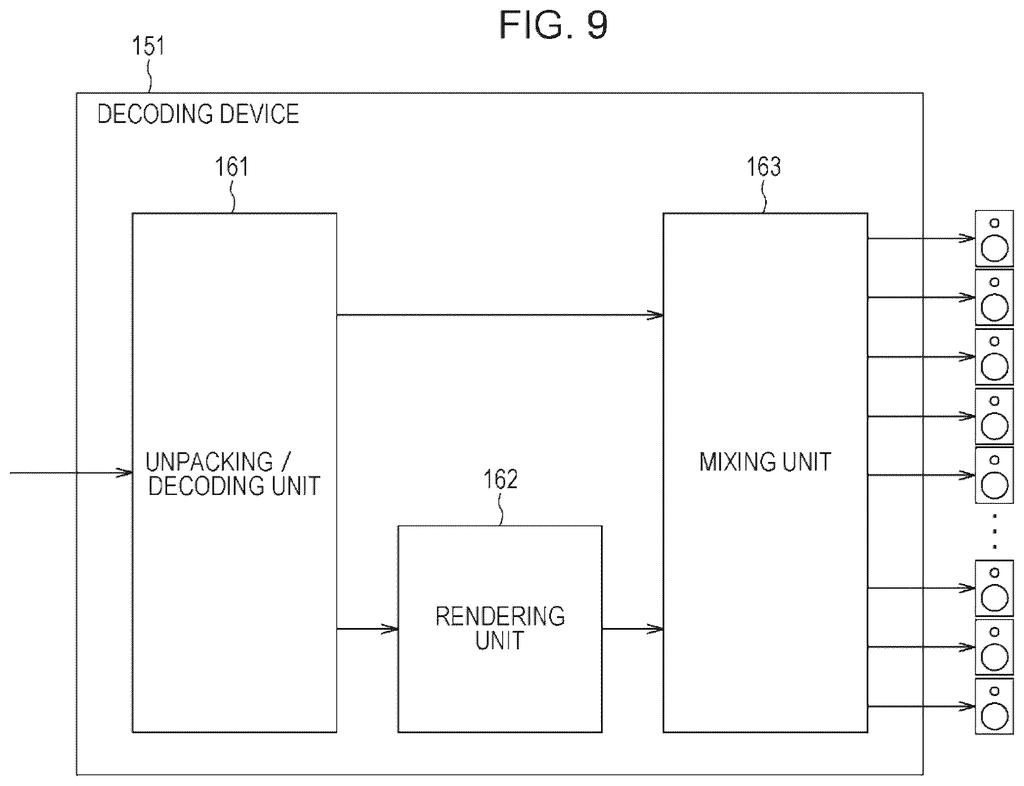
What Sony's sound-ranking decoder actually does
You're watching a film on an older tablet, and the soundtrack has dozens of separate layers: dialogue, rain, footsteps, a distant siren, the score. The tablet's chip can't juggle them all at once, so the audio stutters or won't play at all.
Sony's patent application attacks that by giving each sound a priority score. In the filing's example, the scores run from 0 (least important) to 7 (most important). Your device rebuilds the high scorers and skips the rest, which simply play as silence. How many it skips can depend on how powerful your device is.
If the file arrives without scores, your device can work them out itself by judging how loud each sound is and what shape its pitch pattern has. To avoid harsh clicks when a sound drops out, the volume fades down or up instead of cutting off.
determining whether the priority information can be obtained from a bitstream including the encoded audio signals, in response to determining that the priority information can be obtained from the bitstream, acquiring the priority information from the bitstream …
Translation: The device first checks if importance data is already included in the incoming audio stream.
How the decoder picks which sounds to play
Modern surround-sound files can hold many separate pieces: channels (the tracks sent to each speaker) and objects (individual sounds, like a helicopter, that carry a position in 3D space). Normally a player has to decode every one of them, meaning unpack and rebuild the audio from compressed data. The filing's own example is a 24-channel track plus extra objects, which a weak mobile device may fail to play in real time.
The claims cover a decoder that works with a priority score for each object. It first checks whether the file's bitstream (the stream of data it receives) carries those scores. If so, it reads them. If not, it generates its own from the sound pressure (how loud a sound is) or the spectral shape (how the sound's energy spreads across low and high pitches). It then decodes using the scores and builds the final audio.
In the description, a decoder compares each score against a threshold, and anything below it is not rebuilt and plays as silence. The threshold can be tied to the device's processing power. A file can also carry several sets of scores, for example one for a device that can handle two channels and one for a device that can handle 24.
Dropping a sound abruptly can cause clicks, so dependent claims add a fade-out or fade-in by lowering or raising the volume over time. The description also looks at the time slices just before and after the current one when deciding what to skip.
… acquire one or more encoded audio signals including a plurality of channels and/or a plurality of objects and priority information for each of the plurality of channels and/or the plurality of objects …
Translation: The system handles various audio tracks and their importance rankings.
Why this matters for low-power audio devices
If this works as described, the same rich soundtrack could play on a powerful home theater system and on a modest, low-power device, each doing as much as it can handle. Your device would drop the sounds you'd miss least instead of failing to keep up.
The filing lists a wide range of target devices: portable audio players, mobile phones, tablets, televisions, personal computers and high-quality audio equipment. The fallback that creates priority scores on the player means even files without them could benefit. The description also notes that skipping a sound saves later work, such as positioning that sound across your speakers.
This is the 653rd Sony filing in our Sony coverage since May, adding to a body of work that includes distance-measuring lights and earwax-detecting hearing aids.
The problem here is real, but its size depends on the year. The earliest priority date in this family is 2014, when a phone choking on a 24-channel soundtrack was an everyday worry. Today's chips handle far more, so the pain now falls mostly on low-power and older devices.
The fix fits that problem well. Ranking sounds and dropping the least important ones costs a listener little, since a quiet background layer is easy to miss. The fade handling shows the authors thought about the clicks that skipping would cause, and the fallback for files with no scores covers a gap that would otherwise limit the whole idea.
Verdict: a sensible, modest fix for a shrinking problem. It will matter most where processing power is tight and the soundtrack is dense.
Get our take in your Top Stories
Liked this breakdown? Add Patentlyze as a preferred source on Google, and our plain-English take shows up more often in your Top Stories the next time Sony patent news breaks.
There are more where this came from
We read every patent application Big Tech publishes and send you the ones worth knowing. Plain English, free, every week.
The drawings
32 drawing sheets from US 2026/0341285 A1 · click any drawing to enlarge


Show the other 24 sheets


Want this weekly breakdown for a company we don't cover? Patentlyze Pro →
Be the first to weigh in