
Apple Files Patent to Share Your AirTag's Location Without Giving Up Control
Letting someone else help find your lost item used to mean giving them your encryption keys. Apple's filing splits the job across two servers so they only get answers, and only for as long as you allow.
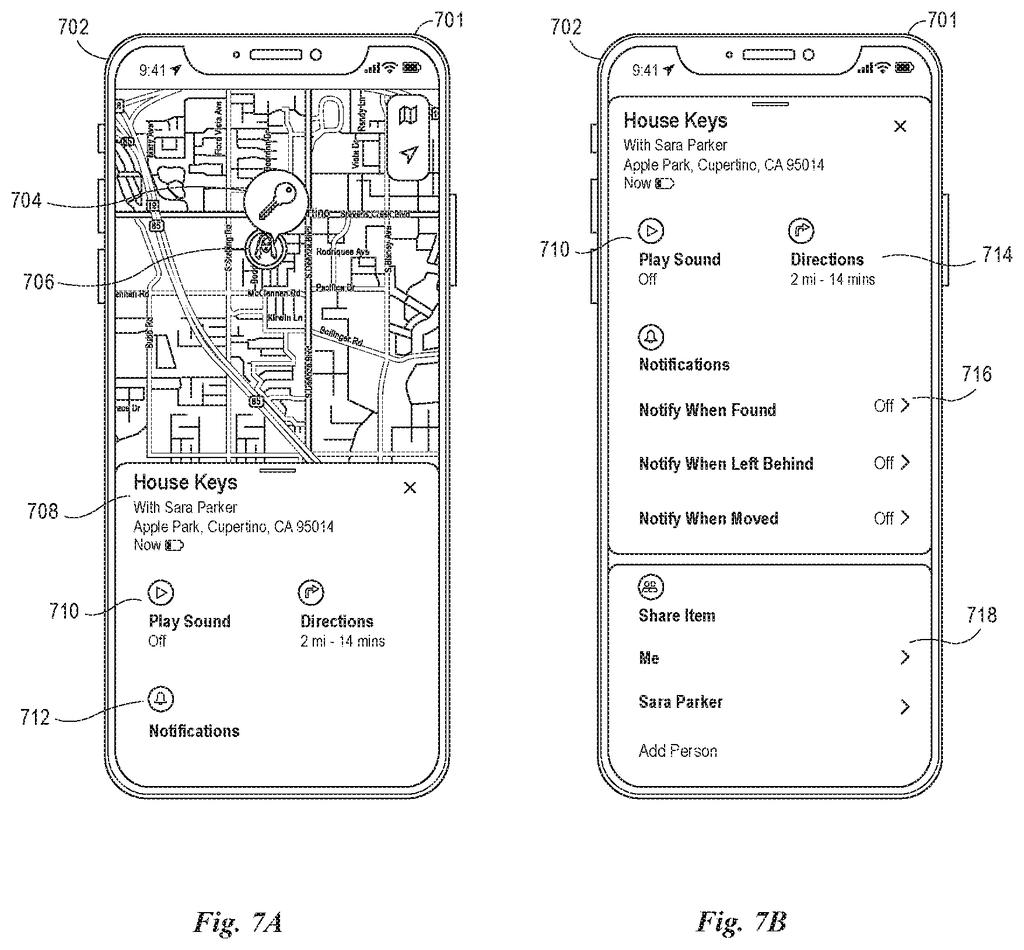
What Apple's AirTag sharing setup actually does
In earlier tracker-sharing designs, sharing a tag's location meant handing the other person a copy of your encryption keys. The filing says that's a problem: once they hold your keys, they can use the tag as if it were theirs, and limiting what they see gets hard.
Apple's filing describes a different route. You approve a person, and your phone leaves a scrambled lookup list on a location server. The matching unlock key, plus the rules (who, for how long, under what conditions), goes to a separate server. When the person asks where the item is, the servers check the rules and send back an encrypted answer.
You never give out the secret your tag and phone share. Because the lookup list already sits on the server, the person can still get answers when your phone is off, and the access can end when the share does.
… decrypting an encrypted payload with at least one cryptographic key included with the location services request, the encrypted payload received from an owner device for a requested share of location information for the accessory device …
Translation: The server unlocks sharing permissions using digital keys provided by the original owner.
How the two servers split the keys and rules
The filing describes a two-server setup. A location server stores encrypted location reports that nearby devices upload after hearing a tag's Bluetooth beacon. A second delegate server holds the keys and rules for each share.
The claims cover both halves of the handshake:
- Owner side (claim 16): after the other person accepts, your phone generates a set of hashed public keys (scrambled lookup codes derived from a secret that only your phone and the tag know) for the expected length of the share. It encrypts them and sends them to the location server. It also sends a decryption key and metadata (the person's identifier and the conditions for the share) to the delegate server.
- Server side (claim 1): when the other person's device asks for the tag's location, the server uses a key in that request to decrypt the owner's payload, pulls the lookup codes out, finds the encrypted location, and sends it back along with an encrypted key to unlock it.
In the description, the tag's keys roll over every 15 minutes in one example, so a one-hour share needs at least four. Rules can include a time window or a ban on lookups when the tag is near you or another sharee. A share link can also carry the key after a # sign in a web address, so the key stays in the browser and is never sent to the server.
… retrieving encrypted location information for the accessory device from a location information database with at least one hashed public key obtained from the decrypted encryption payload …
Translation: The system looks up the tracker's encrypted coordinates using secure keys extracted from the payload.
What this means for sharing your AirTag's location
The practical payoff is lending out a tracker without lending out your account of it. The filing's examples include sharing a set of house keys with a family member, or giving a business, such as one holding your luggage, temporary access to find an item. Your calendar entry for the event could even set the time window automatically.
For Apple, this extends Find My item tracking from one owner to several people. Each person's access can be limited and then switched off. Apple's AirTag and AirPods are both named in the description as the kinds of devices involved. If you have ever wondered who can still see your tag after a trip, this design aims to give you a clear answer.
This is the 598th Apple filing in our Apple coverage we've tracked since May, adding to work like routing audio to the right room and flagging sensitive video messages.
Claim 1 covers more than the headline feature suggests. On the server, it asks for four steps: take a request from the person receiving the share, use a key in that request to unlock a package the owner left behind, use the lookup codes inside to find the encrypted location, and send it back with a key.
Nothing in claim 1 mentions time limits, sharing rules or even an AirTag. Those details show up in the dependent claims, such as claim 2, which checks the sharing conditions before anything is unlocked. If granted, the core would cover that server handshake for any shared tracker, and the time limits would be add-ons.
Claim 16 covers the owner's phone. It prepares lookup codes for the length of the share, then sends a key and the rules to a second server. Splitting the job that way means no single server holds everything. It is a plumbing-level filing, and most people would only ever notice it as a share button that expires.
Get our take in your Top Stories
Liked this breakdown? Add Patentlyze as a preferred source on Google, and our plain-English take shows up more often in your Top Stories the next time Apple patent news breaks.
There are more where this came from
We read every patent application Big Tech publishes and send you the ones worth knowing. Plain English, free, every week.
The drawings
26 drawing sheets from US 2026/0342548 A1 · click any drawing to enlarge


Show the other 18 sheets


Want this weekly breakdown for a company we don't cover? Patentlyze Pro →
Be the first to weigh in