
Samsung Files Patent to Help AI Learn New Things Without Forgetting Old Ones
Teach an AI to sort horses and deer, and it can lose its grip on dogs and cats. Samsung's filing tries to prevent that while spending as few human labeling hours as possible.
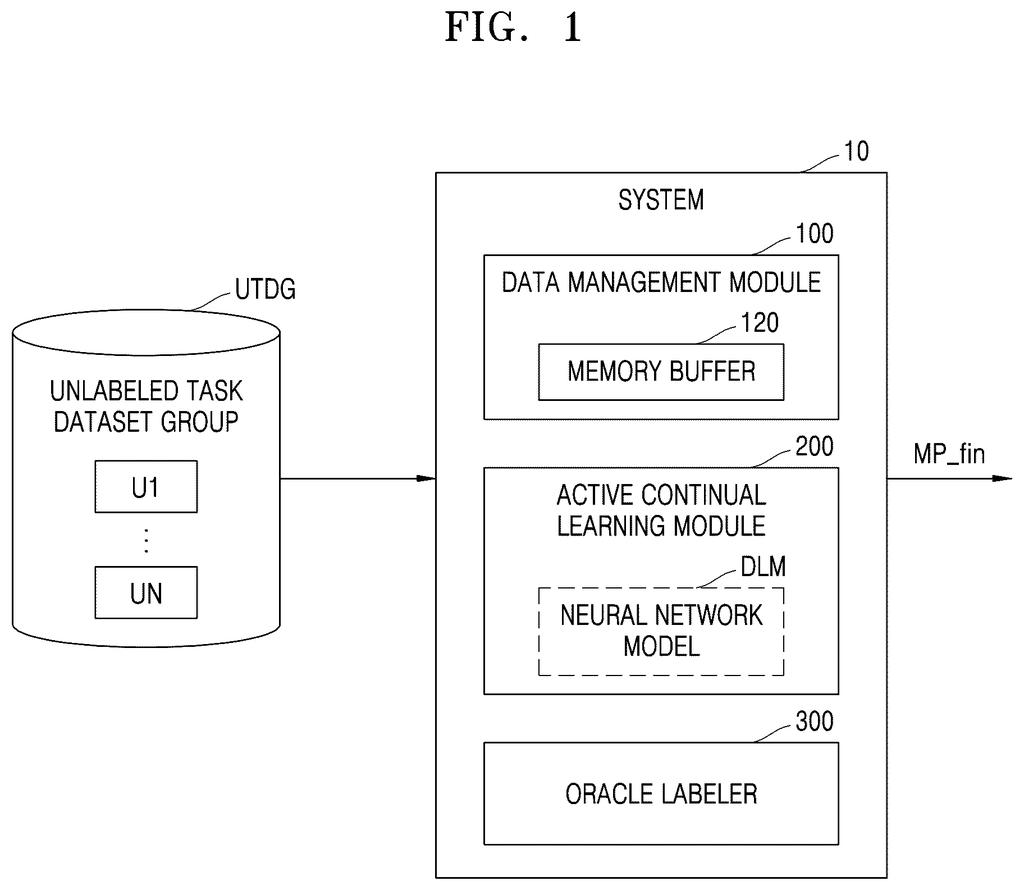
What Samsung's AI memory-buffer idea actually does
Ever crammed for a new class and found last semester's material had vanished from your head? AI models do the same thing. Teach one to tell dogs from cats, then horses from deer, and it can lose its grip on the first job. Engineers call this catastrophic forgetting.
Samsung's filing goes after that problem, plus a second headache: labeling. Someone, such as a medical imaging analyst, has to mark each training example by hand, and that time is expensive. So the system asks for only a limited number of labels per task and chooses the examples carefully.
Its picks favor examples that help with the new job and keep the old skills fresh. Labeled examples from earlier tasks sit in a memory buffer, a saved stash the model checks against every time it learns something new.
performing active continual learning for a first task based on a first unlabeled task dataset corresponding to the first task, a pretrained model parameter of the neural network model, and a memory dataset prestored in a memory buffer to update the model parameter and expand the memory dataset; …
Translation: The system learns a new task using unlabeled data and memory from past tasks to update its neural network.
How the system picks which examples get labeled
The patent covers a method for training a neural network (software loosely modeled on how brains learn) through a series of tasks, using data that starts out unlabeled. For each task, the system begins with the model's existing settings and the memory buffer, trains, and then adds new labeled examples to the buffer. After the last task, it outputs the final settings.
Inside each task, the system runs repeated rounds. It draws a small batch of unlabeled examples, sends them to an outside labeler (a human specialist or a trusted automatic system), and trains on the results. It then picks more examples to label until it hits a preset labeling budget or number of rounds.
The interesting part is how it picks. It uses a measure called Fisher information, a way of scoring how much an example would shake up the model's knowledge:
- It builds a compact list of numbers (an embedding vector) for the memory buffer and another for the remaining unlabeled pool.
- It blends the two using a balancing weight: the ratio of past data to all data so far, so more history means more weight on remembering.
- It shortlists examples that match the blend (up to double the budget), then keeps the ones with the biggest scores.
To save computing power, it looks only at the last layer of the network.
Why expert labeling time is the cost to cut
Human labeling is often the slowest, priciest part of building an AI system. The filing itself mentions medical imaging analysts and semiconductor defect inspectors as specialists who might do it. A method that spends their limited time on examples that help the model learn something new and keep what it knew could cut that bill.
The filing names no product, and its examples are image sorting. For you, the practical angle is any AI that has to keep learning after it ships. Models that lose old skills when they pick up new ones get worse over time, and this patent describes one way to slow that slide.
That makes this Samsung's 37th filing we've tracked in Enterprise AI since June, a group that includes one on turning photos into app icons and one on stripping color data from image patches.
Every shortcut here has a price tag. The memory buffer grows with each task, since it keeps labeled examples from all earlier ones, so storage climbs the longer the model keeps learning. The weighting also gives old tasks a voice in proportion to how much data they had, so a small task from long ago gets a small say even if it matters a lot.
The computing savings carry a cost too. Judging examples by the last layer of the network is far cheaper than inspecting the whole model, and it means the system sees only a slice of what each example would change. The filing's own examples are plain image sorting, such as dogs and cats, so how far the trick stretches is untested in the text.
Still, the trades look sensible. Human labeling is the expensive part, and spending that budget on examples that protect old skills costs only a modest amount of storage. It reads as a practical refinement for anyone retraining models over time.
Get our take in your Top Stories
Liked this breakdown? Add Patentlyze as a preferred source on Google, and our plain-English take shows up more often in your Top Stories the next time Samsung patent news breaks.
There are more where this came from
We read every patent application Big Tech publishes and send you the ones worth knowing. Plain English, free, every week.
The drawings
10 drawing sheets from US 2026/0340404 A1 · click any drawing to enlarge


Show the other 2 sheets


Want this weekly breakdown for a company we don't cover? Patentlyze Pro →
Be the first to weigh in