
Adobe Patents a System for Keeping Customer Identity Graphs from Collapsing
When you try to link too many customer identifiers together in a single graph, the whole thing can fall apart. Adobe's new patent describes a surgical way to figure out exactly which connection to cut — and which to keep.
What Adobe's identity graph pruning actually does
Imagine a web of sticky notes where each note is a way to identify a person — an email address, a device ID, a loyalty card number. Lines connecting them mean "these belong to the same person." Now imagine the web gets so tangled that your system refuses to add any more lines. That's what Adobe calls a collapsed state.
Adobe's patent describes a method for figuring out the exact right line to remove so the web untangles — without losing the new connection you were just trying to add. Instead of blindly deleting edges, the system tests candidates in a temporary copy of the graph to see which removal actually solves the problem.
This is the kind of quiet plumbing that makes a customer data platform feel reliable. If you've ever wondered why two accounts for the same person stay stubbornly separate in some marketing tools, this is the kind of work that fixes it.
How Adobe finds and removes the edge that causes collapse
Adobe's patent targets a specific failure mode in identity resolution — the process of stitching together multiple digital identifiers (emails, cookies, phone numbers, device IDs) into a single unified customer profile.
Identity graphs have namespace limits: there's a cap on how many nodes can be linked before the graph is considered collapsed (essentially broken or over-merged). When a new incoming record would push a graph over that limit, the system needs to decide what to do.
The patented method works in three steps:
- Detect collapse: Apply the new record's identity node and edge to the existing graphs and confirm the collapsed state is triggered.
- Prune to a temporary state: Strip out multiple edges to get back to a safe baseline — a temporary, non-collapsed version of the graph.
- Find the minimal cut: Re-apply the new incoming edge, then test each of the previously pruned edges one by one. The edge whose re-addition causes the graph to collapse again is identified as the one to permanently discard.
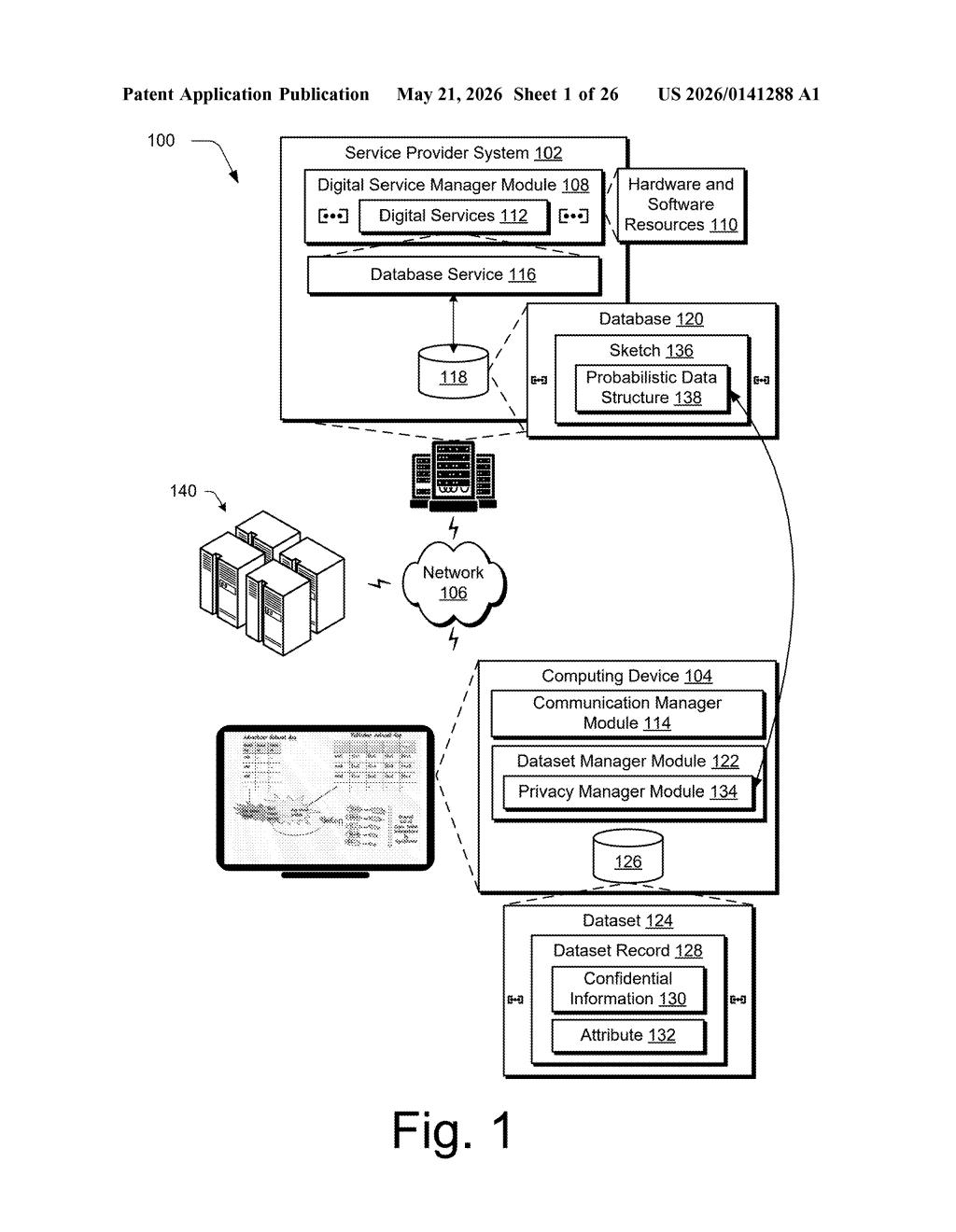
The result is a non-collapsed state that includes the new record's edge while dropping the specific older edge most responsible for the overcrowding. The live identity graph is then updated accordingly. The patent also references probabilistic data structures (space-efficient ways to approximate set membership, like Bloom filters) as part of the broader system architecture.
What this means for Adobe's customer data platform
Adobe Experience Platform's real-time customer profile is central to its enterprise pitch — the idea that you can act on a unified view of a customer across every touchpoint. Identity resolution is the engine under that hood, and graph collapse is one of the messiest edge cases it has to handle. A naive solution (just drop the newest connection) would mean new customer data gets silently lost. Adobe's approach instead finds the least valuable existing link to remove.
For enterprise customers running large-scale audience segmentation or personalization campaigns, this kind of precision matters. Incorrectly merged or silently dropped identities translate directly into wasted ad spend, broken personalization, and compliance headaches around data accuracy.
This is unglamorous but genuinely important infrastructure work. Identity graph integrity is one of those problems that only shows up when it goes wrong — and when it does, it causes expensive downstream failures in campaign targeting and attribution. The algorithmic approach here (test-then-prune rather than guess-and-drop) is the kind of careful engineering that separates a mature customer data platform from a fragile one.
There are more where this came from
We read every patent application Big Tech publishes and send you the ones worth knowing. Plain English, free, every week.
Want this weekly breakdown for a company we don't cover? Patentlyze Pro →