
Sony's New Patent Covers Headphones That Read Brain Waves to Tune Music and Visuals
A Sony patent application describes headphones that listen to your brain before they play to it. They find your personal brain rhythm, then pulse music or visuals at a matching rate to help you relax, focus or fall asleep.
What Sony's brain-wave headphones actually do
Imagine putting on headphones before bed and hearing music that adjusts itself to your brain. Sensors in the earpieces pick up your brain's electrical activity, find its natural beat, and shape the sound to fit.
That beat is different for every person. Sony's patent application describes turning your personal beat into a gentle pulse in the music's volume, or a flicker in the brightness of a VR screen. To help you relax, the pulse matches your beat. To help you focus, it runs twice as fast. To help you drift off, it runs at half speed.
Afterward, the system checks your brain again. If the change was too small, it plays another round. The filing says this is a safer route than sending electric current through the head, since you just watch and listen.
an acquisition unit configured to acquire a first signal related to a brain wave of a user …
Translation: The system collects data about the user's brain activity.
How Sony finds your personal alpha rhythm
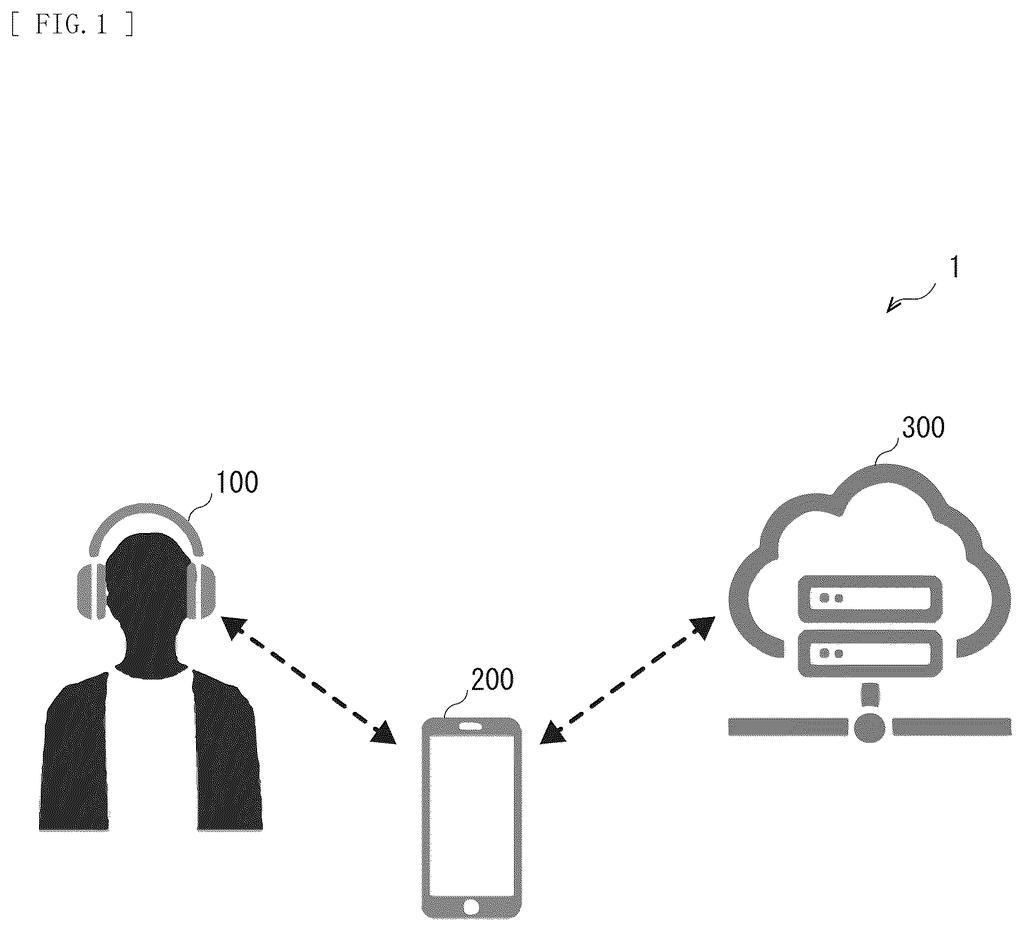
The setup has three parts. A sensor worn on the head (the filing mentions headphones, earphones, eyewear and VR goggles) records the brain's tiny electrical signals. An analysis unit finds a specified frequency in that signal. A control unit then changes the content you see or hear based on it.
To find the frequency, the software filters out noise from blinking and body movement. It then runs a Fast Fourier Transform (a math routine that sorts a signal by how fast it wobbles) to build a power spectrum (a chart of how strong each speed is). It looks for the tallest peak between 8 and 13 Hz, the alpha wave range the filing ties to relaxation.
Then it modulates the content, meaning it makes brightness or volume rise and fall at a chosen rate:
- Relax: the same rate as your alpha peak.
- Concentrate: twice that rate (the beta range).
- Sleep: half that rate (the theta range).
It can also time the pulses to the phase of your brain wave (where you are in each wave cycle) so they don't cancel it out. To measure cleanly, it records while the screen is black or a steady 440 Hz tone plays, compares strength before and after, and repeats if the rise is under a threshold. It can also estimate your emotion from the signal.
… a control unit configured to control content on the basis of the specified frequency …
Translation: The system changes what you experience based on your brainwaves.
What this means for relaxation and focus apps
If something like this ever shipped, the pitch would be simple: relaxation, focus and sleep sounds that tune themselves to your brain. The design measures you first and checks afterward whether it worked, which is more personal than pressing play on a generic track.
It also points at what headphones and VR headsets could become: devices that listen to you as well as play to you. That raises a privacy question the text we saw does not address, since brain signals are about as personal as data gets. And as with any patent application, nothing here says a product is coming.
Sony's 11th filing we've tracked since July on our body-reading wearables watch builds on one flagging bad heart rate readings and one filtering noise from health data.
The big trade here is convenience for accuracy. To get a clean reading, the system records a baseline for about 30 seconds to a minute with a black screen or a flat tone, which is a small price for someone winding down.
The bigger gamble is the shortcut: it finds your alpha rhythm, then doubles it for focus and halves it for sleep. That keeps the math cheap, and it assumes those multiples work the same for everyone, with no test results in the text.
The recheck loop is the smart guard, and its cost is that weak earbud sensors could keep replaying sessions that do nothing. The trade is fair for a relaxation gadget and too thin to back any health promise.
Get our take in your Top Stories
Liked this breakdown? Add Patentlyze as a preferred source on Google, and our plain-English take shows up more often in your Top Stories the next time Sony patent news breaks.
There are more where this came from
We read every patent application Big Tech publishes and send you the ones worth knowing. Plain English, free, every week.
The drawings
8 drawing sheets from US 2026/0334830 A1 · click any drawing to enlarge


Want this weekly breakdown for a company we don't cover? Patentlyze Pro →
Be the first to weigh in