
Sony Patents a Way to Turn Idle Game Controllers Into Extra Speakers
Sony has filed a patent that would let a PlayStation console pump audio through any connected controller that isn't currently being used, turning idle gamepads into ambient speakers scattered around the room.
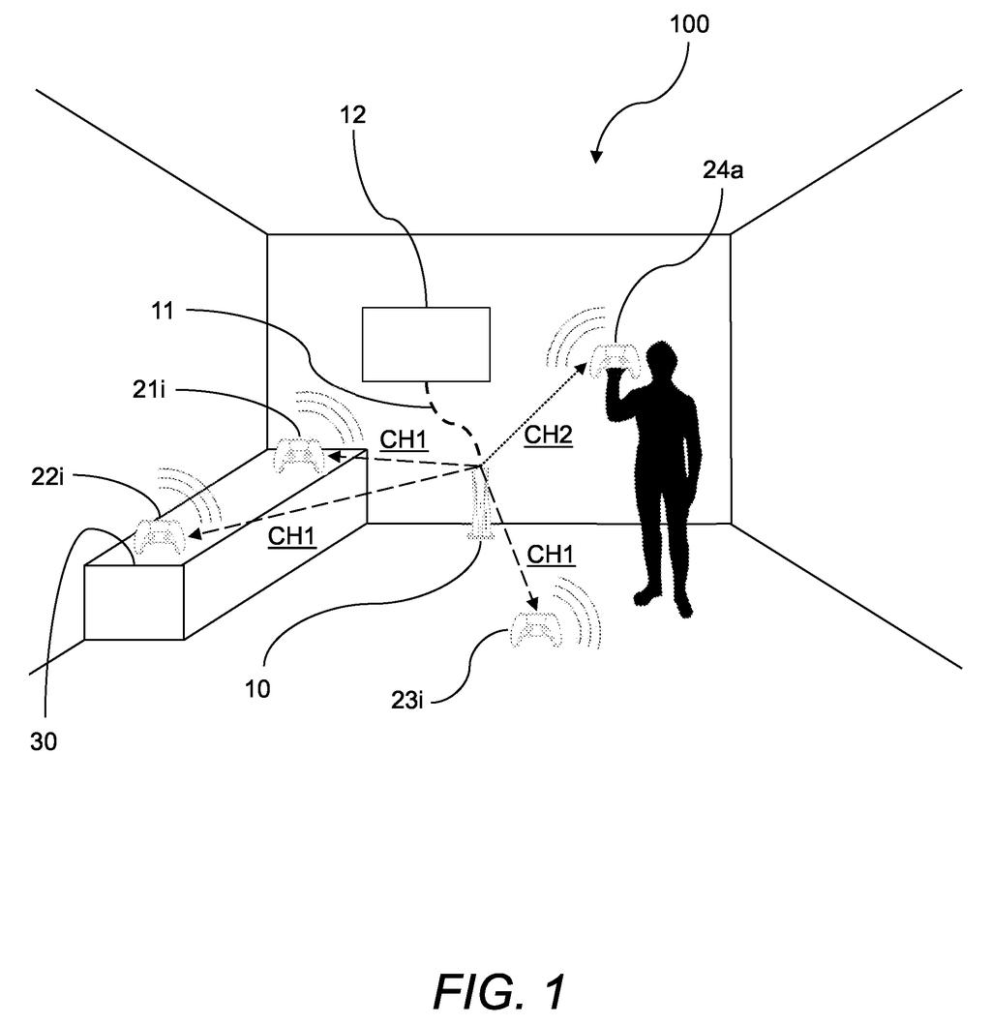
What Sony's idle-controller audio trick actually does
A second controller sits untouched on the couch while your friend watches you play. Right now, that controller does nothing. Sony's patent describes a system that notices when a connected gamepad is sitting idle and sends audio signals to it.
The DualSense controller already has a small speaker built in, plus haptic motors that can vibrate in rhythm with sound. This patent would let the console detect which controllers are powered on but not actively in use, then route audio to those devices. The result is that an idle controller could produce sound or rumble patterns, effectively becoming an extra audio node in the room.
That means more immersive sound spread around your physical space, not just coming from the TV, without any extra speakers or setup required.
detecting a plurality of peripheral devices in a powered-on state, wherein each of the peripheral devices are connected to the computing system and respectively comprise a vibration generating component; identifying which of the peripheral devices are in an idle state; and sending audio signals to the identified peripheral devices.
Translation: The system finds controllers that are turned on but not being used and routes game sounds to them.
How the system spots idle controllers and routes audio to them
The patent describes a three-step process running on the host computing system (in Sony's context, a PlayStation console).
- Detection: The system scans all connected peripheral devices and checks which ones are powered on. Each device must include a vibration-generating component, which covers anything from the rumble motors in a standard gamepad to more specialized haptic hardware.
- Idle identification: The system then separates the active controllers (the ones a player is using) from the idle ones. A controller is considered idle when it isn't providing input or being used for active gameplay.
- Audio routing: Audio signals are sent specifically to the idle devices. The vibration component in each idle peripheral can then reproduce those signals as audible sound, felt vibration, or both.
The patent doesn't specify a particular audio format or limit the approach to game sound. Any audio stream the console is handling could, in principle, be redirected to idle peripherals. The core insight is that every connected controller already has hardware capable of producing output; the console just isn't using it when the controller sits idle.
What this means for PlayStation audio and living-room gaming
For everyday PlayStation users, this could make the audio experience feel more physical and spatially spread out without buying a surround-sound system. A second controller on the coffee table could vibrate and emit sound that matches what's happening on screen, wrapping you in sound from multiple directions.
The feature also fits neatly into Sony's existing hardware. The DualSense already has a speaker and sophisticated haptics, so Sony has been filing around haptic and audio output features since at least 2020 the software infrastructure to use them more aggressively is the main remaining piece. No new hardware would need to ship for a version of this to reach current-generation consoles.
Sony's 23rd filing in the audio patents we cover since May adds to a run that includes one quieting sounds you can't hear and one compressing spatial audio.
From a ship-path perspective, this patent is unusually close to a deployable feature. The hardware it needs already exists in every DualSense sold since 2020. The patent is essentially a software routing decision: detect idle controllers, send audio there.
The shortest route to a product here is a firmware update, not a new device. Sony would need to decide how to expose it (a developer API, a system-level accessibility option, or an automatic ambient mode), but none of those require new chips or new peripherals.
The main open question is audio quality. Controller speakers are small and not designed for fidelity, so the experience might work better as spatial rumble cues than as actual sound reproduction. Still, as a low-cost way to add a positional audio layer to living-room gaming, the concept is practical and the path from patent to product is shorter than most.
There are more where this came from
We read every patent application Big Tech publishes and send you the ones worth knowing. Plain English, free, every week.
The drawings
3 drawing sheets from US 2026/0284532 A1 · click any drawing to enlarge


Want this weekly breakdown for a company we don't cover? Patentlyze Pro →
Be the first to weigh in