
Intel Files Patent for Robots That Turn Down Their Own Noise Near Hospitals and Schools
Cities are starting to cap how loud things can be, but a delivery robot's noise changes with every task and every street. Intel's patent application describes a vehicle that checks the local noise limit and adjusts itself to stay under it.
What Intel's quiet-zone vehicle patent does
Ever been woken up by a delivery truck idling outside your window? Now add a growing crowd of robots, drones and self-driving vehicles, each with motors, cooling fans and computers that hum, in cities that are starting to set noise limits.
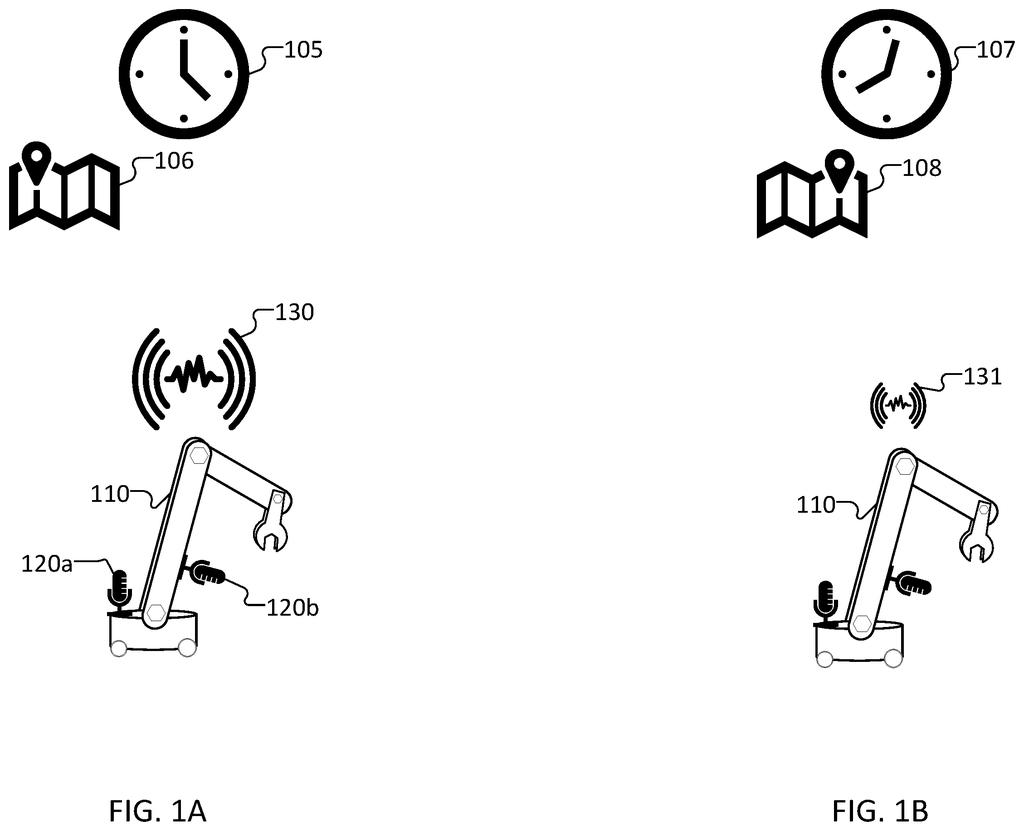
Intel's patent application describes a vehicle that checks how loud its surroundings already are, looks up how loud it is allowed to be at that spot and time of day, and then adjusts itself to fit. Near a hospital at night, it might slow down, spin its fans slower or do less heavy computing. On a busy street at midday, it can run louder.
It can also play anti-noise, sound waves that cancel out its own hum, so it doesn't always have to slow down to get quiet.
determine a noise level within an environment of a vehicle; determine a permissible noise level allowed in the environment; and control an operational parameter of the vehicle that influences a vehicle noise level caused by operation of the vehicle …
Translation: The system measures how loud an area is, checks the local limit, and adjusts the machine's volume to comply.
How the vehicle trades speed for silence
The patent's claims cover a three-step loop. The vehicle measures the noise in its environment, finds the permissible noise level for that place, and then changes how it operates to stay within the limit.
The allowed level comes from a "noise policy," basically a rulebook that ties together the type of place, the vehicle's job and the time of day. The vehicle's own contribution can be measured with microphones on the vehicle or in the surroundings. It can also be estimated from a lookup table that links each operating mode to a typical noise level.
The things it can adjust include:
- The vehicle's route, speed and acceleration
- How hard its processor works (which changes how much its cooling fan has to spin)
- Fan speed directly
- An active noise cancellation output, meaning speakers that emit sound with the same strength and opposite timing to cancel the hum
A rules engine (a stored set of if-this-then-that priorities) decides what to dial back first. The filing's example is that an audio system gets throttled before a navigation or safety system. The description also covers sharing a noise "budget" among several vehicles in the same area and keeping a shared database of who is contributing what.
The real-time motion and path planner may generate occupancy information about an environment around a robot. The occupancy information represents defined volumes of space of the environment, and each defined volume of space is associated with a corresponding occupancy probability.
Translation: The robot maps out the surrounding space in real time to calculate the chances of running into anything.
Why noise rules could reach delivery robots
If you live near a hospital, school or busy warehouse, this is about whether the machines working there can be made to respect local quiet hours. The filing's background points out that more robots and drones means more noise, and that some places already regulate it. A vehicle that adapts on its own is easier for a city or property owner to accept than one that is simply kept out.
For companies running fleets, it turns noise into something they can manage, like battery or heat. The filing is clear that just making a machine quieter can hurt its performance. That is why it includes the trade-off rules and the anti-noise option, which lets a vehicle stay quiet without slowing down.
Intel's seventh filing in the Robotics patents we cover since May follows earlier applications like drones reporting route changes and voice-commanded robots.
The hardware side of this is mostly already in vehicles: motors, fans, microphones, and a small computer to run the logic. The only addition some setups would need is a speaker for active noise cancellation, and even that is listed as optional.
The real gap is external. Something has to publish the noise rules for each location and time of day, and this filing imagines property owners or city systems providing that feed. Without it, the vehicle has nothing to check against.
The fastest path to a working product is probably a private site, like a hospital campus or a warehouse, where one operator controls both the machines and the rules. Rolling this out across a city would require a lot of coordination that has nothing to do with the vehicle itself.
Get our take in your Top Stories
Liked this breakdown? Add Patentlyze as a preferred source on Google, and our plain-English take shows up more often in your Top Stories the next time Intel patent news breaks.
There are more where this came from
We read every patent application Big Tech publishes and send you the ones worth knowing. Plain English, free, every week.
The drawings
5 drawing sheets from US 2026/0351231 A1 · click any drawing to enlarge


Want this weekly breakdown for a company we don't cover? Patentlyze Pro →
Be the first to weigh in