
Waymo Files Patent for Truck Stops Where Self-Driving Vehicles Exchange Cargo Loads
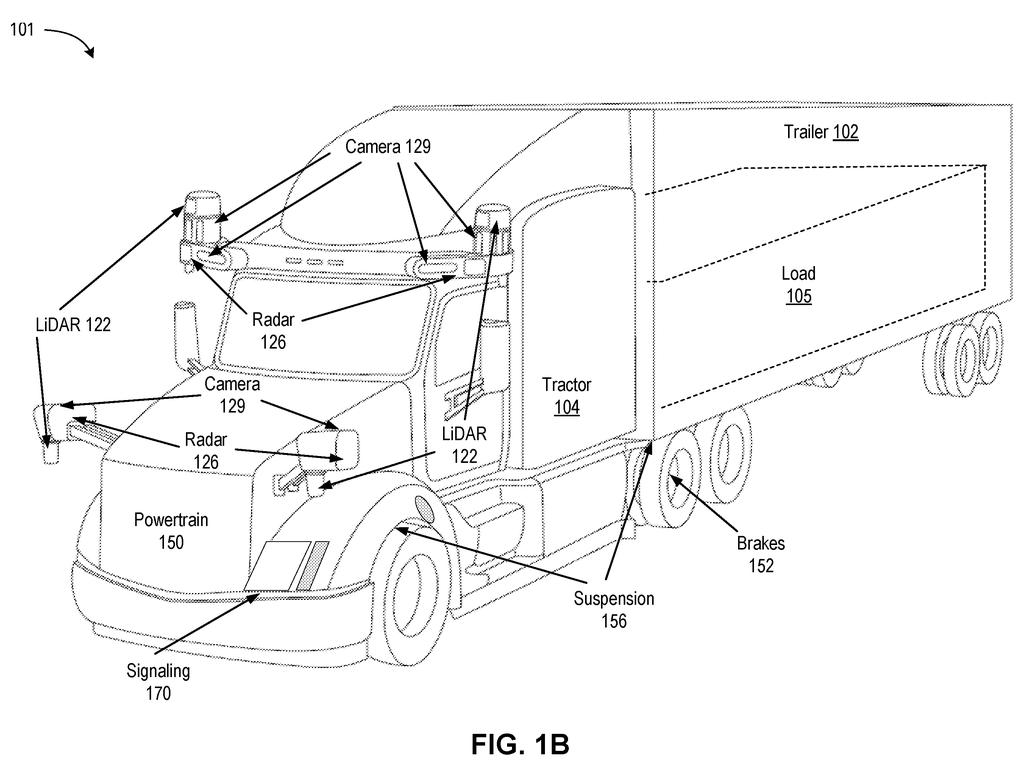
Self-driving trucks handle highways far better than crowded city streets, and Waymo's new patent builds a whole relay system around that. Trailers get dropped at hubs, and robots hook them up to the next truck.
What Waymo's truck relay hubs actually do
Today, a truck hauling a load from a warehouse to a customer has to handle every mile, including the crowded city streets at each end. The patent points out that city driving is where self-driving trucks struggle: it needs detailed maps, adds insurance costs and throws up odd situations that call for human experience.
So this filing splits the trip into legs. A trailer rolls to a hub near a highway, gets unhooked, and is hooked to a self-driving truck that handles the highway stretch to a second hub. Another vehicle can finish the last stretch.
The hub also takes over chores that people do by hand today. Robots hook up trailers and refuel trucks, scales check the weight, and scanners confirm that the right trailer is paired with the right truck.
delivering, using a first autonomous vehicle (AV) operating in an AV driving mode, the trailer load from a starting location to a first hub; responsive to delivering the trailer load to the first hub, detaching the trailer load from the first AV; causing a second AV operating in the AV driving mode to move to the trailer load; attaching the trailer load to the second AV; …
Translation: One robot truck brings the trailer to a hub, drops it off, and a second robot truck hooks up to it.
How robots hitch, fuel and check a trailer
The claims cover a relay for freight. A first self-driving truck (an AV, short for autonomous vehicle) hauls a trailer to a hub and detaches from it. A second self-driving truck then moves to that trailer, attaches, and drives it to a second hub.
Another claim covers the robots at the hub: a hitching robot that unhooks the trailer from one truck and hooks it to another, and a lifting robot that slides under the front of the trailer and holds its weight during the swap.
The filing also describes optional checks a truck can pass through before it leaves:
- Weighing each wheel to work out how the load is spread inside the trailer
- Scanning the trailer's interior with X-ray, infrared or ultrasound to compare its contents with the manifest (the paperwork listing what should be inside)
- Running acceleration-and-braking tests on the tractor and trailer brakes
- Scanning a digital ID, like a barcode, to confirm the truck and trailer belong together
- Using a refueling robot that reads the truck's ID to pick the right nozzle
One more detail: when a truck parks and shuts down its computer, it first takes photos of its surroundings. On restart it takes new photos and compares them. If nothing shifted, it finishes starting up and picks up where it left off, which catches a truck that was moved while it slept.
… determining, based on a comparison of the one or more first images to the one or more second images, that the AV has not moved between the first time and the second time and completing the starting-up of the data processing system of the AV.
Translation: The truck checks its cameras during a reboot to make sure it did not roll away while the computer was off.
Why highway-only driving could cut costs
For you, the effect shows up far from any hub: in how goods travel across the country. The filing's stated aim is cheaper, safer trucking. Driverless trucks would stick to highway driving, which the filing says needs less mapping than city driving, and the system would cut out the human errors and delays in preparing trucks and trailers.
The checks matter just as much. A mismatched trailer, a lopsided load or weak brakes on a highway are problems you would care about as a fellow driver. Putting those checks into a repeatable routine run by machines is how the filing says it would speed up handling and make vehicle preparation consistent. It remains a patent application, so none of this is a product.
This is the 23rd Google patent we've tracked in our Robotics coverage since May, adding to filings like one turning text into robot code and one on self-planned calibration paths.
You will probably never set foot in one of these hubs, yet you could feel what happens inside them. A trailer with the wrong load, cargo piled too far toward the back, or worn brakes are problems you would notice only on the road next to a rig, or as a late delivery.
That is why the plain-sounding checks earn their place here. A scale, a barcode match and a brake test turn a rushed human checklist into the same routine every time. The photo comparison when a parked truck wakes up is a nice small touch: it answers 'am I still where I parked?' before the truck drives off.
Day to day, you would see little change at your door. The benefit is fewer handoff mistakes and, if the economics work out, lower shipping costs, though the filing gives no figures.
Get our take in your Top Stories
Liked this breakdown? Add Patentlyze as a preferred source on Google, and our plain-English take shows up more often in your Top Stories the next time Google patent news breaks.
There are more where this came from
We read every patent application Big Tech publishes and send you the ones worth knowing. Plain English, free, every week.
The drawings
12 drawing sheets from US 2026/0336659 A1 · click any drawing to enlarge


Show the other 4 sheets


Want this weekly breakdown for a company we don't cover? Patentlyze Pro →
Be the first to weigh in