
Apple Files Patent for Letting Your Phone Decide What Apps' Servers Can See
Apps can ask the cellular network for details about your phone, and today the network often answers without checking what you'd want. Apple's filing puts a signed-off permission slip in your phone's hands.
What Apple's phone-consent token actually does
A delivery app wants to know something about your phone from the cellular network. Maybe it's your location, maybe your connection status. The network can often hand it over without asking you, because the network decides what the app gets to see.
Apple's patent application flips that. Your phone and the app swap a small digital permission slip, called a token. Your phone fills in what the app may see, who may see it, and when the permission runs out. It then sends the slip to the carrier's network.
When the app's server later asks the network for your information, the network checks the slip first. If you didn't approve something, the app doesn't get it. The filing also says you could cancel the permission at any time.
… updating the AF token with information about consenting exposure of UE-related information to the AF …
Translation: Your phone updates its security pass to specify exactly what data third-party servers are allowed to see.
How the consent token travels through the network
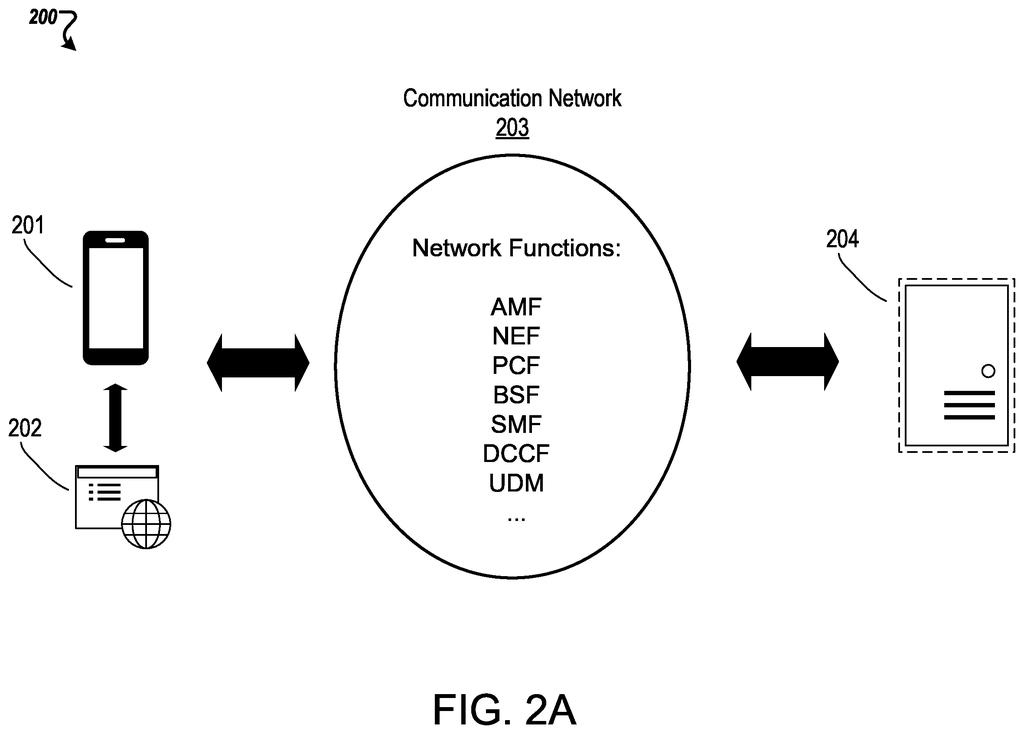
The claims cover a phone that works with an application client (the app software on your device) that talks to an application function (the matching software running on a company's server). The phone gets an AF token, a small data object that identifies the server and records what you agreed to share. It updates the token with your consent details, then hands it to the carrier's network.
The filing describes two ways to get the token. The server can create it and pass it to the app, or the phone can generate it from a message the app sends. That message lists which phone information is involved, authorizes sharing it, and says how long the permission lasts.
The patent describes several routes for sending the token into the carrier's core network (the 5G equipment that manages subscribers and data):
- Through subscription data sent to the unified data management system, the network's subscriber database.
- Through session settings sent to the session management function.
- Through a data collection coordinator over the normal data connection.
- Through a control message to the policy control function.
One independent claim covers the network side. When the server asks for a phone identifier, the subscriber database creates an ID that is unique to that phone and that server. That ID unlocks only the information you approved. The description also mentions an edge computing version, where the server sits close to the phone.
accessing an application client (AC), wherein the AC communicates with an application function (AF) on a network entity …
Translation: The app running on your mobile device talks to a remote server on the network.
Why this matters for your phone's privacy settings
The practical result is more say over what an app's server can learn about your phone from the carrier network. The description says today's approach, where the network translates an address into a temporary ID, doesn't take the phone's wishes into account. Per-server permissions with expiry times and revocation would change that, and the filing says it improves security and privacy.
You probably wouldn't see any of this directly. It lives in the plumbing between phones and 5G carriers, so it would only matter if standards bodies and carriers adopted something like it. The examiner's first review rejected the claims as filed, which is routine at this stage and usually followed by amendments.
Apple's 18th filing we've tracked since July in our on-device AI privacy push work follows ideas like flagging sensitive video calls and hiding identity in shared documents.
If this works as described, you'd benefit without ever opening a settings screen. An app's server asks the network about your phone, and the network checks your permission slip before answering. You'd notice it mostly by what doesn't happen: details you never approved don't reach a company's servers.
The weak spot is that you can't use any of it on your own. Carriers and app makers would all have to build support, and the filing describes a plumbing change, not a screen you tap. A person using an iPhone could go years before seeing a visible control.
Still, the idea of a permission with an expiry date and an off switch is easy to like. Most privacy prompts today are one-time, all-or-nothing questions. A slip that says who, what and until when is a more honest way to ask.
Get our take in your Top Stories
Liked this breakdown? Add Patentlyze as a preferred source on Google, and our plain-English take shows up more often in your Top Stories the next time Apple patent news breaks.
There are more where this came from
We read every patent application Big Tech publishes and send you the ones worth knowing. Plain English, free, every week.
The drawings
12 drawing sheets from US 2026/0353069 A1 · click any drawing to enlarge


Show the other 4 sheets


Want this weekly breakdown for a company we don't cover? Patentlyze Pro →
Be the first to weigh in