
Samsung Files Patent for Sending AI Training Jobs to a Second 5G Tower
Your phone's 5G tower can pass AI training work to a second tower, and this Samsung patent application also labels that data so it doesn't compete with your calls.
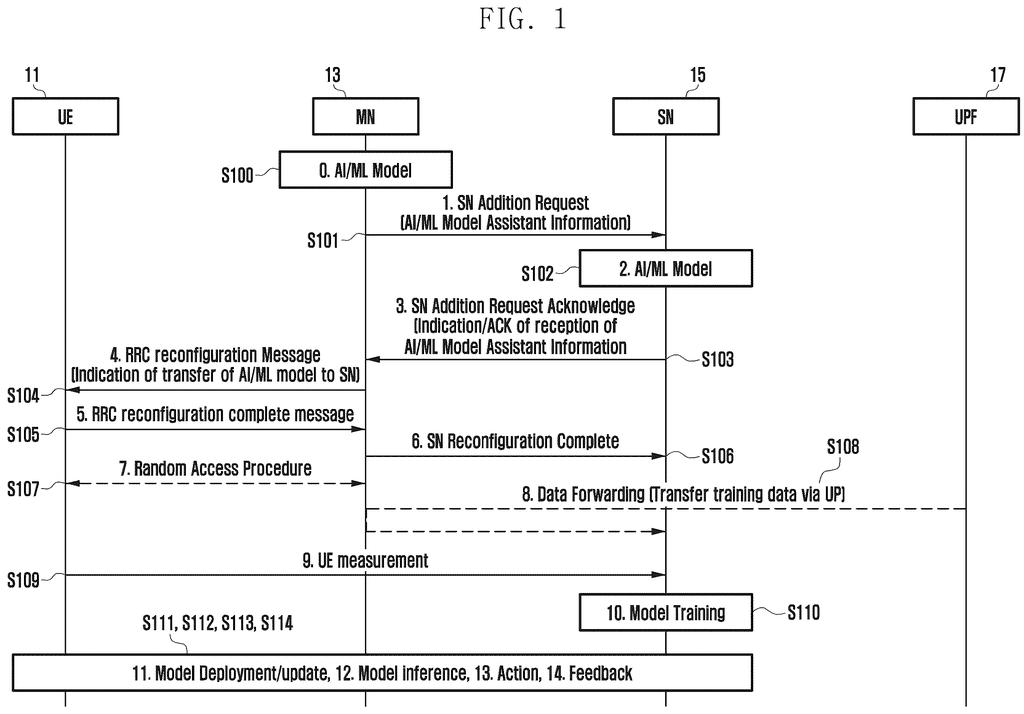
What Samsung's AI-training handoff actually does
A 5G tower is busy carrying your video call, while a big batch of AI training data needs to cross the same airwaves. To the network, both look like ordinary traffic, even though only one of them is urgent.
Samsung's patent application describes a way to sort the two apart. The first tower, the one your phone is already talking to, tells a second tower about the AI model and sends it the training data. It then tells your phone to open a second connection to that second tower. The second tower does the training and produces an updated model.
The filing also suggests the training data could get lower priority and lighter handling than your calls and browsing, since it is not urgent.
… transmit, to the UE, a first message to trigger the UE to establish a second connection with the second entity, wherein the first message indicates that the second entity has obtained at least one of the AI/ML model or the data relating to the AI/ML model …
Translation: The first tower tells your device to connect to a second tower that is now ready to handle your artificial intelligence tasks.
How the first tower passes the job to a second
The claims cover two roles. A first entity (in the filing, typically a base station acting as the main tower for your phone, called the master node) and a second entity (another base station, the secondary node). While your phone is connected to the first, the first sends the second information about an AI model (a trained program), such as an ID, the model itself, or details on how it should be trained.
Next, the first entity sends your phone a message (an RRC reconfiguration message, the standard way a network changes how a phone connects) saying the second entity now has the model or data. That triggers the phone to open a second connection with the second entity. The first entity then forwards the training data, and the second entity trains the model and produces an updated one.
The claims also cover spotting the training data in the first place. Data arriving from the core network's traffic gateway (the user plane function) can be identified by a label, a quality-of-service tag (the 5QI, a code that tells the network how urgent a flow is), an ID, its size, or its format. It is then sent differently from everything else.
The description proposes two new 5QI classes: one for real-time training (guaranteed bit rate) and one for offline training.
… transmit information relating to an artificial intelligence/machine learning (AI/ML) model to a second entity in the communications network, wherein the information is usable for obtaining the AI/ML model and/or data relating to the AI/ML model …
Translation: The main network node shares the necessary machine learning details with the secondary tower before sending any actual workload.
Why AI training traffic needs its own lane
If your carrier ever trains AI models over its own network, you would want that work to stay out of your way. According to the filing, a 5G network tends to treat training data like ordinary user data, giving it the same power and computing share. This patent application describes labeling it, giving it its own lane, and moving the job to a second tower, so your streaming and calls are not competing with a pile of non-urgent data.
It also looks like groundwork for a networking standard. The description leans on industry standards documents for 5G, and the changes it proposes (new traffic classes, new messages between towers) would need carriers and equipment makers to agree on them. Whether anything ships depends on that process, so you would not see this on your phone directly.
Samsung's 94th filing we've tracked since May in our 5G and network push watchlist follows signal-blocking gate fixes and AI signal prediction with another look at keeping connections stable.
For you, the best version of this patent is one you never notice. Nobody opens an app to see where AI training data traveled. What you would notice is the failure it prevents: a video call that could stutter because a big pile of non-urgent data took the same airwaves.
The filing is written in the dense language of cellular standards, and much of it describes message names and labels that only network engineers will ever see. That makes it a routine piece of plumbing, though a sensible one. If carriers do start moving AI training across their networks, giving that traffic its own label and a lower priority is a fair way to protect everyone else's connection.
The filing gives no numbers for how much it would help, so the benefit stays a promise on paper.
Get our take in your Top Stories
Liked this breakdown? Add Patentlyze as a preferred source on Google, and our plain-English take shows up more often in your Top Stories the next time Samsung patent news breaks.
There are more where this came from
We read every patent application Big Tech publishes and send you the ones worth knowing. Plain English, free, every week.
The drawings
6 drawing sheets from US 2026/0352560 A1 · click any drawing to enlarge


Want this weekly breakdown for a company we don't cover? Patentlyze Pro →
Be the first to weigh in