
Samsung Files Patent for Cell Networks That Know Your Location in 3D
Your carrier usually knows which coverage zone your phone is in, but Samsung's patent application slices that zone into 3D blocks and keeps your exact block secret on the way in.
What Samsung's cube-level phone tracking does
Ever notice that your carrier knows roughly which neighborhood you're in, but has no idea whether you're on the ground floor or the twentieth? Today's mobile networks track phones by coverage zones called cells, and a single cell can span a big chunk of a city.
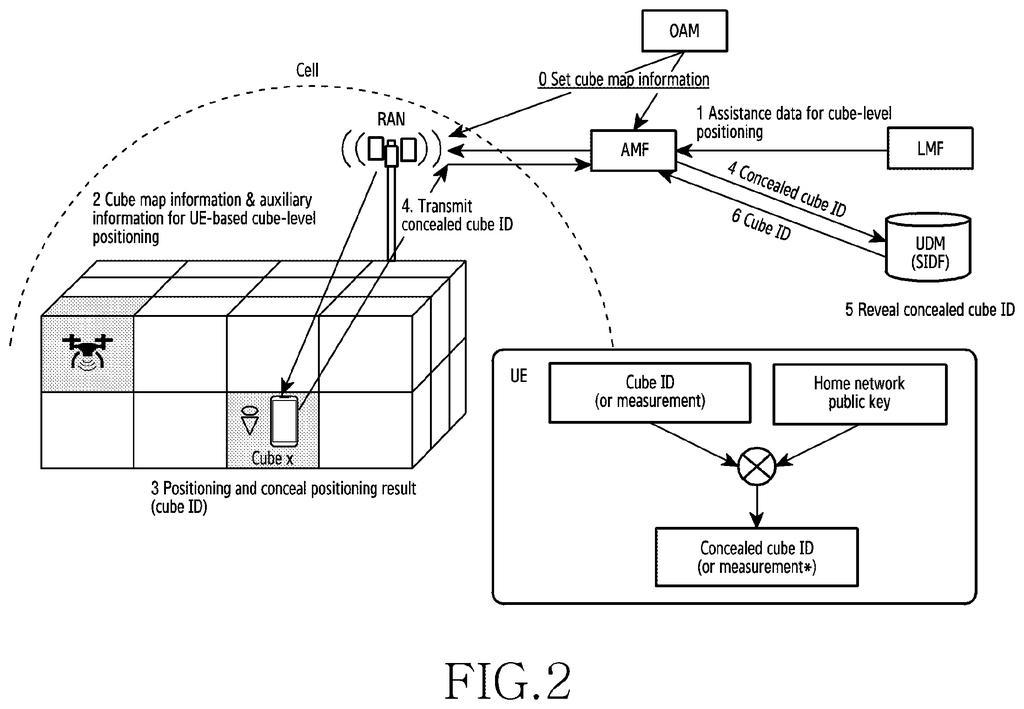
Samsung's patent application carves those zones into a grid of small 3D blocks it calls cubes. Your phone works out which cube it's in using GPS, sensors, and signals from the network. Then it scrambles that answer before sending it, because your exact whereabouts are private and the first message a phone sends isn't fully protected yet.
Only your carrier's own systems can unscramble it, and only if your plan allows the feature. After that, the network can apply rules to that cube, such as limiting where you can connect or how fast your data can go.
receive configuration information configuring at least one cube associated with a three-dimensional space within a cell; receive, from a location management function (LMF) node, auxiliary information for location measurement; transmit, to a terminal, the auxiliary information for location measurement; …
Translation: The network sets up imaginary spatial blocks and shares tracking data with your device.
How the phone scrambles its cube location
The patent covers how a carrier's core network, specifically a unit called the AMF (access and mobility management function, which keeps track of each phone's connection), handles a new location unit called a cube. A cube is a small 3D block inside a cell, described by coordinates that include altitude.
In the main claim, the AMF does the following:
- Receives the cube setup, meaning the map of blocks within a cell.
- Gets helper data from the LMF (location management function, the part that handles positioning) and passes it to the phone.
- Receives a concealed (scrambled) location answer back from the phone.
- Works out the phone's cube ID, checks whether a cube-based policy may be applied, and sends that policy to the phone.
The filing describes several routes. In one, the phone picks its own cube and scrambles the ID with the carrier's home network public key (a lock that only the carrier holds the key to), and the carrier's subscriber database (called UDM) unlocks it. In another, the phone sends the ID after a security handshake finishes, inside a protected message. In a third, the phone sends raw measurements and the LMF works out the cube.
Afterward, the phone watches for the moment it leaves its cube and re-registers when it enters a new one.
… identify an identifier (ID) of a cube associated with the terminal on the basis of the concealed information associated with the location measurement of the terminal; determine whether it is allowed to apply a mobility management policy based on the identifier of the cube to the terminal; …
Translation: The system figures out which spatial block you occupy to decide how to handle your network connection.
Why block-level tracking changes network rules
For you, nothing would change on the screen. The effect shows up in how the network treats your phone depending on where in a cell you are. The filing lists examples: allowed and blocked cube lists, a preferred type of radio connection for a given block, and a maximum data speed per block. That would let a carrier treat a small zone inside a cell differently from the area around it, though the filing doesn't spell out specific cases.
The privacy piece matters just as much. The first message a phone sends isn't fully protected, so the filing scrambles the location before it goes out. As networks gain more precise positioning, how that data is guarded becomes a bigger question for every phone owner.
Samsung's 88th filing we've tracked since May adds to work including one on satellite handoffs and one using radio waves for location, all within their 5G and network push.
Finer location is a trade: the network gets more control, and in return it learns far more about you. A cell covers a wide area, so knowing you're in one reveals little. A cube pins you to a small block of space, and the patent's own text calls that level of detail personal information.
The scrambling step is the fix, and it holds up for that first message. Your carrier's home systems can still unlock the answer, so the privacy gain is protection from eavesdroppers along the way, while the carrier itself ends up knowing more than it does today.
The other bill comes due in upkeep. Your phone has to keep checking its position and re-register each time it crosses into a new block, which means more work for both phone and network. Whether that pays off depends on rules carriers actually want to apply block by block, and the filing offers few concrete examples beyond access lists and speed limits.
Get our take in your Top Stories
Liked this breakdown? Add Patentlyze as a preferred source on Google, and our plain-English take shows up more often in your Top Stories the next time Samsung patent news breaks.
There are more where this came from
We read every patent application Big Tech publishes and send you the ones worth knowing. Plain English, free, every week.
The drawings
9 drawing sheets from US 2026/0323568 A1 · click any drawing to enlarge


Show the other 1 sheets

Want this weekly breakdown for a company we don't cover? Patentlyze Pro →
Be the first to weigh in