
Microsoft Files Patent for AI That Points Technicians to Seizure Spikes in Brain Scans
Reviewing a single brain scan session for epilepsy can take a technician about 10 hours. Microsoft's filing describes an AI that puts the clips most likely to show seizure activity in front of them first.
What Microsoft's brain-scan ranking tool does
Every time an epilepsy patient finishes a brain monitoring session, someone has to sit down and scroll through hours of wavy lines, hunting for the few seconds that matter. The filing says that can take about 10 hours per session, and surgery plans can wait on it.
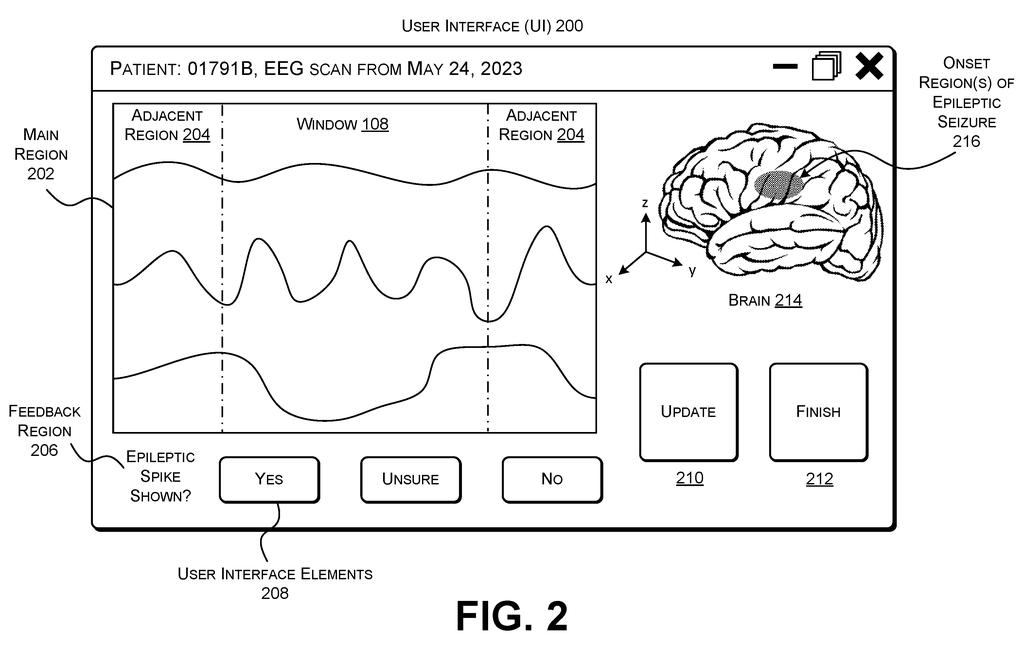
Microsoft's patent application changes the order of work. Instead of reading the recording start to finish, a technician is shown the short clips an AI thinks are most likely to contain a seizure spike. They click yes, no or unsure, and the AI learns from each answer and reshuffles the rest of the pile.
The filing says a technician might find what they need after looking at only a small slice of the data, in some cases in five or ten minutes instead of hours.
… identifying, by a machine learning model and based on the one or more features, a first window from the plurality of windows that is most likely to show an epileptiform discharge.
Translation: An AI uses extracted data features to find the specific moment in the scan most likely to show a seizure spike.
How the AI re-ranks clips after each answer
The system takes a recording of brain activity (from EEG, MEG, fMRI or electrodes placed inside the skull) and chops it into short windows, anywhere from 1 to 30 seconds each. A recording can hold as many as 1,200 data points per second, so a single session can become thousands of windows.
Each window is boiled down to a set of numbers called features, such as average power in different brainwave bands, the mean, or how spread out the signal is. One option builds a graph of how the signals from different sensors relate to each other. A machine learning model, trained earlier on labeled examples, then ranks every window by how likely it is to hold an epileptiform discharge (the sharp, spiky signature of seizure activity).
The top window goes on screen with buttons for yes, no or unsure. That answer feeds an online learning step (the model updates on the fly instead of being retrained from scratch), the remaining windows are re-ranked, and the next one appears. Reviewed windows are not shown again. This matters because blinking or head movement can also make spikes that fool the model at first.
The filing also describes starting from a model built on a patient's earlier sessions, updating after batches of 3 to 10 windows, and a 3D brain view that narrows down where seizures begin as more spikes are confirmed.
The ML model ranks the windows according to the likelihood each contains an epileptiform discharge. The highest-ranked window is shown to a technician trained in interpreting brain scans.
Translation: The system sorts the scan sections by risk level and presents the most suspicious one to a human expert for review.
Why this could shorten waits for epilepsy surgery
The practical payoff is time. The filing says technician review is a bottleneck that can delay epilepsy surgery, and that expensive scanners sit underused while recordings wait to be read. If a technician can confirm enough spikes after looking at 100 or 200 windows, one person could handle several sessions in a day.
A human stays in charge throughout. The AI only decides what to show first, and the technician's answers train it as they go. The filing is a continuation of an earlier application and names no product, so this describes a method, not something you can buy or a hospital tool you will see soon.
Microsoft's 594th filing in our Microsoft coverage since May adds to a pattern that includes locked AI model storage in chips and ID badges for AI agents.
If you or someone you love has epilepsy, the number that matters here is waiting time. The filing blames hours of manual review for slowing surgery decisions, and this design goes straight at that delay.
The doctor stays in charge. The AI only chooses what to show first, and a person checks every clip it surfaces, which keeps a wrong guess from turning into a wrong answer. The yes, no or unsure buttons are a sensible, low-friction way to teach the system.
The 90 to 99 percent time savings come from the filing's own estimates, with no test results shown, so treat them as a goal. Even so, sorting by likelihood and learning from each answer is a simple idea that a patient could someday feel as a shorter wait.
Get our take in your Top Stories
Liked this breakdown? Add Patentlyze as a preferred source on Google, and our plain-English take shows up more often in your Top Stories the next time Microsoft patent news breaks.
There are more where this came from
We read every patent application Big Tech publishes and send you the ones worth knowing. Plain English, free, every week.
The drawings
4 drawing sheets from US 2026/0351418 A1 · click any drawing to enlarge


Want this weekly breakdown for a company we don't cover? Patentlyze Pro →
Be the first to weigh in