
Apple Files Patent for Tagging the Flaws in 360 Video So Added Objects Blend In
Every 360-degree camera leaves flaws in its footage, like glare, lens warping and the seams where pictures meet. Apple's patent application describes finding those flaws and writing them down, so fake objects added later can carry the same ones.
What Apple's 360-video flaw tracking does
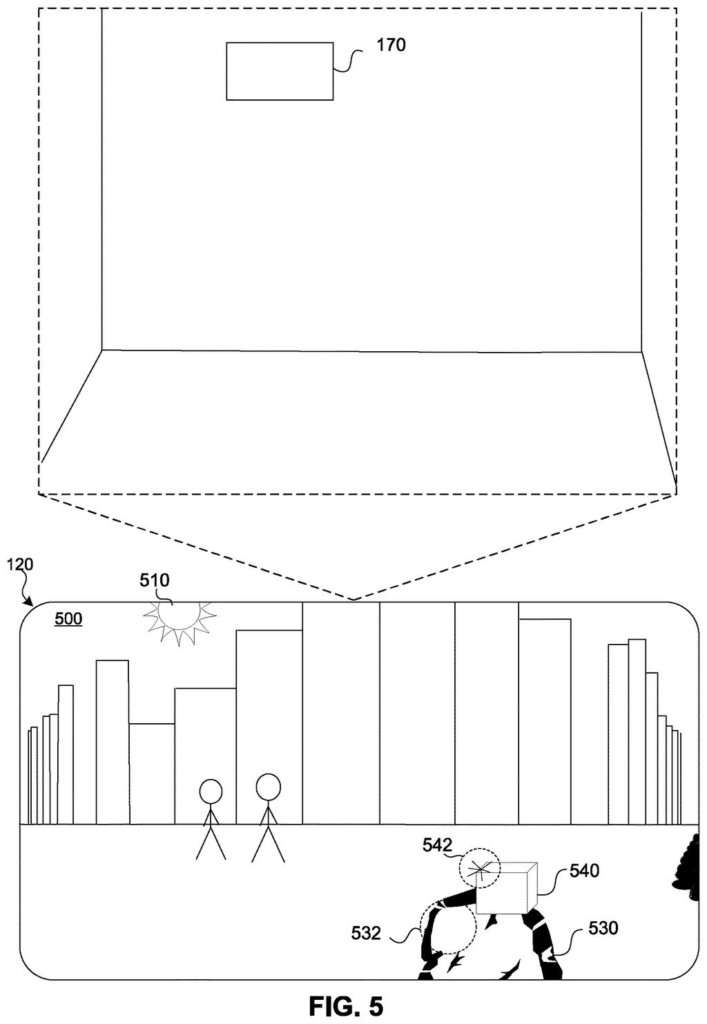
Imagine you're wearing a headset, watching a 360-degree video of a city park. The sun glints off a rock, and a studio has dropped a virtual object right next to it. If that object has no glare at all, your brain notices that it doesn't belong.
Cameras that shoot 360 video use several lenses pointed in different directions, and the pictures from each get stitched together. That process leaves fingerprints: glare, lens distortion, and visible seams where two pictures meet. Apple's patent describes having the device spot those flaws and keep a record of them right next to the video.
With that record in hand, added objects can be given the same glare and flaws in the right places, so they look like they were filmed too. The claims in this version focus on the first half: finding the flaws and saving notes about where they are and how bad they are.
… determining an attribute of the spherical image content corresponding to the multi-camera configuration or the combination process, the attribute comprising an imperfection within the spherical image content; and storing the spherical image content and data indicating the determined attribute.
Translation: The system finds flaws caused by stitching together multiple camera angles and saves that flaw data along with the video.
How Apple logs seams, glare and lens quirks
The patent covers footage from a camera rig with several lenses pointed in different directions. Each lens takes a picture at nearly the same moment (the filing gives "within one second" as an example), and software stitches the pictures into one spherical image or video. The content can be 180°, 360° or surround video, and it can be stereo, meaning separate left-eye and right-eye versions for a headset.
The device then looks for an attribute, which here means a flaw tied to the camera setup or the stitching. The claims name lens aberration (warping or color fringing from the glass), light refraction (the bending of light that shows up as glare) and stitching seams. It can find them in two ways:
- Checking hardware details such as a camera's position, its orientation, or its lens type (wide angle, fisheye, and so on).
- Detecting mismatches in the footage itself, such as stitching artifacts where two pictures meet.
Finally, it stores the footage along with data about each flaw: its type, where it sits in the image, how strong it is, and where the seams run. The footage can be saved as equirectangular projections (the flattened, world-map style layout of a sphere).
The description goes further than the claims. Virtual objects can be generated to mimic those flaws, such as copying a sun reflection from a rock onto a virtual object at the same angle, or matching the lens's blur and its sharpest-pixel "sweet spot" for each eye.
… generating virtual content based on the determined attribute, wherein at least a portion of the virtual content is configured to be congruent with the attribute of the spherical image content, and generating augmented spherical image content based on the spherical image content and the virtual content.
Translation: Added digital objects are adjusted to match those specific flaws so they blend in naturally.
Why added objects in headset video may look real
If you watch immersive video in a headset, an added object that glares or blurs differently from the real scene breaks the illusion fast. Keeping a record of the camera's flaws gives editing software what it needs to make added objects match, which could make mixed real-and-virtual video easier to believe.
The filing names head-mounted devices, though it also lists phones and tablets as possible hardware. The first people to feel the effect would be creators who add graphics to 360 footage, but viewers get the payoff: fewer objects that look stuck on. This application is a continuation of one filed in 2023, so it extends an earlier idea.
Apple's 62nd filing we've tracked in our AR glasses race watchlist since May follows earlier applications like one on cutting wireless lag and one on dot depth capture.
You would notice this fix only when it is missing. A virtual object with no glare, sitting in a video full of sunlight, looks stuck on, and the illusion collapses. If the idea works, you won't notice anything, because the added object will simply look like it belonged there.
The claims in this version cover the groundwork: spotting the flaws and saving notes about their type, location and size. The matching step shows up in the description. That is a modest first step, but the benefit lands where headset viewers feel it most, inside a video that surrounds them and gives a mismatched object nowhere to hide.
Verdict: routine engineering with a clear payoff for anyone making or watching immersive video.
Get our take in your Top Stories
Liked this breakdown? Add Patentlyze as a preferred source on Google, and our plain-English take shows up more often in your Top Stories the next time Apple patent news breaks.
There are more where this came from
We read every patent application Big Tech publishes and send you the ones worth knowing. Plain English, free, every week.
The drawings
8 drawing sheets from US 2026/0350933 A1 · click any drawing to enlarge


Want this weekly breakdown for a company we don't cover? Patentlyze Pro →
Be the first to weigh in