
Samsung Patents a TV Feature That Names the Song Playing in Your Show
Samsung's patent application describes a TV that listens to its own soundtrack, remembers the songs, and sends the list to your phone so you never have to pause the show to find a name.
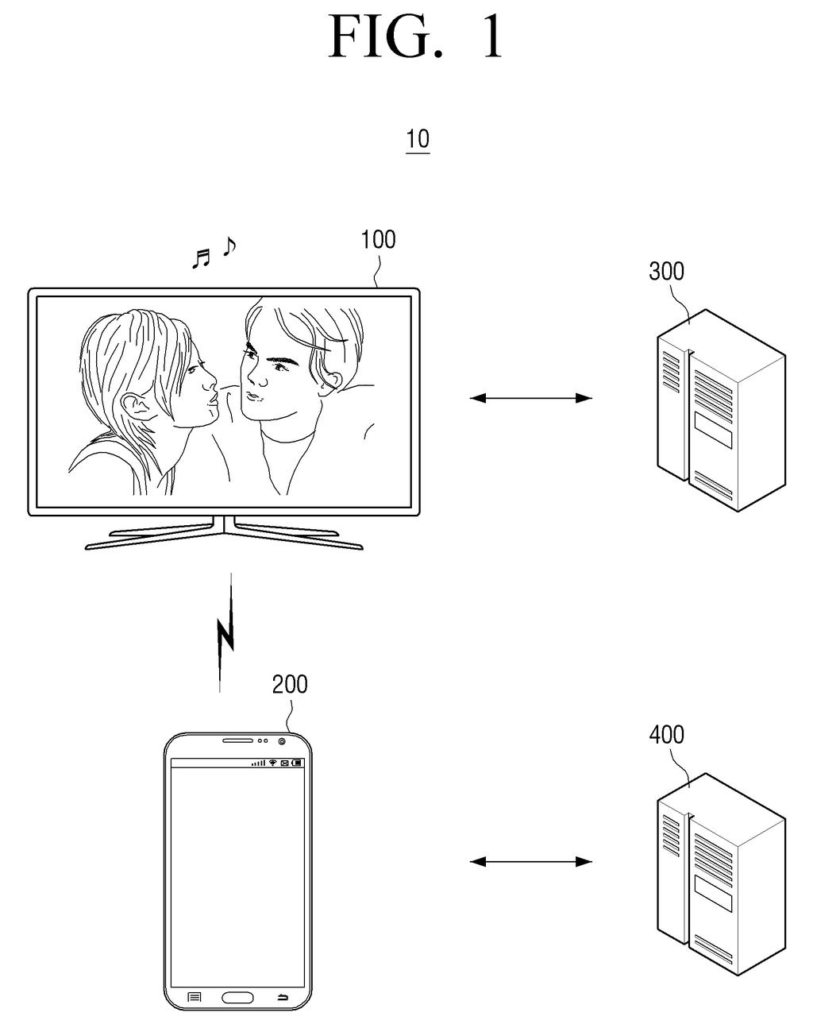
What Samsung's song-spotting TV actually does
Imagine you're halfway through a drama when a song starts that gives you chills. You don't know its name, and pausing to hunt it down would wreck the scene. So you grab your phone, wave it at the speaker, and miss the next two minutes of the plot.
Samsung's patent describes a TV that does the listening for you. You switch on a music identification mode, and the TV keeps a short digital fingerprint of each song as it plays. When you press a button, it sends those fingerprints to a music-identification service, which sends back titles, artists, and album details.
In the main example, the results go to your phone instead of your screen. The TV just flashes a short note like "check your cell phone," and your show keeps playing.
… obtain data corresponding to an audio of the content output through the audio output unit while the function corresponding to the audio recognition is being performed …
Translation: The TV records the sound of whatever show is currently playing when you hit the search button.
How the TV saves songs while you keep watching
Claim 1 describes a TV (the patent calls it a display apparatus) with a signal receiver, a screen, a speaker, a network connection, and a controller, which is the chip that runs the show. When an audio recognition function is running while a program plays, the controller grabs data about the sound coming out of the speaker. It then gets information about that audio from a server and displays it alongside the program.
The description fills in the mechanism:
- Listening mode: you switch on a music identification mode, and the TV saves an audio fingerprint (a compact digital summary of a sound, used to match it against a database) for each song that plays.
- Separating music from talk: the TV sorts the soundtrack from dialogue by checking frequency patterns in the audio, using statistical methods such as a Gaussian mixture model (a way of grouping sounds by probability).
- Asking the server: when you press a button, the TV sends the fingerprints, newest song first, to a music identification server, which returns the title, artist, genre, composer, album name, and cover art.
The main example then forwards the results to your phone, where they become a music album list you can edit and play through a streaming service, while the TV shows a brief "check your cell phone" message. The description also says the TV could do the matching itself from a stored database.
… displaying a result UI corresponding to the obtained information on the display apparatus …
Translation: It pops up a box on your screen showing the name of the song.
What this means for Samsung smart TV owners
If you have ever lost a song to a scene change, this would save you the hunt. The filing notes that soundtracks from shows and movies take a considerable share of music charts, yet finding one is a chore. Because the TV keeps the songs it already heard, you would not need to rewind and replay a scene just to catch a name.
For Samsung, the pairing of a TV and a phone is the point: the TV does the listening, and the phone becomes the place you browse and play. This application belongs to a family that traces back to a Korean filing from 2015, and the claims here are written around any audio shown on screen. Whether it ever becomes a feature is something the filing does not say.
Samsung's 1594th filing we've tracked since May continues its AI efficiency push, joining the ransomware-blocking drive patent and the computing power allocation one.
Claim 1 is short and wide. It covers a TV with an input, a screen, a speaker, and an internet connection, plus a controller that grabs data from the audio while an audio recognition function runs, then shows information from a server alongside the show.
Nothing in that claim mentions a phone, a saved list of songs, or even music. Those details show up in the description and in narrower follow-up claims, such as the one limiting the audio to background music and the one listing titles, singers, and album covers.
Read plainly, the main claim describes a TV that names whatever it hears and puts the answer on screen over your show. That is a familiar idea from phone apps, so the filing's value depends on how its wording holds up. It also continues a family of applications going back to 2015, which shows the idea has been kept alive for a long time.
Get our take in your Top Stories
Liked this breakdown? Add Patentlyze as a preferred source on Google, and our plain-English take shows up more often in your Top Stories the next time Samsung patent news breaks.
There are more where this came from
We read every patent application Big Tech publishes and send you the ones worth knowing. Plain English, free, every week.
The drawings
7 drawing sheets from US 2026/0350090 A1 · click any drawing to enlarge


Want this weekly breakdown for a company we don't cover? Patentlyze Pro →
Be the first to weigh in