
Apple Patents a Stylus That Watches Your Grip for Signs of Health Changes
A stylus you use for notes or sketches could also keep a running record of how firmly you grip it and how much your hand shakes, then flag changes over time.
What Apple's wellness-tracking stylus actually does
Health checks for things like hand strength or a tremor usually happen rarely, often in a clinic, and you know you're being tested. That makes slow changes easy to miss, and knowing you're watched can change how you behave. Apple's patent application describes a way to watch for those changes using something you may hold for long stretches anyway: a stylus.
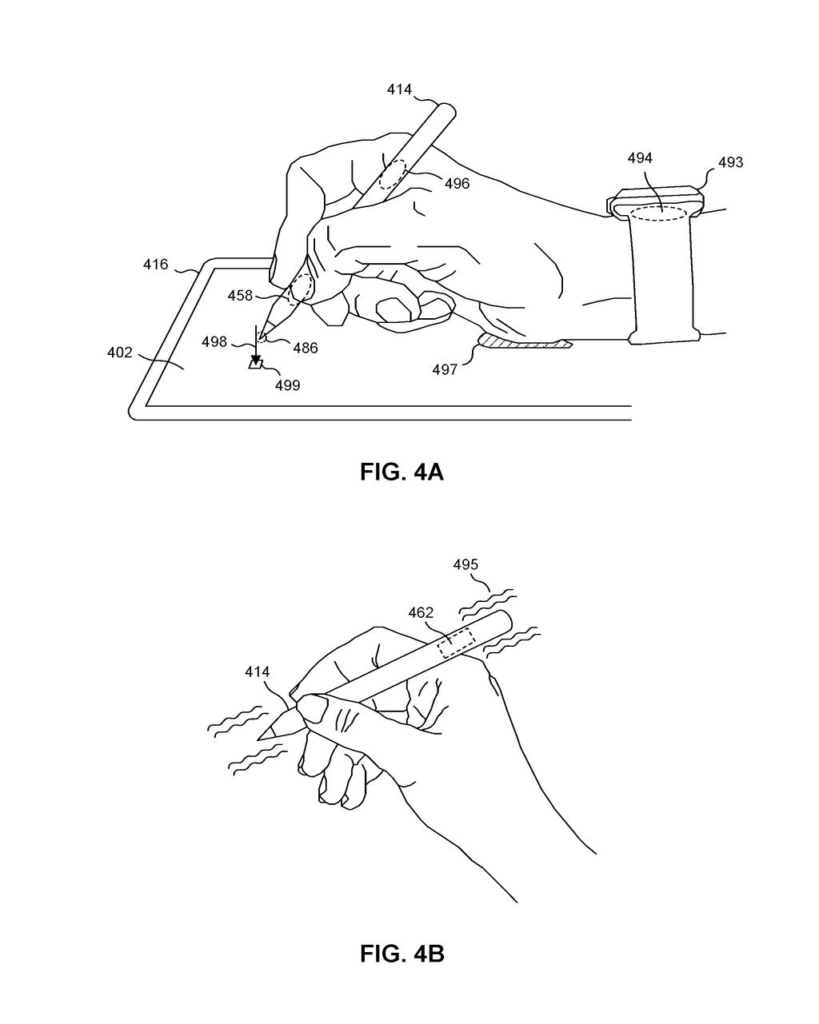
Sensors in the stylus's sides, tip and motion chip measure how hard you squeeze, how you tilt it, how hard you press, how much it shakes, and even your hand's temperature. A tablet or watch can add extras like palm pressure and heart rate. The system builds a baseline of your normal, then compares your recent writing against it.
If something drifts far enough, you get an alert. The filing says the message reports what changed, not a diagnosis. It can also bring good news, such as a child's handwriting improving.
… comparing the first current data to the first profile data, and detecting a first change between the first current data and the first profile data from the comparison that exceeds a first predetermined threshold; and generating a first wellness insight based on the first change.
Translation: The system looks for significant differences between your current habits and your established baseline.
How the stylus learns your normal grip and tremor
The filing covers a system that collects readings from an input device, usually a stylus, and compares recent readings against a long-term history. The stylus carries an inertial measurement unit (a motion chip that senses tilt, speed and shaking) plus force, touch and temperature sensors on its sides and tip. A tablet's touchscreen or a watch can add palm pressure and heart rate.
The core steps are:
- Capture data over a recent "current" period and an earlier, separate "historical" period.
- Build and update a user profile (a baseline of your normal) from the historical data.
- Compare current data to the profile and look for a change past a preset threshold.
- Generate a wellness insight from that change.
Capture can happen automatically during everyday writing, or after a prompt asks you to trace a line or circle, or hold the stylus in the air so the motion chip can score steadiness. The description gives example triggers: grip pressure under 80 gram-force (a unit of pressing force) or a 10 to 30 percent drop, a tilt angle above 60 degrees, a stability score under 70 out of 100, or a heart rate above 120 beats per minute. Profiles can also track writing speed, strokes per minute and how often you autocorrect.
You can reset your baseline after an illness or injury. The filing says an insight reports what changed, when and by how much, and is not a diagnosis.
… stylus grip pressure, tilt and touch location, stylus tip pressure, stylus motion, and user temperature. In some instances, these measurements can be obtained through everyday use of the stylus, while in other instances, the user can be prompted to perform certain tasks …
Translation: The pen tracks your physical handling and body temperature during normal writing or special drawing tests.
What Apple's idea means for stylus and tablet owners
If this ever shipped, the practical change is that a stylus you already use for notes or sketches could double as a health check, with no extra gadget and no appointment. The data would be gathered during normal writing, which the filing argues avoids people changing their behavior because they know they are being tested. You could see a message on your tablet or watch saying what shifted and when.
The filing also treats other accessories as possible sensors, listing earbuds, rings, smart glasses and computer mice. It says people could switch off the sensors or restrict access to the collected data, which matters for something this personal. Whether any of this becomes a product is open, since this is a patent application.
Apple's 14th filing we've tracked in our Apple health sensor patents since May adds to a picture that already includes sleep-detecting earbuds and a cycle-predicting watch.
Slow changes in hand strength and steadiness are a real problem, because nobody books a checkup for something they haven't noticed. Yearly doctor visits and one-off tests miss a drift that builds over months, and the filing says so itself. Comparing you against your own history is a sensible answer to that.
The approach fits the size of the problem when the goal is simply spotting that something moved. A stylus held for long stretches produces far more readings than a clinic visit ever could. The filing is also upfront that an insight reports a change and does not name a cause, and a shaky hand can come from stress as easily as from illness.
So the value depends on how well the alerts avoid false alarms, and the filing offers its thresholds only as examples. Coverage would also be uneven, since plenty of people rarely pick up a stylus. As a way to catch gradual change, the idea is well aimed.
Get our take in your Top Stories
Liked this breakdown? Add Patentlyze as a preferred source on Google, and our plain-English take shows up more often in your Top Stories the next time Apple patent news breaks.
There are more where this came from
We read every patent application Big Tech publishes and send you the ones worth knowing. Plain English, free, every week.
The drawings
7 drawing sheets from US 2026/0349539 A1 · click any drawing to enlarge


Want this weekly breakdown for a company we don't cover? Patentlyze Pro →
Be the first to weigh in