
Apple Patents Air Gestures That Control Siri With a Wave of Your Hand
Apple has filed a patent for a system that lets you control a voice assistant by waving your hand in the air, but with a catch: the gesture only counts if it happens at exactly the right moment and lasts long enough.
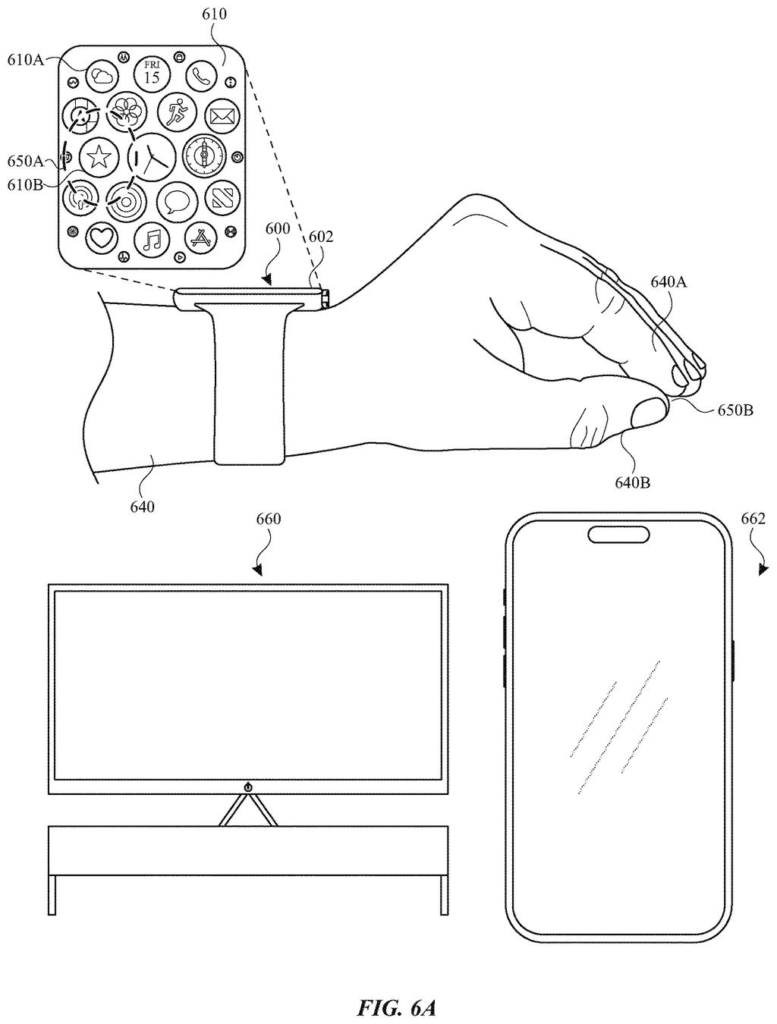
What Apple's timed air-gesture system actually does
You're listening to Siri read out directions while you're cooking, and you want to pause it without touching anything. Apple's new patent describes a system that could let you do exactly that with a wave of your hand.
The system uses a body sensor (built into a device like AirPods or Apple Watch) to detect what the patent calls an "air gesture," a hand or finger movement made without touching any screen. But it doesn't just act on every wave. Two conditions have to be true at once: the gesture has to happen while the voice assistant is already speaking, and it has to be held for a minimum amount of time. If either condition isn't met, the system ignores it.
That two-check approach is the practical point here. Without it, accidental movements near your ear or wrist could constantly interrupt Siri. The timing gate is there to separate intentional commands from random motion.
… detecting, via the physiological sensor, a respective air gesture; and in response to detecting the respective air gesture: in accordance with a determination that a set of one or more conditions is met …
Translation: The system checks if specific rules are met after spotting a hand movement in the air.
How the physiological sensor checks gesture timing
The patent describes a computer system that connects to one or more input devices equipped with a physiological sensor (a sensor that detects body movement or biological signals, such as the accelerometers or electrical sensors found in AirPods and Apple Watch).
Here is the sequence the system follows:
- The user triggers the voice assistant with a voice input or another interaction.
- The system starts outputting voice assistant data, meaning Siri begins speaking a response.
- While that audio is playing, the physiological sensor watches for an air gesture.
- The system then checks two conditions before acting: first, that the gesture occurred during active voice assistant output; second, that the gesture was held for at least a threshold duration of time.
Only when both conditions are satisfied does the system execute the operation tied to that gesture, such as pausing, skipping, or dismissing the response. If either condition fails, the system skips the action entirely.
The threshold duration requirement is the engineering detail that does the heaviest lifting. Requiring a gesture to be sustained for a minimum period filters out head movements, accidental arm swings, or any incidental motion that might otherwise look like a command to a sensor.
What this means for hands-free Siri control
For people who use voice assistants while their hands are occupied (driving, cooking, exercising), interrupting Siri currently means reaching for a device. A reliable air-gesture layer would remove that friction entirely, which is a meaningful quality-of-life change for everyday tasks.
The two-condition gate in claim 1 is also what makes this practically useful rather than just theoretically interesting. Any wearable sensor picks up constant motion throughout the day. Without a timing and context check tied to active voice assistant output, a gesture-control system would be too noisy to trust. Whether Apple ships this in AirPods, Apple Watch, or something else entirely, the underlying idea is about making voice assistants feel more like a two-way conversation you can steer without touching anything.
Apple's 28th filing we've tracked since May in our eye and hand control watchlist builds on earlier applications like grouping AR objects by gesture and gaze-based selection with confirmation.
Claim 1 locks onto one specific situation: a voice assistant is actively talking out loud, you hold a hand gesture in the air long enough to cross a timing threshold, and the device responds. All three conditions must be true at once, which makes the claim narrow by design.
The hold-time rule is the engineering heart of the claim. A gesture only counts if it lasts beyond a set duration, filtering out accidental waves that would otherwise trigger false responses.
Because the claim is tied specifically to the moment a voice assistant is speaking, it would leave gesture controls for music apps, maps, or general navigation completely untouched. What it would actually block is that one precise handoff: silencing or interrupting a speaking assistant by holding a deliberate gesture, with timing built in to prevent mistakes.
There are more where this came from
We read every patent application Big Tech publishes and send you the ones worth knowing. Plain English, free, every week.
The drawings
37 drawing sheets from US 2026/0277335 A1 · click any drawing to enlarge


Want this weekly breakdown for a company we don't cover? Patentlyze Pro →