
Google Patents Camera Autofocus That Stops Jumping Between Similar Subjects
Anyone who has watched a phone camera pulse in and out of focus between two similar things knows how annoying it is. Google's filing tries to make the camera pick a target and stay on it until something clearly better shows up.
What Google's focus-holding camera patent does
You're filming a friend's birthday party and your phone can't make up its mind. The focus slides from the cake to the person blowing out the candles, then back to the cake, and your video pulses in and out of sharpness.
Google's patent application describes a way to calm that down. The camera first works out which parts of the picture are most likely to catch your eye, then picks the best spot and a runner-up. It keeps focusing on its current choice until a new spot is clearly more interesting, not just slightly.
It also checks that a candidate holds up across several frames before committing, so a shiny object in the background doesn't yank the focus away. If the thing you were focused on leaves the frame, the backup spot is already lined up, so the switch is quick.
… determining a filtered ROI for the image frame, wherein the filtered ROI updates from a previous filtered ROI to the primary ROI based on a saliency difference between the previous filtered ROI and the primary ROI exceeding a first threshold …
Translation: The camera ignores minor distractions until a new subject is clearly more important than the current one.
How Google picks a focus target and sticks to it
The system starts with a saliency heatmap: a grayscale map, made by a pre-trained machine learning model, that scores every pixel for how likely it is to catch a viewer's eye.
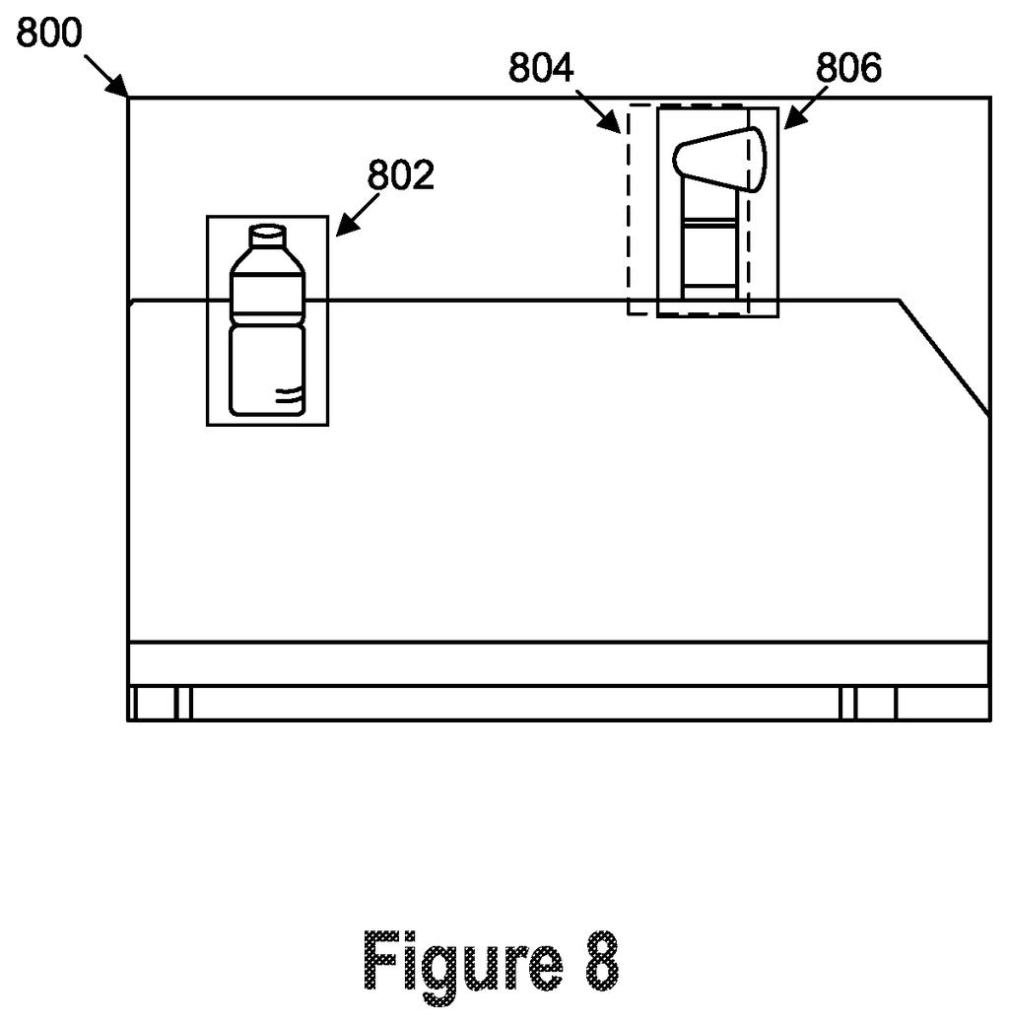
It then slides boxes of different sizes and shapes (anchor boxes) across the map and averages the scores inside each. The best box becomes the primary region of interest. The runner-up must sit outside a 'banned zone' around the primary, so the two are truly different spots.
A filtered region carries over from the previous frame and only switches to the new primary when its score beats the old one by more than a threshold. An overlap check can also hold it in place, since jumping between boxes that mostly overlap would change little.
A finite state machine (a simple set of labeled stages) adds a final check. Each region is in one of four states:
- Committed: usable.
- Pending: waiting for a stability check.
- Probation: usable, but watched for failure.
- Standby: not usable.
Focus is then applied by moving the lens, or by blurring everything outside the region.
… determining a saliency heatmap representing saliency of pixels in the image frame …
Translation: The software creates a map to figure out which parts of the picture matter the most.
What this means for your phone's camera shots
Bad focus is the first thing you notice when it goes wrong. A camera that hops between two subjects makes video look unsteady and can ruin a quick photo. The filing also notes that out-of-focus frames make it harder for other software to recognize what is in a picture, such as when photos are made searchable.
The approach targets the in-between moments: two similar subjects, a subject that walks out of frame, or a shiny object in the background that fools the model. For you, a working version would mean fewer shots where the focus lands on the wrong thing. For Google, it is a software-side improvement to the camera experience on phones, tablets and the other cameras the filing lists.
Google's 1009th filing in our Google coverage since May adds to a run of image-reading ideas, including captioning one photo region and reading a full scene, all of which we've tracked.
Of all the ideas a camera patent can have, this one sits close to a shippable feature. It needs no new lens, sensor or chip. The filing runs on a phone's ordinary camera, processor and a trained model, and it even mentions shrinking the model to save time and battery.
The shortest route to a product is an update to the camera's focus software. What has to exist first is the part the filing leaves out: the actual threshold numbers and how many frames count as 'consistent,' which decide whether focus feels calm or sluggish.
Those settings take real tuning on real footage, and that is where the work lies. The idea is sound and easy to explain. The risk is a camera that holds on a beat too long, so your subject moves and the focus stays behind.
Get our take in your Top Stories
Liked this breakdown? Add Patentlyze as a preferred source on Google, and our plain-English take shows up more often in your Top Stories the next time Google patent news breaks.
There are more where this came from
We read every patent application Big Tech publishes and send you the ones worth knowing. Plain English, free, every week.
The drawings
11 drawing sheets from US 2026/0350957 A1 · click any drawing to enlarge


Show the other 3 sheets


Want this weekly breakdown for a company we don't cover? Patentlyze Pro →
Be the first to weigh in