
Google Files Patent to Stop Faraway Local Businesses From Crowding Your Search Results
Search for 'Edison' from a few states away, and a local power company can outrank the inventor. Google's patent describes a way to push such faraway local pages down, unless they are strong answers on their own.
What Google's faraway-result demotion does
A person in another state types 'Edison' into a search bar on their phone. They want to read about the inventor. Instead, the top result is a power company that shares his name, because so many of its local customers visit its website.
Google's patent describes a fix. When you search for something like 'coffee shops,' the system checks whether people who run that search usually want nearby places. If they do, and a local page is far from where your phone is, that page can be pushed down the list so a better answer ranks above it.
There is also a safety valve. A faraway page that scores well on its own merits, like a restaurant famous across the country, is left alone.
… determining, by the computing system, based on selection data for the search query, whether a local intent measure for the search query meets a threshold value indicating an implicit specification of locality; …
Translation: The system figures out if you are secretly looking for a nearby business.
How Google decides a local result is too far
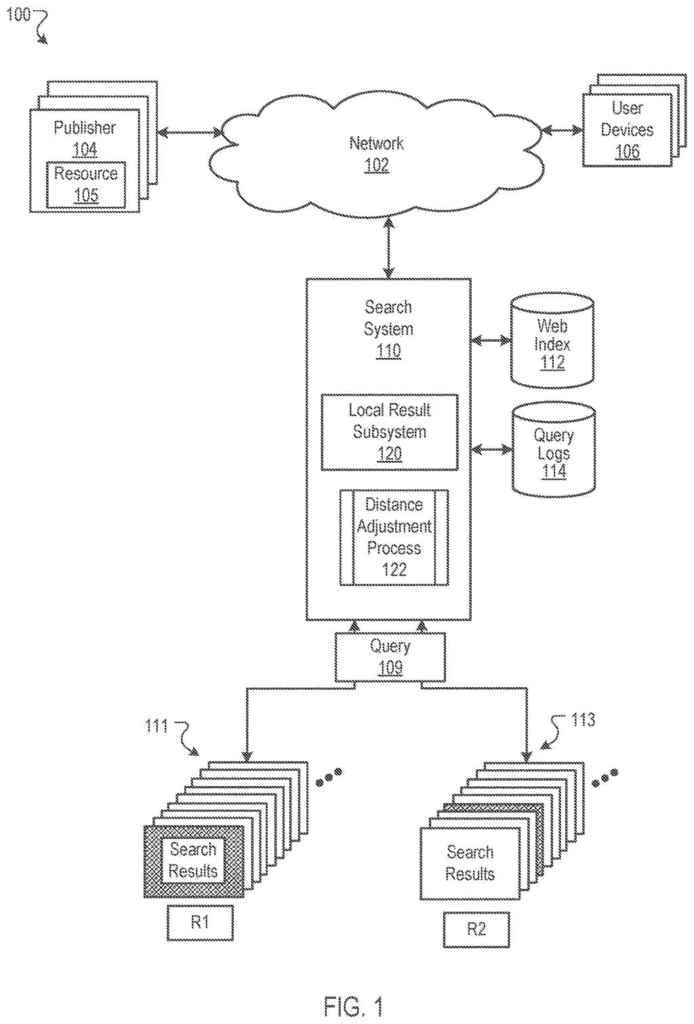
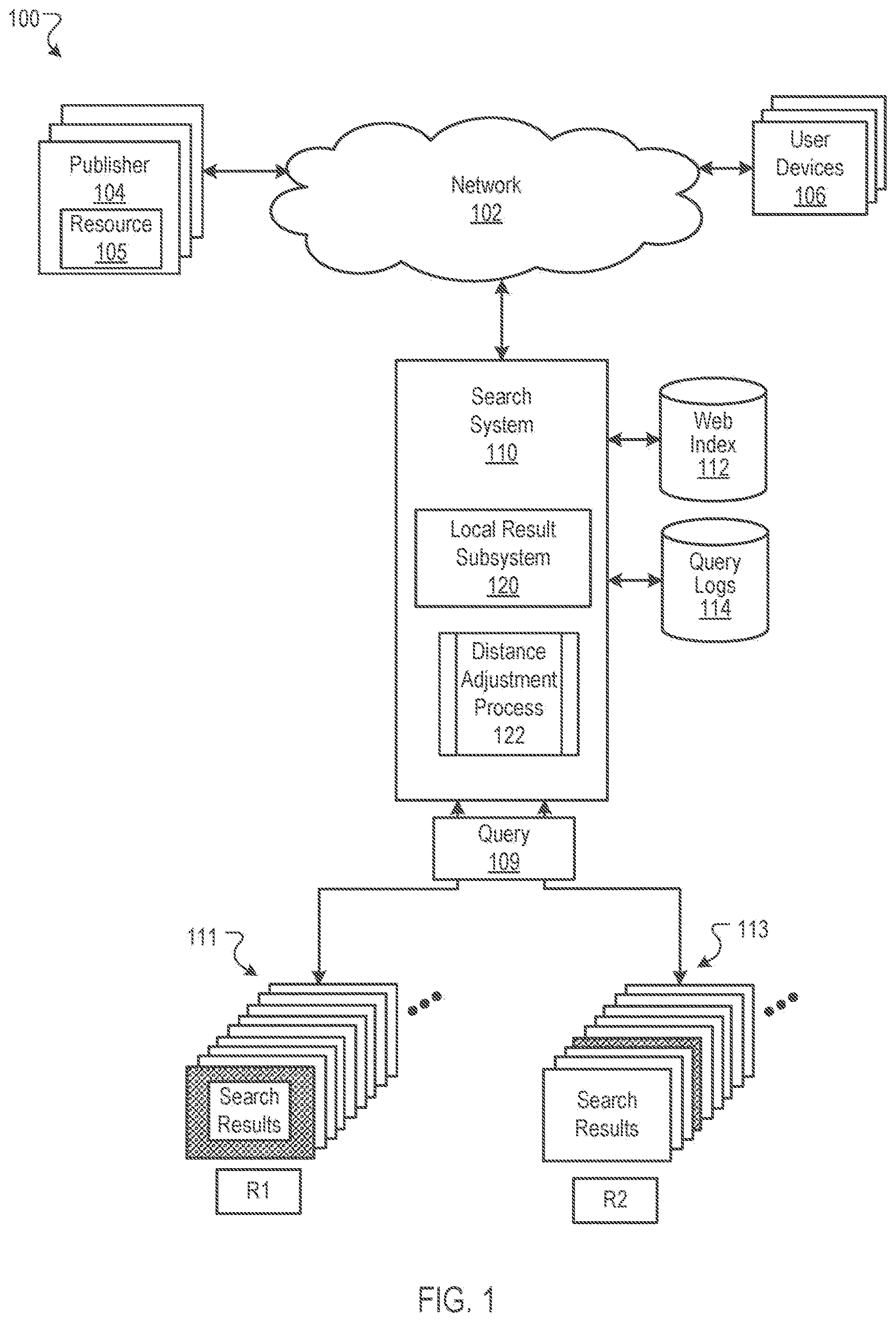
The patent describes a ranking step that runs after a search engine has already found relevant pages. It starts with two inputs: your query and the location of your phone. The system then asks whether the search has an implicit local intent (people who run it tend to click on nearby places, even though the query never names a location). That score comes from selection data, meaning records of what people clicked, kept in a query log.
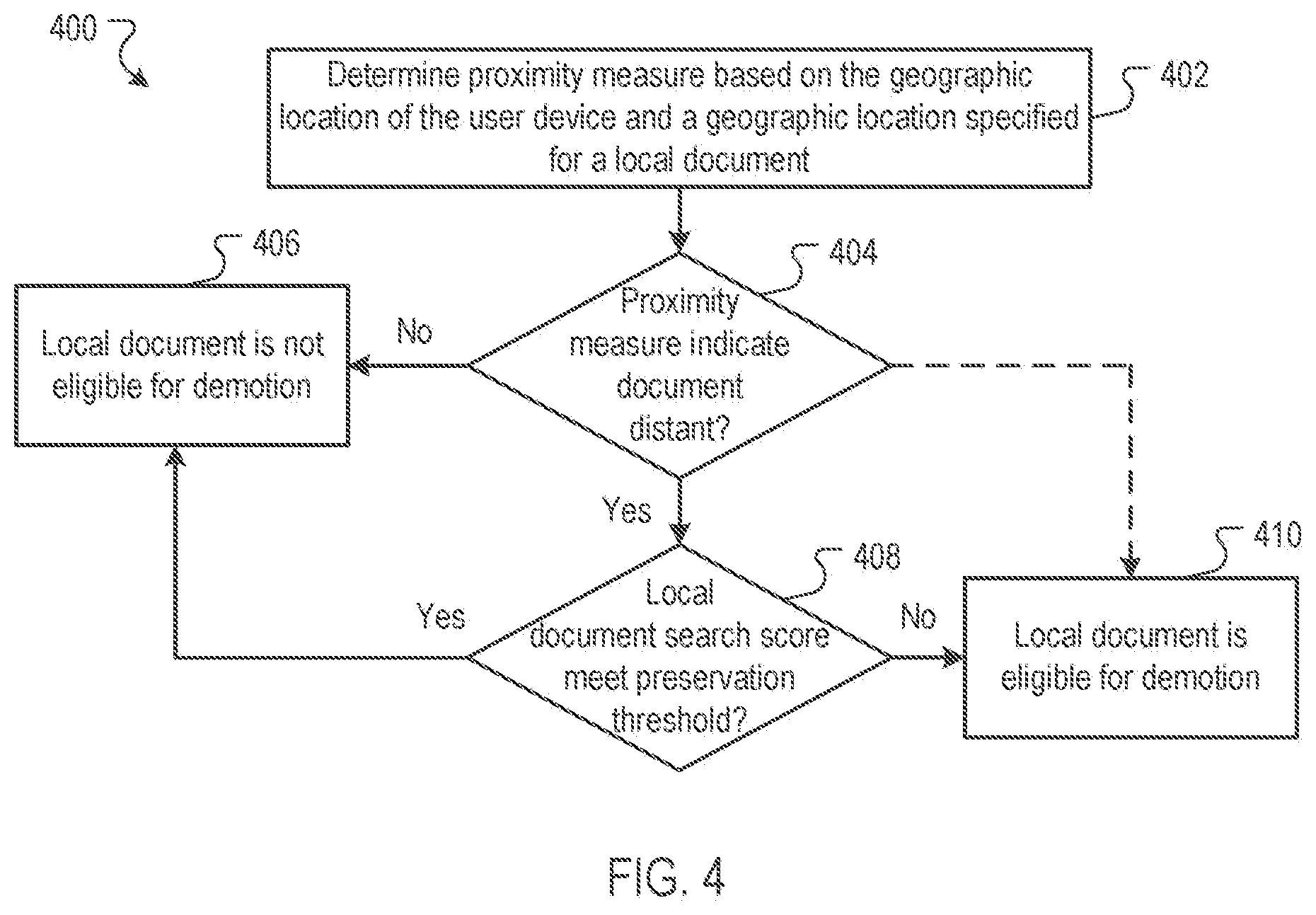
Next it looks at the results. A local document is a page classified as tied to a specific place, such as a restaurant or a utility. If that page is far from your phone, it becomes eligible for demotion. The claim also requires another result with a high enough score to take its spot. When everything lines up, the local page's score is lowered so it ranks below that stronger result.
The filing adds some details:
- The size of the drop can follow a sigmoid (an S-shaped curve): little demotion when local intent is weak, rising quickly as it becomes clear.
- A page that scores high on its own, ignoring location, can be spared.
- The cutoff distance can depend on the type of page. The description says restaurants could get a shorter distance than medical clinics.
The first local document is demoted in its ranking when at least one of the proximity measures indicates a respective other local document has a specified location that is within a threshold distance of the location of the user device.
Translation: Faraway businesses get pushed down the list if a closer competitor exists.
What this means for your Google local searches
For you, this is about search results that fit what you meant. A search for 'coffee shops' should lead to cafes near you, while a search for 'Edison' from several states away probably should not lead with a local utility. The protection for pages that score high on their own means a famous restaurant people know nationwide would not get buried just because you are far from it.
For Google, it is a refinement to a core product. The filing is a continuation of an application first filed in October 2013, so the idea has a long paper trail. The text names no product, and it does not say whether or how Google Search uses this today.
That makes this Google's 968th filing in our Google coverage since May, a run that includes an AI fact-checker and a health chatbot.
Claim 1 is a stack of conditions, and every one has to be true before anything gets demoted. The search must lean local based on what people click, the local page must be far enough from the phone, and some other result must score high enough to take its place.
That makes the claim narrower than the headline idea sounds. A search that names a city falls outside it, and so does a search with no local pattern, like 'quadratic equation.' The wording is wide in other ways: 'documents' covers any kind of result, and the rule applies to any mobile device.
The claim also leaves open how far is far. A dependent claim ties the cutoff to the type of page, which gives Google room to tune it. A ranking tweak this specific is routine housekeeping for a search engine, though a sensible one.
Get our take in your Top Stories
Liked this breakdown? Add Patentlyze as a preferred source on Google, and our plain-English take shows up more often in your Top Stories the next time Google patent news breaks.
There are more where this came from
We read every patent application Big Tech publishes and send you the ones worth knowing. Plain English, free, every week.
The drawings
3 drawing sheets from US 2026/0339967 A1 · click any drawing to enlarge

Want this weekly breakdown for a company we don't cover? Patentlyze Pro →
Be the first to weigh in