
Google Patents a Camera Sensor That Counts People Without Keeping a Single Photo
Google has filed a patent application for a sealed camera sensor that counts the people in a room, then erases every frame it saw without ever saving one.
What Google's camera-that-forgets sensor does
Most cameras that can tell whether someone is in a room work by sending video to a central computer, which means a lot of footage of your life ends up stored somewhere you can't easily check. Google's patent application describes a different design: a small, sealed sensor that does the looking and the thinking in one package.
The camera grabs a frame, an AI model checks it for people (or another chosen object), and the sensor then erases the frame without ever saving it to permanent memory. What leaves the device is only the answer, such as 'someone is here' or 'three people.' The filing even suggests the answer could go out as a simple electrical signal, so there is no video channel to tap into.
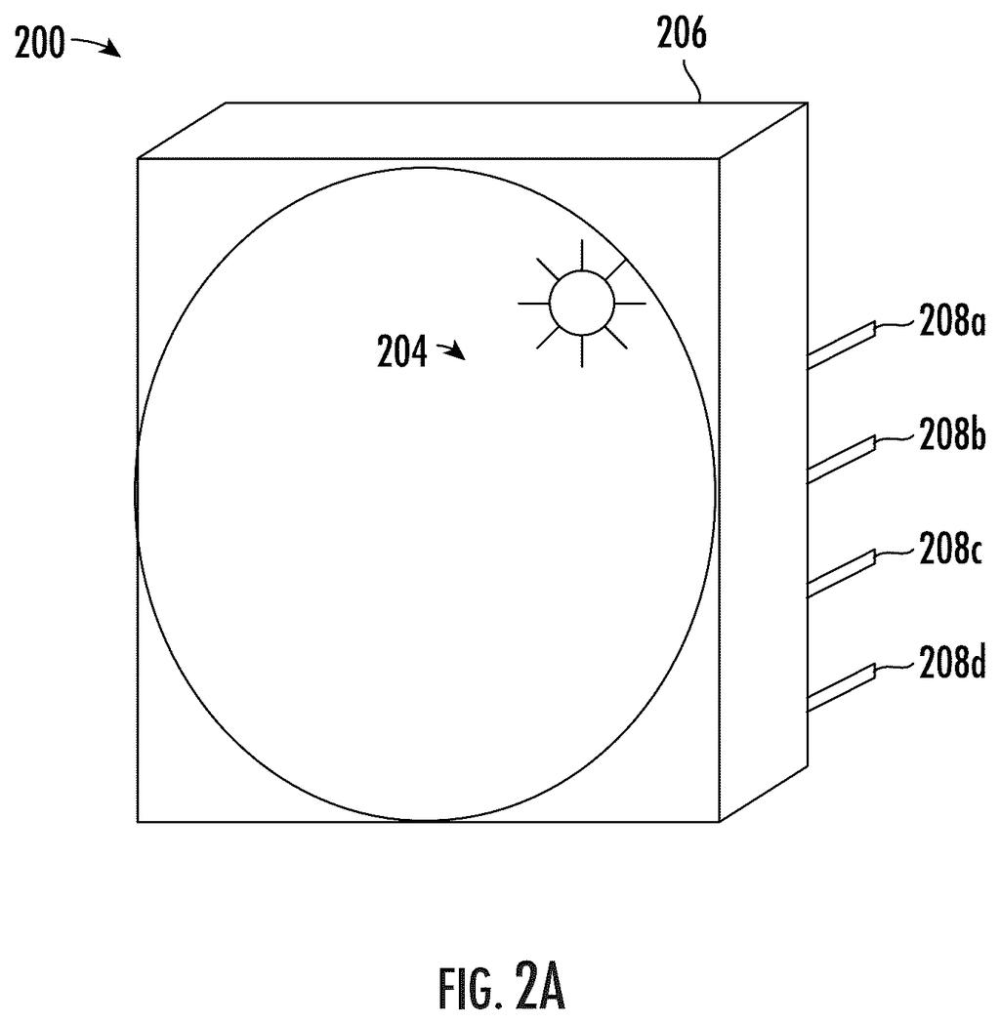
The filing also describes a small light on the sensor that flashes what it is reporting, so people nearby can see what it is telling the system.
… deleting the one or more image frames from the temporary data buffer upon generation of the model output, wherein the one or more image frames are deleted without ever being written to the non-volatile memory …
Translation: The device permanently erases every picture immediately after counting the people in it.
How the sensor wipes each frame after one look
The claims describe a sealed sensor with its own camera, processor and two kinds of memory: a short-term temporary buffer and permanent (non-volatile) storage that holds the software and the AI model. The camera captures frames, and the frames are kept only in the temporary buffer while a machine-learned object detection model (an AI trained to spot a particular kind of thing, such as a person) looks at them.
As soon as the model produces its result, the frames are deleted. The claims stress that they are never written to the permanent memory. One described version uses a ring buffer (a fixed loop of memory where new frames simply overwrite the oldest ones).
Other claims and details in the filing add:
- A pruned or quantized model, meaning a shrunken version of the AI so it fits on a tiny chip.
- A digital signature on each output, so outside systems can confirm it came from a genuine sensor.
- A tamper-resistant housing, and a public fingerprint (a hash) of the software so it can be verified.
- A second AI model that takes the first model's output, for example to find a license plate and then read its text.
The description says the sensor can run at about 2 to 15 frames per second and may have just four electrical connections, including a single signal line out.
… privacy preserving detection of objects or related information present in image data …
Translation: The technology counts individuals without recording or saving their personal images.
Why a forgetful camera matters for your home
If you've ever hesitated over a camera in your home, office or a shop, this is the concern the patent targets. A presence sensor that can tell a person from a pet, and count heads, is handy for turning on lights, adjusting heating and cooling, or sending you an alert. The filing's pitch is that you get that without a stored video archive that can be hacked or misused.
The patent also tries to make the privacy promise checkable: signed outputs, a published fingerprint of the software, a sealed case, and a light that flashes what the sensor is reporting. The filing names uses beyond homes too, such as reading license plates for traffic systems, which shows the same design could be pointed at less comfortable jobs. As with any patent application, it describes a design, not a product on sale.
Google's 66th filing we've tracked since May in our on-device AI privacy watchlist follows work on noise-canceling voice assistants and processing private data securely.
The idea that lands is simple: a camera that forgets. If a sensor can tell the lights to switch on without ever keeping a picture of you, the worst case from a hacked device shrinks from 'someone watched my living room' to 'someone learned the room had two people in it.' You would notice the benefit only on the day something goes wrong.
The weak spot is trust. You can't open a sealed sensor to confirm it deletes anything, so the signed outputs, the public software fingerprint and the blinking light carry real weight. Those are the parts to look for if a product like this ever ships.
The license plate example is a reminder that the same forgetful design can still produce a record of who drove by. Privacy here depends on what the sensor is told to report, and that is a choice made by whoever installs it.
Get our take in your Top Stories
Liked this breakdown? Add Patentlyze as a preferred source on Google, and our plain-English take shows up more often in your Top Stories the next time Google patent news breaks.
There are more where this came from
We read every patent application Big Tech publishes and send you the ones worth knowing. Plain English, free, every week.
The drawings
7 drawing sheets from US 2026/0350830 A1 · click any drawing to enlarge


Want this weekly breakdown for a company we don't cover? Patentlyze Pro →
Be the first to weigh in