
Google Files Patent for Earbuds That Cancel Noise for Voice Assistants
Google describes a way for earbuds to use the one thing they always have, two microphones sitting an equal distance from your mouth, to clean up your voice before a speech-to-text system hears it. The twist is that the filter is trained to please a transcription program, not a human ear.
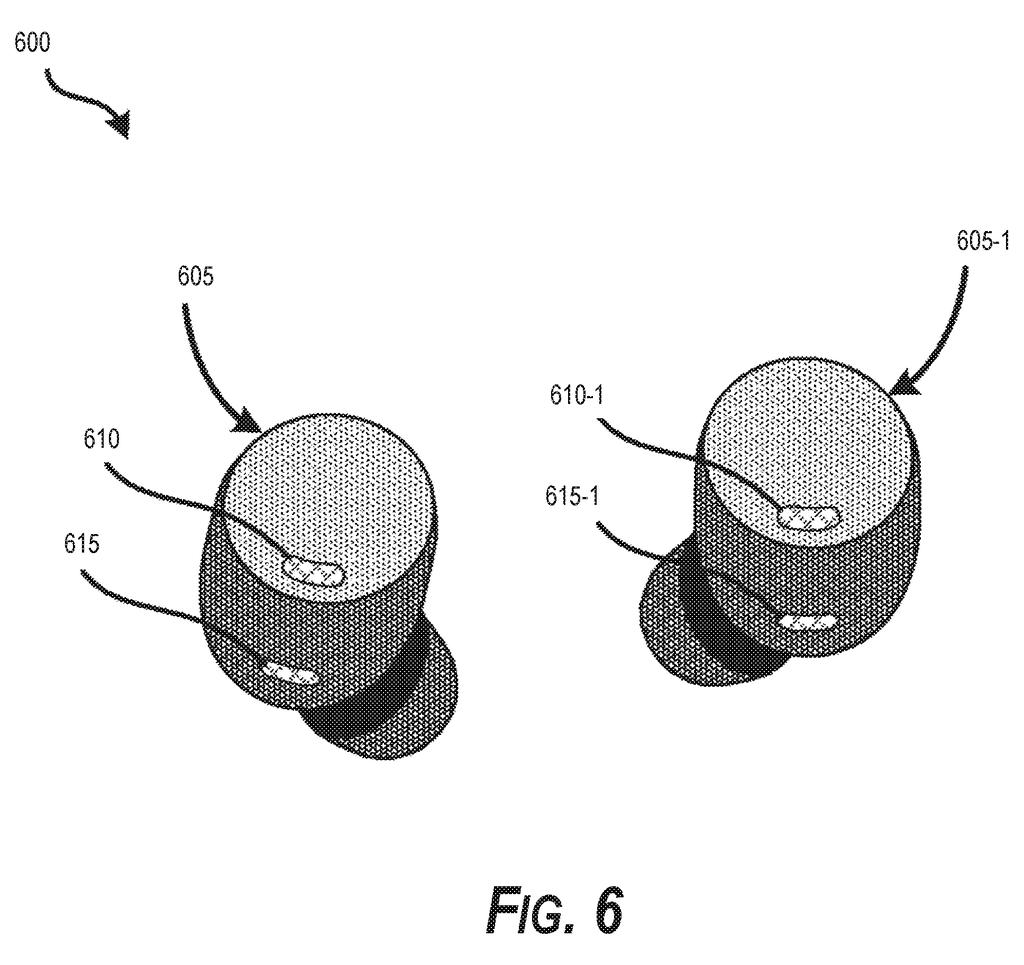
What Google's two-microphone earbud filter does
Ever tried dictating a text while standing next to a bus stop? Your phone usually gets a few words wrong, and the noisier the street, the worse it gets.
This Google patent application goes after that problem with a trick built around earbuds. Your mouth is about the same distance from the left and right earbud, so your voice reaches both mics at nearly the same moment. Noise from the side, like a passing car or a nearby chatterbox, does not. Adding the two mic signals together boosts your voice, while subtracting one from the other nearly erases your voice and leaves a clean sample of the background noise.
A small AI model then uses both versions to decide which parts of the sound to turn down. The cleaned-up audio goes to a speech recognition program that turns it into text.
generating a mid signal and a side signal by delay-and-sum and difference signal processing of a first audio signal from the first microphone and a second audio signal from the second microphone; …
Translation: It combines sounds from two mics to isolate the voice from background noise.
How the left and right mics catch noise
The filing describes an audio pipeline for any pair of microphones in a fixed position, with earbuds as the main example. It starts by making two new signals from the left and right mic recordings. The mid signal is an average of the two (a simplified form of delay-and-sum beamforming, a classic method of lining up sounds from one direction so they reinforce each other). The side signal is the difference between the two, which cancels centered speech and leaves the off-center noise.
Features from both signals (such as Mel-frequency cepstral coefficients, a compact summary of how sound energy is spread across pitches) feed a small neural network. It uses convolutional layers (which spot local patterns) and Gated Recurrent Unit layers (which track how sound changes over time). The network outputs a gain mask, a grid of values between roughly 0 and 1 that says how much to turn down each slice of sound. That mask is applied to the mid signal, and the result goes to a speech recognition model.
The training approach is the unusual part. The network learns using a frozen (locked, unchanged) speech recognizer as a judge.
- A mask loss compares its mask to an ideal one.
- An encoder loss checks that the recognizer's internal view of the cleaned audio resembles its view of clean speech.
- A language model loss checks the resulting text against the correct transcript.
The training data was simulated, using recordings from a dummy head wearing earbuds, plus interfering voices and real noise from cafes, parks and buses.
The system can provide noise reduction for improving speech recognition accuracy in noisy environments using wearable devices such as earbuds.
Translation: This tech helps tiny earphones understand your voice clearly even in loud public places.
Why noisy-street voice typing could improve
If this ends up in earbuds, the practical gain is voice commands and dictation that hold up when you are not in a quiet room. Think of asking your assistant a question on a train platform or dictating a message while walking down a busy street. The filing says the model is built to be small enough for the limited battery and chip power inside earbuds, and it names smart watches and AR glasses as other possible homes.
The design also avoids retraining for each speech recognizer. Because the recognizer stays frozen during training, the same cleanup stage could, in principle, sit in front of different transcription systems. This is a patent application, and it does not say whether Google will ship it in any product.
Google's 65th filing we've tracked since May in our on-device AI privacy push adds to earlier applications like faster private data crunching and a secure phone startup vault.
The trade at the heart of this design is clear: the cleanup is tuned for a machine listener, so it may not sound better to you. The filing says outright that the training targets transcription accuracy, not how pleasant the audio is. If the same cleaned audio were played on a phone call, the other person might hear odd artifacts. That cost seems fine as long as the cleaned stream goes only to the transcriber.
The second cost is the assumption that your mouth sits dead center between the two mics. That holds for a pair of earbuds in both ears. It breaks if you wear only one earbud, which many people do on calls, because the side-minus-mid trick needs both. Nothing in the claims says what happens in that case.
The third cost is that the pipeline reuses the noisy phase of the original signal rather than rebuilding it, a shortcut that saves power. On balance, the trades look sensible for a battery-starved earbud, and the frozen-recognizer training is the clever part. It is a practical piece of engineering, not a dramatic leap.
Get our take in your Top Stories
Liked this breakdown? Add Patentlyze as a preferred source on Google, and our plain-English take shows up more often in your Top Stories the next time Google patent news breaks.
There are more where this came from
We read every patent application Big Tech publishes and send you the ones worth knowing. Plain English, free, every week.
The drawings
10 drawing sheets from US 2026/0351272 A1 · click any drawing to enlarge


Show the other 2 sheets


Want this weekly breakdown for a company we don't cover? Patentlyze Pro →
Be the first to weigh in