
Google Patents AI That Drops a Plain Product Photo Into a Lifestyle Scene
Google has filed a patent for an AI that takes a few plain, white-background photos of a product and places it in a lifestyle scene, like a handbag on a busy city street. It does this without any training on that specific product.
What Google's product-photo patent actually does
You're scrolling an online store, and every handbag is a bag floating on a plain white background. The nice photos, the ones with a person carrying it down a busy city street, take a photographer, a model and a lot of editing. That cost limits how many of them ever get made.
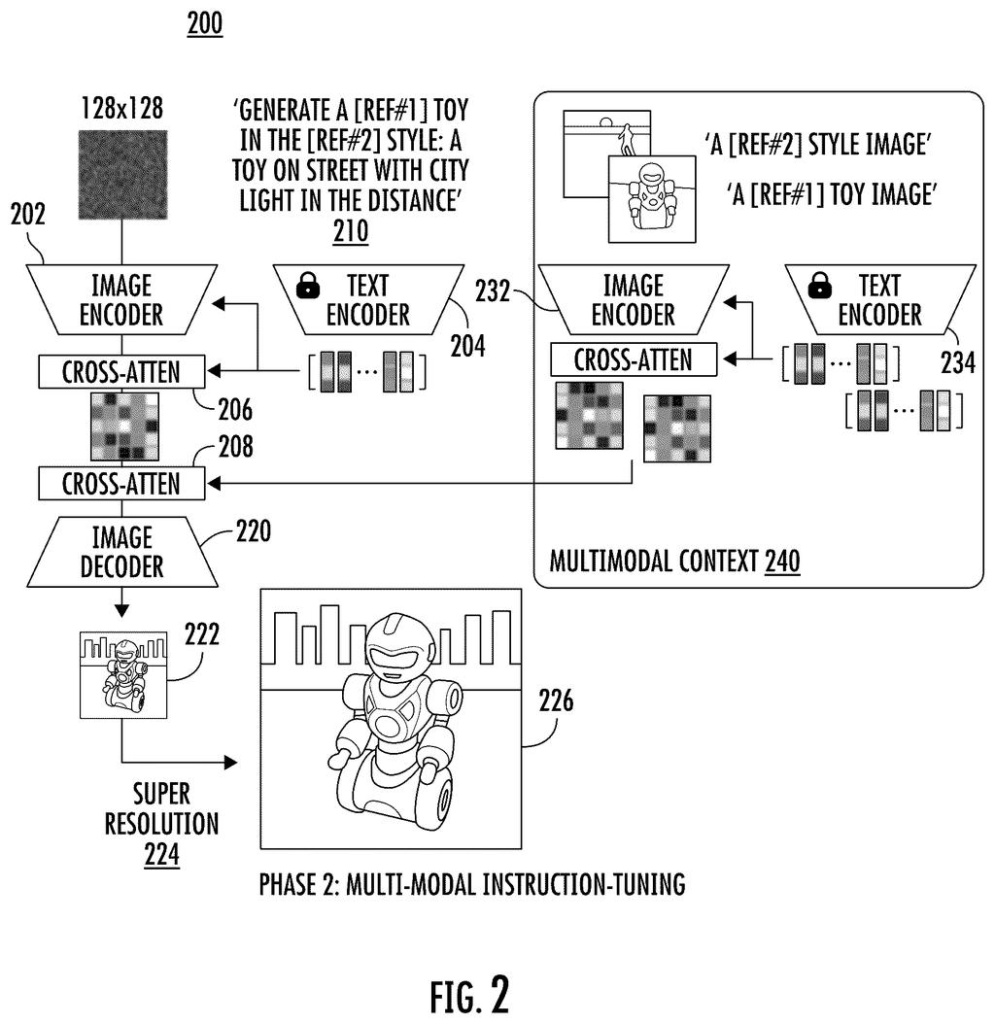
Google's patent describes a system that makes those scene photos for you. You give it one to three plain photos of a product, plus a short description of the scene you want. It writes its own detailed instructions, creates several versions of the picture, throws out the ones where the product looks wrong, and shows you the best few.
The key idea is that it doesn't need to be taught each new product one at a time. It is trained once on lots of matched photo sets, so a brand-new item should work the first time you try it.
a machine-learned model, wherein the machine-learned model is a zero-shot model and is configured to receive one or more input images that depict an object as input and output one or more images of the object in a different context; …
Translation: The AI system takes a picture of an item and places it into an entirely new environment without needing extra training.
How the system drafts, filters and ranks images
The system takes one or more photos of an object (the filing describes one to three, often from different angles) along with a short request describing the scene you want. It is built around a zero-shot model, meaning an AI model that can handle a brand-new object without being retrained on it first.
Before drawing anything, the system rewrites your request. It can turn it into several instruction-style prompts (a standard format the model was trained to understand), each worded a little differently, and it can point to the specific photo files or product numbers. Each rewritten prompt produces its own image.
Then comes a cleanup pass:
- Each image is checked against a fidelity metric, such as whether the product and its characteristics actually appear. Images that fail are removed.
- The survivors get a quality score and are ranked.
- A set number of the top images is shown to you.
To make the one-model-fits-all approach work, training uses groups of images of the exact same item: one to three plain-background shots plus one lifestyle shot. A Game Boy would be grouped only with the same Game Boy model and color, never with a Game Gear. Photos with busy backgrounds can be edited to a plain one, and several models trained on different image sets can have their internal settings averaged into the final model.
The computing system receives an input query comprising one or more images of the object with a specific set of attributes in a first context.
Translation: The software starts by taking in a regular product photograph showing the item's original details.
What this means for online sellers and ad teams
The target here is advertising and online shopping. Catalogs are full of plain product photos, while lifestyle shots cost real money in photographers, models and editing. A tool like this could let a seller generate many scene options for each item, including brand-new releases, without building a custom model for every product. If it ever shipped, some of the lifestyle photos you see while shopping could be generated rather than shot.
The filing names no product, and the application is early. A patent examiner's first review rejected the claims as filed, which is routine and usually followed by amendments. Treat it as a look at how Google frames the problem of cheap, scalable product imagery.
Google's 78th filing we've tracked since May in the AI photo editing race builds on one that captions photo regions and one grading video quality.
Skipping per-product training buys speed and scale, and it costs precision. A model that has never seen your specific bag has to guess at stitching, buckles and printed logos. The filing itself names logos and text as trouble spots it tries to fix with extra training steps.
The safety net is pricey too. The system makes several versions of each image, scores them, and discards the ones that lose the product. You pay to generate pictures nobody ever sees, and the checks described ask whether the object appears with its characteristics, a bar a shopper may judge more strictly than a computer does.
For ads, the trade reads as worth it: a fast set of drafts a person can pick from beats a photo shoot for every item. For a store listing where buyers expect the picture to match what arrives in the box, the gap between close and exact matters a lot more.
Get our take in your Top Stories
Liked this breakdown? Add Patentlyze as a preferred source on Google, and our plain-English take shows up more often in your Top Stories the next time Google patent news breaks.
There are more where this came from
We read every patent application Big Tech publishes and send you the ones worth knowing. Plain English, free, every week.
The drawings
16 drawing sheets from US 2026/0350878 A1 · click any drawing to enlarge


Show the other 8 sheets


Want this weekly breakdown for a company we don't cover? Patentlyze Pro →
Be the first to weigh in