
Sony Files Patent for a Configurable Motion-Evaluation Content Generator
Sony is patenting a system that takes a specific 'evaluation perspective' — say, a physical therapist's criteria or a sports coach's checklist — and automatically builds motion-assessment content around it, bundling video and audio into a single personalized package.
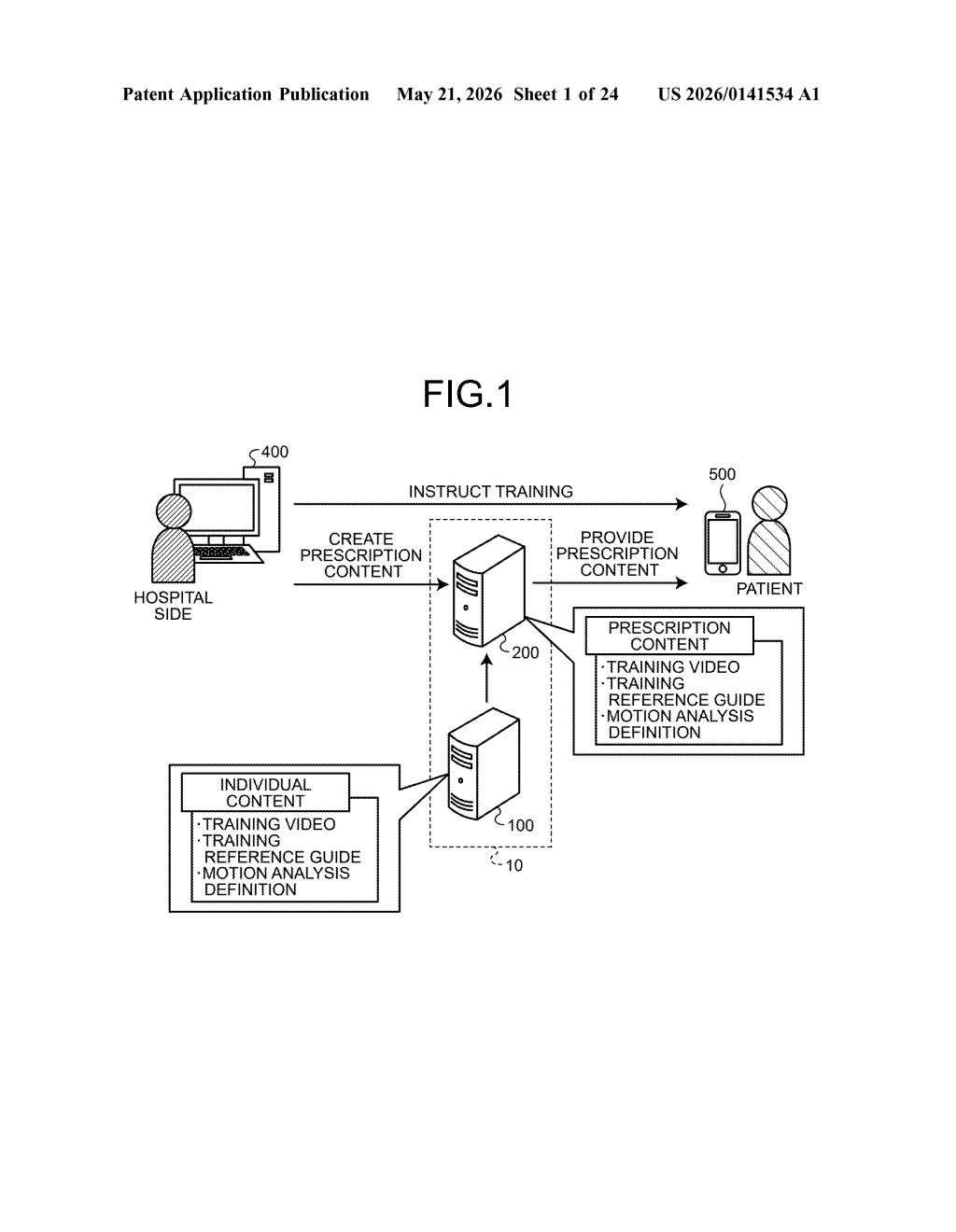
What Sony's motion-evaluation content system actually does
Imagine you're recovering from a knee injury, and your physical therapist wants to check whether you're bending your leg correctly during squats. Instead of you filming yourself and emailing clips back and forth, a system could automatically generate a structured evaluation — complete with video of your movement and audio commentary — configured specifically to what your therapist is looking for.
That's roughly what Sony is describing here. The patent covers a method for taking an evaluation perspective (essentially a set of criteria for judging a movement), then automatically determining how to assess that motion and wrapping the result into shareable content with video and/or audio baked in.
The abstract even references a patient prescription and training video workflow, which hints at rehabilitation and athletic coaching as the primary use cases. Think of it as a configurable report card for how you move, generated automatically from whatever angle or standard the evaluator cares about.
How Sony's system builds evaluation configs from perspectives
The core of the patent is a four-step pipeline:
- Acquire an evaluation perspective — this is the lens through which a motion gets judged. It could be a coach's form checklist, a clinician's range-of-motion standard, or a training protocol.
- Determine a configuration — the system figures out how to structure the evaluation based on that perspective (what to measure, what to highlight, how to present findings).
- Acquire video and/or audio — it pulls in media related to the motion being evaluated, whether that's a live recording, a stored clip, or audio feedback.
- Generate content — it combines the configuration and the media into a unified output, like a training guide or prescription document.
The claim is intentionally broad — it doesn't specify how the evaluation perspective is captured or how the configuration is derived. That abstraction suggests Sony is staking out the general concept of perspective-driven, auto-configured motion content, rather than a specific algorithm.
The filing's diagram references a "motion analysis definition" layer, suggesting the system has some structured way of encoding what a 'correct' or 'target' movement looks like before generating its output.
What this means for AI-powered coaching and rehab tools
For physical therapy, sports coaching, and fitness tech, the bottleneck has always been the manual work of turning a video review into actionable feedback. A system that can auto-configure an evaluation based on who's doing the assessing — and then package that up with the relevant media — could significantly reduce that friction.
Sony has hardware in this space (cameras, wearables, medical imaging) and a long history in content creation tools, so a motion-eval content pipeline would plug into multiple product lines. Whether this lands in a Sony sports camera workflow, a telehealth platform, or a PlayStation fitness product is anyone's guess, but the patent is clearly aimed at professional or clinical evaluation scenarios, not casual consumer use.
This is a real idea with practical applications in rehab and coaching, but the patent claim is written at such a high level of abstraction that it's more of a land-grab than a technical disclosure. The interesting question is whether Sony has a specific product in mind — the prescription/patient language in the abstract suggests something clinical — but the filing gives almost nothing away about the actual implementation.
Get our take in your Top Stories
Liked this breakdown? Add Patentlyze as a preferred source on Google, and our plain-English take shows up more often in your Top Stories the next time Sony patent news breaks.
There are more where this came from
We read every patent application Big Tech publishes and send you the ones worth knowing. Plain English, free, every week.
Want this weekly breakdown for a company we don't cover? Patentlyze Pro →