
LiDAR Background Imaging Fills Gaps in Vehicle Range Data
Waymo's LiDAR sensors already fire laser pulses to map the world around a car — but what about the directions where those pulses don't bounce back? A new patent proposes using the ambient background light the sensor passively captures to fill in those gaps, even for objects sitting beyond the sensor's maximum range.
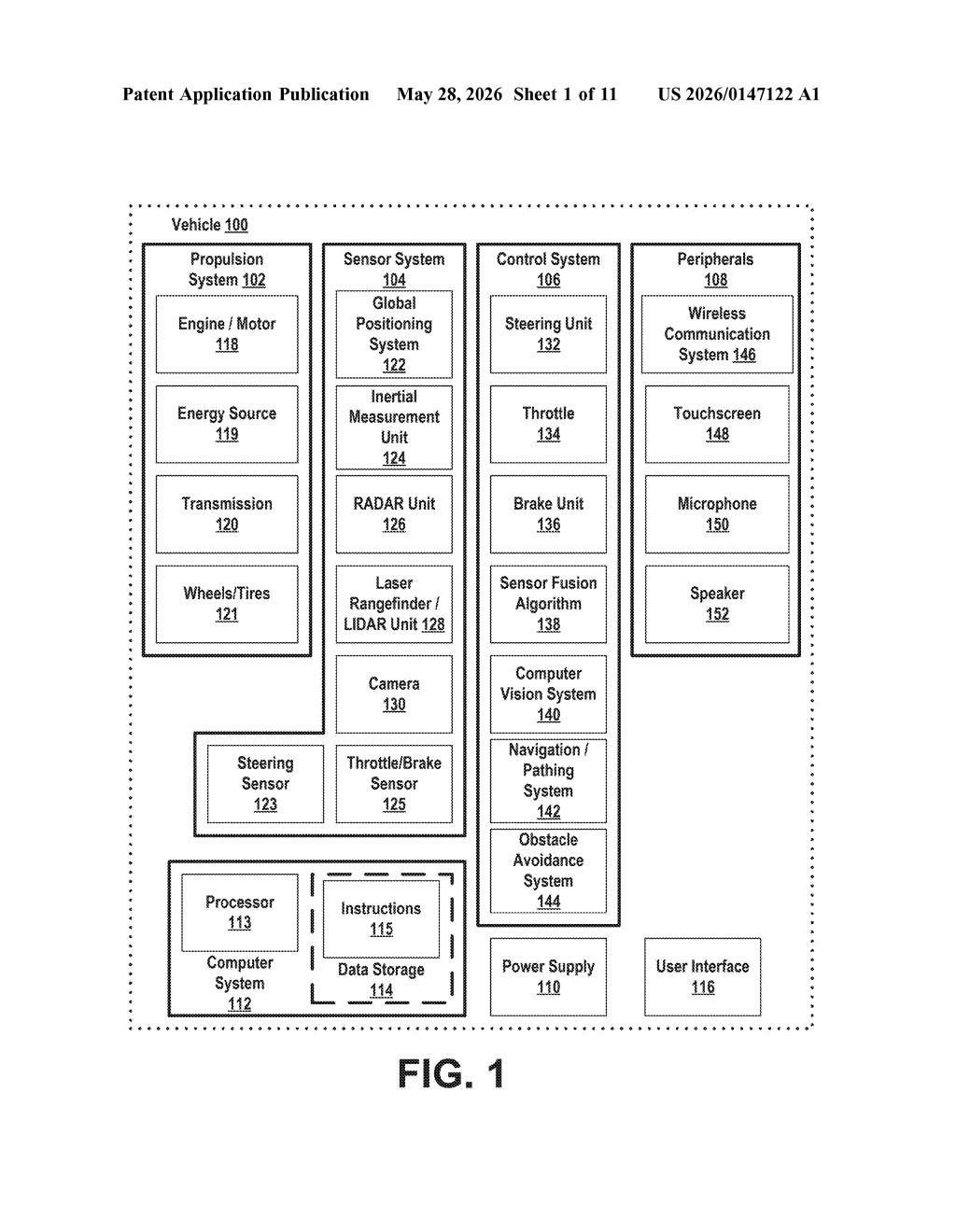
What Waymo's background-light LiDAR fix actually does
Imagine your car's sensor system is trying to map everything around it, but some objects just don't reflect the laser beam well enough to register — dark clothing, certain road surfaces, or things that are simply too far away. Those directions come back blank, leaving holes in the map your car uses to make decisions.
Waymo's patent describes a way to squeeze more information out of the same LiDAR hardware by paying attention to what it's already passively collecting: ambient background light. Every time the sensor scans a direction, it's also measuring how much natural or environmental light is coming from that direction. That background brightness can act like a clue — if there's a strong signal from a supposedly empty direction, something is probably out there.
The system uses that background light intensity data to add missing range estimates, correct existing ones, and flag range readings that might be unreliable. The end result is a richer, more trustworthy depth map of the environment — generated without adding any new sensors.
How ambient light intensity patches missing range data
Standard LiDAR works by firing laser pulses in many directions and timing how long each one takes to bounce back. If a pulse doesn't return — because the object absorbed it, it was out of range, or interference occurred — that direction simply shows up as missing data in the range image.
This patent adds a parallel data stream: the background image. While the LiDAR fires its lasers, it's simultaneously recording background light intensity (the ambient light arriving at the sensor from each direction, not from its own pulses). These two images — the active range image and the passive background image — are captured together for every scan.
The method then does three things with the background data:
- Adds range data for directions where the active scan came back empty, inferring that something must be present based on detected ambient reflectance.
- Corrects existing range readings that may be inaccurate, cross-checking them against the background signal.
- Evaluates data quality, flagging range values that look suspicious given the background context.
Notably, the patent explicitly covers estimating ranges beyond the sensor's normal maximum range — using passive background intensity to infer that a distant object exists even when the active pulse can't reach it. The final output is a single enhanced digital image combining both data sources.
What this means for self-driving sensor reliability
For autonomous vehicles, a missed detection isn't just a data quality problem — it's a safety question. A pedestrian in dark clothing, a vehicle with low reflectivity, or an object at the edge of sensor range are exactly the cases where a LiDAR blind spot is most dangerous. If background light data can reliably catch even a fraction of those misses, it's a meaningful improvement without any hardware upgrade.
This also signals a broader pattern in Waymo's sensor strategy: extract more signal from existing hardware rather than simply adding more sensors. That matters because every additional sensor adds cost, weight, and compute overhead. A software-layer enhancement that makes current LiDAR units more capable is an attractive engineering direction as the industry pushes toward lower-cost autonomous systems.
This is solid, unglamorous engineering work — the kind of incremental reliability improvement that actually moves the needle on autonomous vehicle safety without making headlines. Using passive ambient light as a cross-check for active LiDAR isn't conceptually flashy, but the ability to infer objects beyond the sensor's rated range from background intensity alone is genuinely useful. Worth watching as a signal that Waymo is investing seriously in squeezing more capability out of its existing sensor stack.
There are more where this came from
We read every patent application Big Tech publishes and send you the ones worth knowing. Plain English, free, every week.
Want this weekly breakdown for a company we don't cover? Patentlyze Pro →