
Samsung Patents a Virtual Assistant That Remembers Who's Talking Between Commands
Most voice assistants treat every command like a fresh conversation — Samsung wants to change that by tracking whether the same person issued the last command and only continuing if they did.
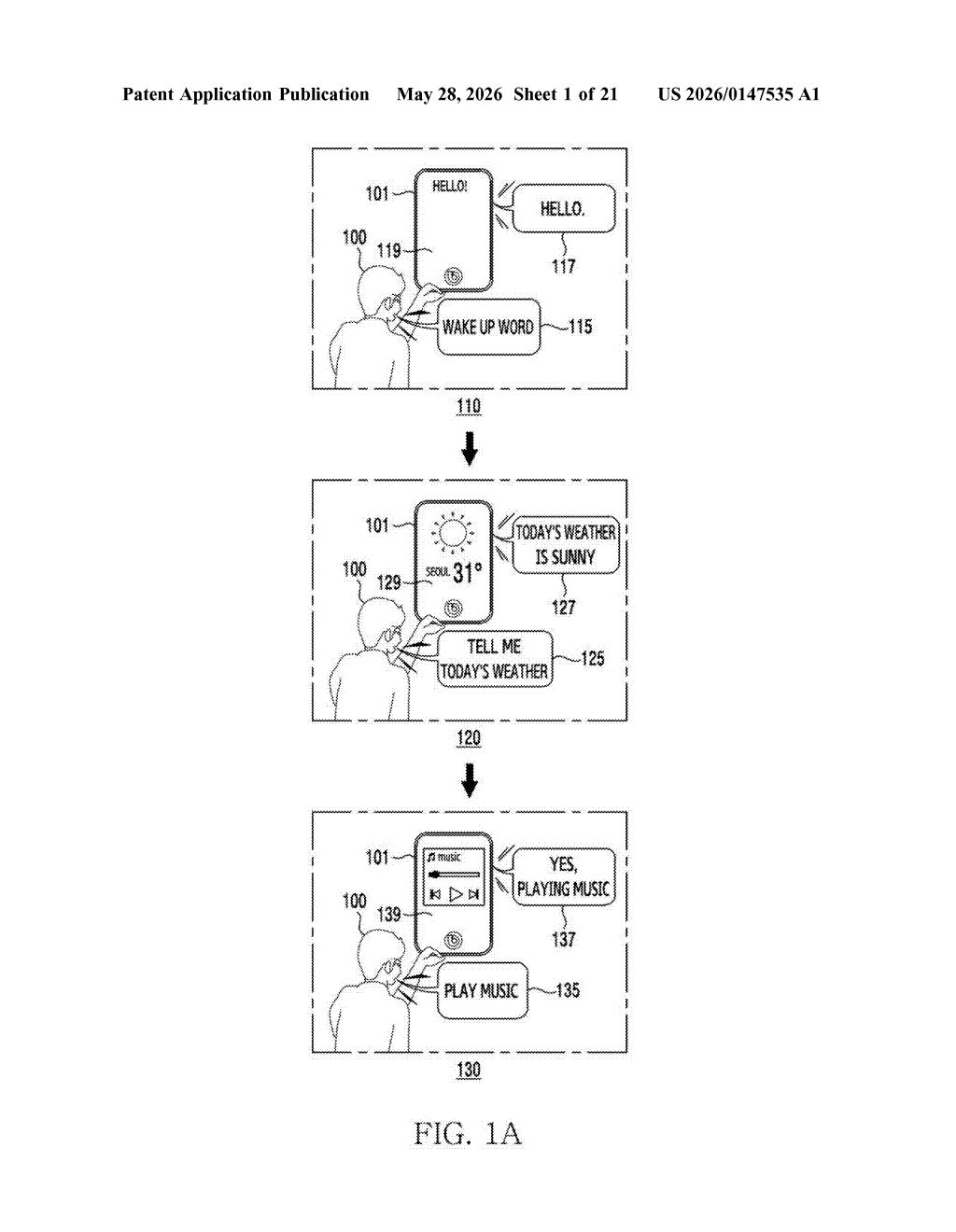
What Samsung's speaker-continuity voice patent actually does
Imagine you're using a voice assistant on your phone or smart speaker, and you ask it to play some music. Then, a few seconds later, you ask it to turn up the volume. Simple enough — but what if someone else in the room slipped in a command between yours? Most assistants today would just execute whatever comes next, regardless of who said it.
Samsung's patent describes a system that generates a kind of vocal fingerprint for each command it hears. When a second command arrives, the assistant compares that new fingerprint to the previous one. If they're similar enough — meaning it's probably the same person talking — it goes ahead and executes the follow-up. If not, it can treat the new voice as a different speaker entirely.
The practical upshot: in a household where multiple people share a device, your voice session stays yours. Someone else asking their own question won't hijack the context of your ongoing interaction with the assistant.
How Samsung matches speaker identity across voice commands
The patent describes an electronic device — think a Galaxy phone, smart speaker, or Galaxy AI-capable appliance — that runs a continuous speaker-verification loop alongside its normal voice command pipeline.
Here's the core sequence:
- The device receives a first voice signal containing a command and generates first identification information — essentially a speaker embedding (a numerical representation of vocal characteristics like pitch, cadence, and timbre).
- It executes the requested function normally.
- When a second voice command arrives, it generates second identification information the same way.
- It then computes a similarity value between the two embeddings. If that value clears a configurable threshold, the second command is executed. If not, the device can apply different logic — potentially prompting for re-authentication or ignoring the command in a secured context.
The patent also references a training component: the abstract's garbled diagram text hints at an utterance-verification flow that feeds back into model training, suggesting the system can improve its speaker models over time with repeated use.
This is essentially incremental speaker diarization (the process of figuring out who is speaking when) applied to command continuity rather than just transcription accuracy.
What this means for multi-user smart device households
For single-user devices this is mostly a convenience feature — your assistant stays contextually aware that it's you issuing a chain of requests. But the more interesting use case is shared hardware: a family smart display, a car with multiple drivers, or an office device used by a team.
Samsung is also clearly positioning Galaxy AI and Bixby as capable of handling more sophisticated, multi-turn interactions. Building in speaker continuity is a foundational step toward an assistant that maintains personalized session state — remembering your preferences, your active task, and your account context — without requiring you to re-authenticate after every single utterance.
This is solid, practical infrastructure work for a voice assistant ecosystem that has historically lagged behind Amazon and Google in multi-user awareness. It's not a flashy AI demo — it's the kind of low-level identity plumbing that makes higher-level features (like per-user personalization or security gating) actually reliable. Samsung should have shipped something like this years ago, but better late than now.
There are more where this came from
We read every patent application Big Tech publishes and send you the ones worth knowing. Plain English, free, every week.
Want this weekly breakdown for a company we don't cover? Patentlyze Pro →