
Google Patents a Two-Stage Video Transform That Fakes Large-Block Compression
Google has filed a patent for a video compression trick that gets the quality benefits of large transform blocks without actually having to compute them — by cleverly splitting, transforming, and interleaving the data in two passes.
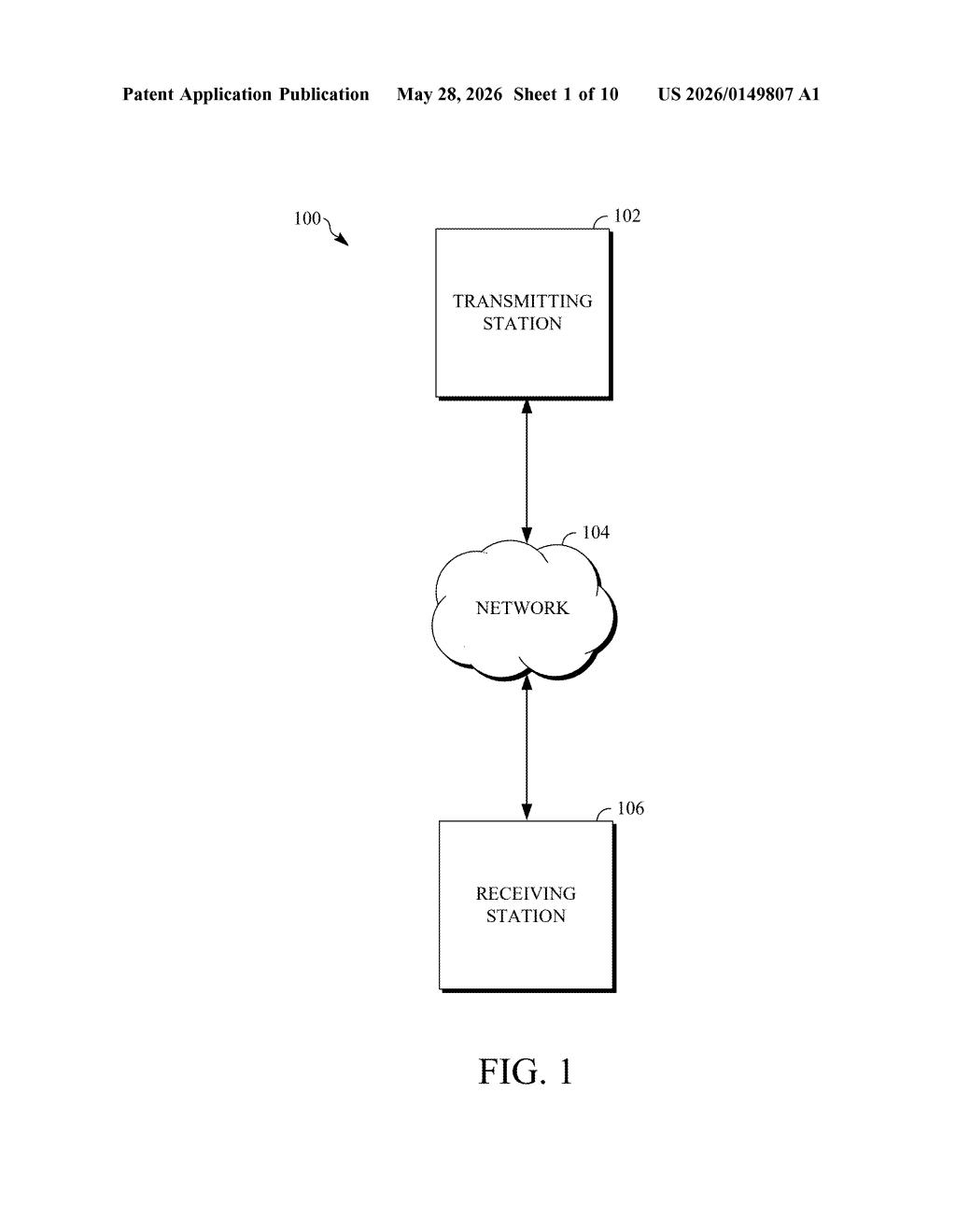
What Google's two-stage video transform actually does
When your phone or laptop compresses a video, it breaks each frame into blocks and runs a mathematical operation called a transform on each one. Bigger blocks generally produce better compression quality, but they're also much more expensive to compute — think of it like trying to solve a jigsaw puzzle: a 1,000-piece puzzle captures more detail, but takes far longer to assemble.
Google's patent describes a workaround. Instead of using one giant transform block, the encoder splits the image data into smaller blocks, transforms each one separately, then shuffles the results together into a new arrangement before running a second transform pass. The decoder does this whole process in reverse. The net effect approximates what you'd get from a much larger transform, without actually performing one.
This kind of under-the-hood efficiency work is exactly what makes codecs like AV1 — Google's open video format — tick. You get better-looking video at lower bitrates, which matters whether you're streaming on YouTube or storing footage on a phone.
How the interleaving trick bridges two transform stages
The patent describes a two-stage transform pipeline that operates at a fixed transform size while approximating the behavior of a larger one.
Here's how the encoding side works:
- A residual block (the difference between the original frame and a predicted frame — essentially the leftover error data the codec needs to encode) is partitioned into smaller first-stage transform blocks.
- A chosen transform kernel (a mathematical function like a Discrete Cosine Transform) is applied to each of these blocks, producing first-stage transform coefficients.
- Those coefficients are interleaved — shuffled together in a defined pattern — into a single second-stage transform block.
- The same transform kernel is then applied again to that combined block, producing second-stage transform coefficients that get quantized, entropy-coded, and packed into the bitstream.
On the decoding side, the process runs in reverse: the second-stage coefficients are inverse-transformed, then deinterleaved back into first-stage blocks via a predefined scan order, and each of those gets its own inverse transform before the residual data is used to reconstruct the image.
The key insight is that the interleaving step creates a mathematical approximation of a larger-scale frequency analysis without requiring the hardware or memory bandwidth that a true large-block transform demands.
What this means for video codec efficiency at scale
Video compression is a relentless engineering tradeoff: more accuracy costs more compute, and more compute costs more power, time, and money. Google runs YouTube — one of the highest-volume video pipelines on the planet — so even marginal codec improvements translate into massive savings at scale. A technique that lets encoders approximate large-transform quality at small-transform cost is the kind of thing that quietly ends up in a codec update and saves millions in bandwidth bills.
For you as a viewer or developer, this could mean better-looking video at the same file size, or the same quality at a smaller file — particularly in complex scenes where large transforms usually shine. It also matters for AV1 and any successor codecs Google contributes to, since the AOM (Alliance for Open Media) coalition is always hunting for efficiency wins without patent encumbrances.
This is unglamorous but genuinely useful compression engineering — exactly the kind of incremental codec work that accumulates into real-world bandwidth savings over time. It's not a headline-grabbing AI feature, but if it lands in AV1 or a future Google codec, it's the sort of thing that makes YouTube load faster for everyone without anyone noticing.
There are more where this came from
We read every patent application Big Tech publishes and send you the ones worth knowing. Plain English, free, every week.
Want this weekly breakdown for a company we don't cover? Patentlyze Pro →