
Adobe Patents a Generative AI That Designs Content Around Performance Data
Adobe is patenting an AI model that doesn't just generate creative content — it learns to link that content directly to real-world performance metrics, training both ideas in the same shared mathematical space.
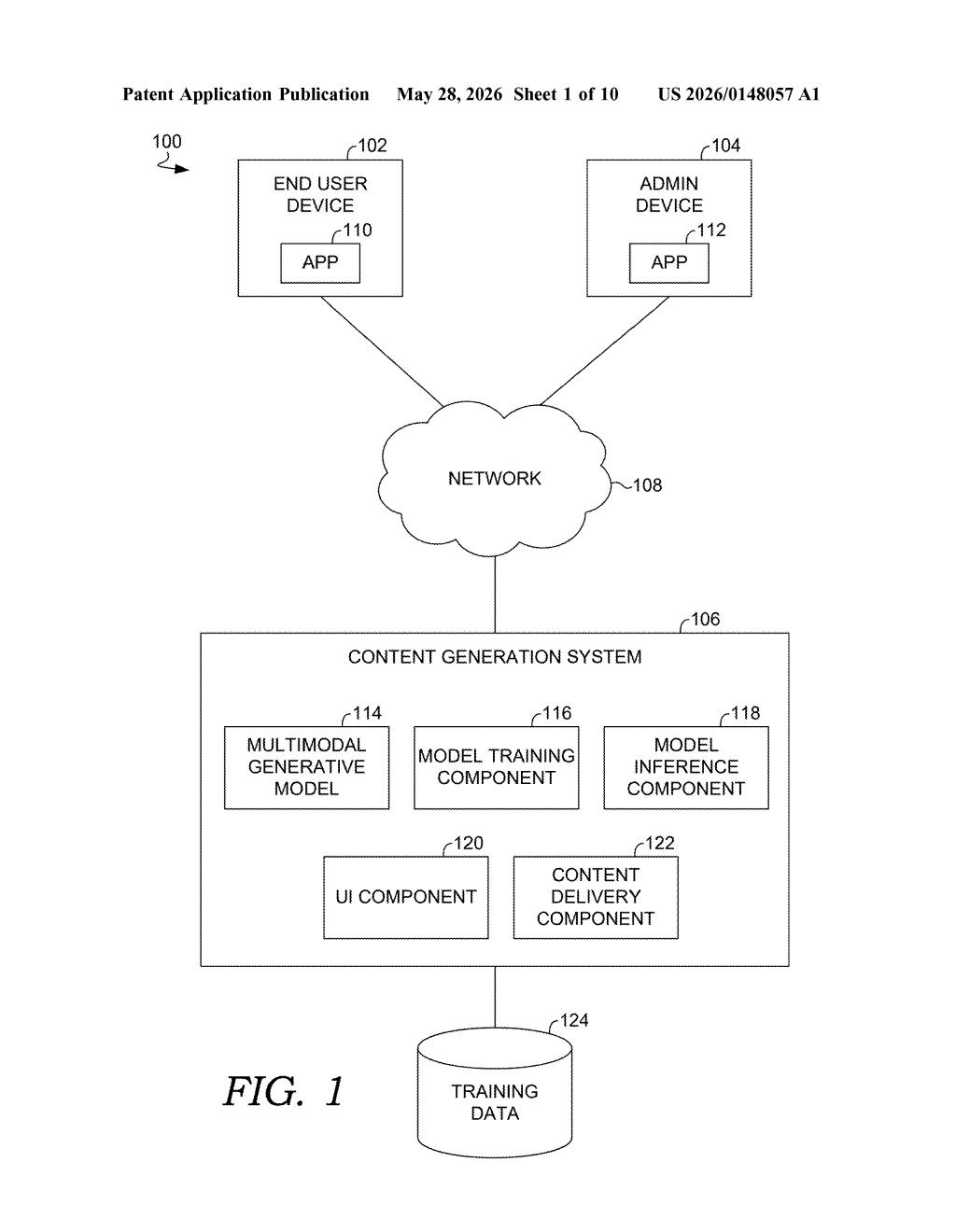
What Adobe's content-performance AI model actually does
Imagine you're a marketer running dozens of banner ad variations. Some perform brilliantly; others flop. Normally, figuring out why requires a separate analytics step — your creative tool and your performance data live in totally different worlds.
Adobe's patent describes a generative AI that learns both at once. You feed it a library of digital content items — think ads, emails, or web graphics — along with each item's performance metrics (click-through rates, engagement scores, whatever you're tracking). The model trains itself to understand how specific creative choices connect to specific outcomes.
The result is a model that, at inference time, could generate new content already tuned toward a target performance goal, or predict how a new design is likely to perform before you ever publish it. It's the creative loop and the analytics loop merged into one.
How the joint latent space fuses content and metrics
The patent describes a multimodal generative model — 'multimodal' meaning it handles two very different types of data at the same time: visual or structured digital content, and numerical performance metrics.
At training time, the system uses two separate encoders (think of them as translators that convert raw inputs into compact mathematical summaries called latent representations). One encoder processes the digital content item; the other processes its associated performance metric. Those two compact summaries are then merged into a single combined latent representation — a shared mathematical space where content and performance live together.
Two decoders then reconstruct outputs from that combined representation: one rebuilds the content item, the other regenerates the performance metric. The model measures how far off each reconstruction is (the loss), then adjusts its internal parameters using both signals simultaneously. This is the key idea — by forcing the model to predict both the content and the metric from a single shared representation, it has to learn the underlying relationship between them.
After training, the model can be used for inference — generating new content conditioned on a desired performance target, or predicting performance for a given piece of content.
What this means for AI-assisted creative tools at Adobe
For Adobe, whose Adobe Express, Firefly, and GenStudio products sit at the intersection of creative work and marketing performance, a model like this would be a meaningful capability upgrade. Right now, creative generation and performance prediction are largely separate workflows. Collapsing them into a single model could let Adobe offer genuine performance-aware content generation — not just 'make something beautiful' but 'make something that converts.'
For you as a user, the practical upshot could be a design tool that surfaces likely performance outcomes as you create, or automatically nudges generated content toward higher-performing visual patterns learned from real campaign data — closing the loop between creative instinct and measurable results.
This is a genuinely interesting architectural bet from Adobe's research side — the joint latent space idea is a clean way to bake performance feedback directly into a generative model rather than bolting analytics on afterward. Whether it survives contact with the messy reality of real-world performance data (noisy metrics, confounded experiments, domain shift) is the hard engineering question, but the framing is sound and the use case for marketing-adjacent creative tools is obvious.
There are more where this came from
We read every patent application Big Tech publishes and send you the ones worth knowing. Plain English, free, every week.
Want this weekly breakdown for a company we don't cover? Patentlyze Pro →