
Qualcomm Patents a System That Stops Updating Your Watch When Its Screen Goes Dark
When you're listening to music through earbuds and your smartwatch screen is off, why should your phone keep sending playback updates to that watch? Qualcomm has filed a patent for a system that asks exactly that question — and stops the waste.
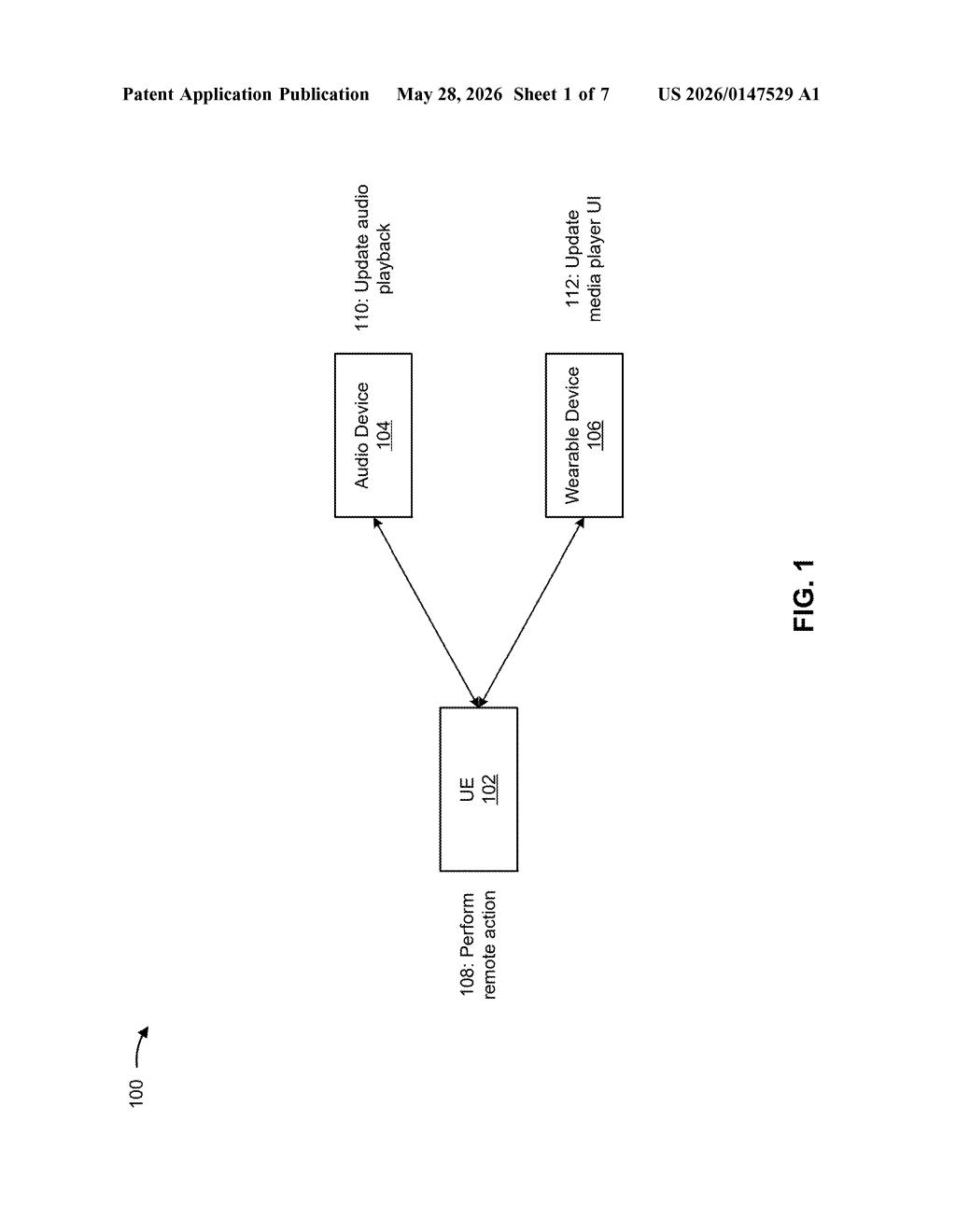
What Qualcomm's multi-device audio handoff actually does
Imagine you're listening to a podcast through wireless earbuds. Your phone is streaming the audio, and your smartwatch is showing a little media player so you can skip tracks from your wrist. That's all working fine — but what happens when your watch screen turns off because you haven't looked at it in 10 seconds?
Right now, your phone probably keeps sending those playback updates to the watch anyway, even though nothing is displaying them. Qualcomm's patent describes a system where the phone stops doing that the moment the watch reports its screen is off. If you skip a track or pause playback from another device, the phone sends that command to your earbuds — but skips the now-sleeping watch entirely.
The watch isn't forgotten. When its screen turns back on, the system can catch it up. This is a small but practical optimization: your phone does less unnecessary work, your watch saves a little power, and the whole multi-device audio experience gets a bit more coordinated.
How the UE tracks wearable screen state to suppress UI updates
The patent describes a coordination layer running on a user equipment (UE) — typically a smartphone — that manages audio playback across two peripheral devices simultaneously: an audio device (think wireless earbuds or a Bluetooth speaker) and a wearable device (like a smartwatch with a media player UI on its screen).
The core logic works in three stages:
- The UE streams audio data to the audio device and sends playback state updates (track name, position, play/pause status) to the wearable's media player interface.
- When the wearable's display turns off, it sends a message to the UE indicating the screen state change.
- From that point forward, if the UE receives a remote action — a playback command like skip, pause, or volume change — it forwards the instruction to the audio device but suppresses the corresponding UI update to the wearable, since nothing would render it anyway.
The suppression is conditional: it's gated specifically on the received screen-off message. If the display turns back on, the system resumes sending updates normally. The patent also covers the scenario where remote actions come in during the screen-off window — the audio device still gets the instruction and acts on it, so playback behavior is unaffected. Only the wearable UI traffic is trimmed.
What this means for Bluetooth audio and wearable battery life
For end users, this is about battery efficiency and cleaner multi-device coordination. Smartwatches have tiny batteries, and wireless protocol overhead — even small Bluetooth packets — adds up over a listening session. Suppressing unnecessary UI sync traffic when the screen is dark is exactly the kind of low-level housekeeping that extends wearable battery life without changing anything you'd notice.
For Qualcomm specifically, this is squarely in their wheelhouse: the company makes the chips and wireless stacks inside a huge portion of Android phones and wearables. A patent like this could end up baked into their audio subsystem firmware or Snapdragon Sound platform, making it a quiet infrastructure improvement that ships across many devices without any fanfare.
This is a sensible, unsexy engineering optimization — the kind of thing that probably already exists in ad-hoc form in various device stacks, and Qualcomm is now formalizing into a proper protocol. It won't make headlines, but tighter multi-device audio coordination is a real pain point on Android, and Qualcomm is in a uniquely good position to fix it at the chip level rather than waiting for app developers to do it properly.
There are more where this came from
We read every patent application Big Tech publishes and send you the ones worth knowing. Plain English, free, every week.
Want this weekly breakdown for a company we don't cover? Patentlyze Pro →