
Qualcomm Patents a Self-Monitoring Trigger That Catches When Its AV AI Contradicts Itself
What if your self-driving system could notice when its own subsystems disagree — and automatically save the sensor data from that moment to improve itself later? That's exactly what Qualcomm is patenting here.
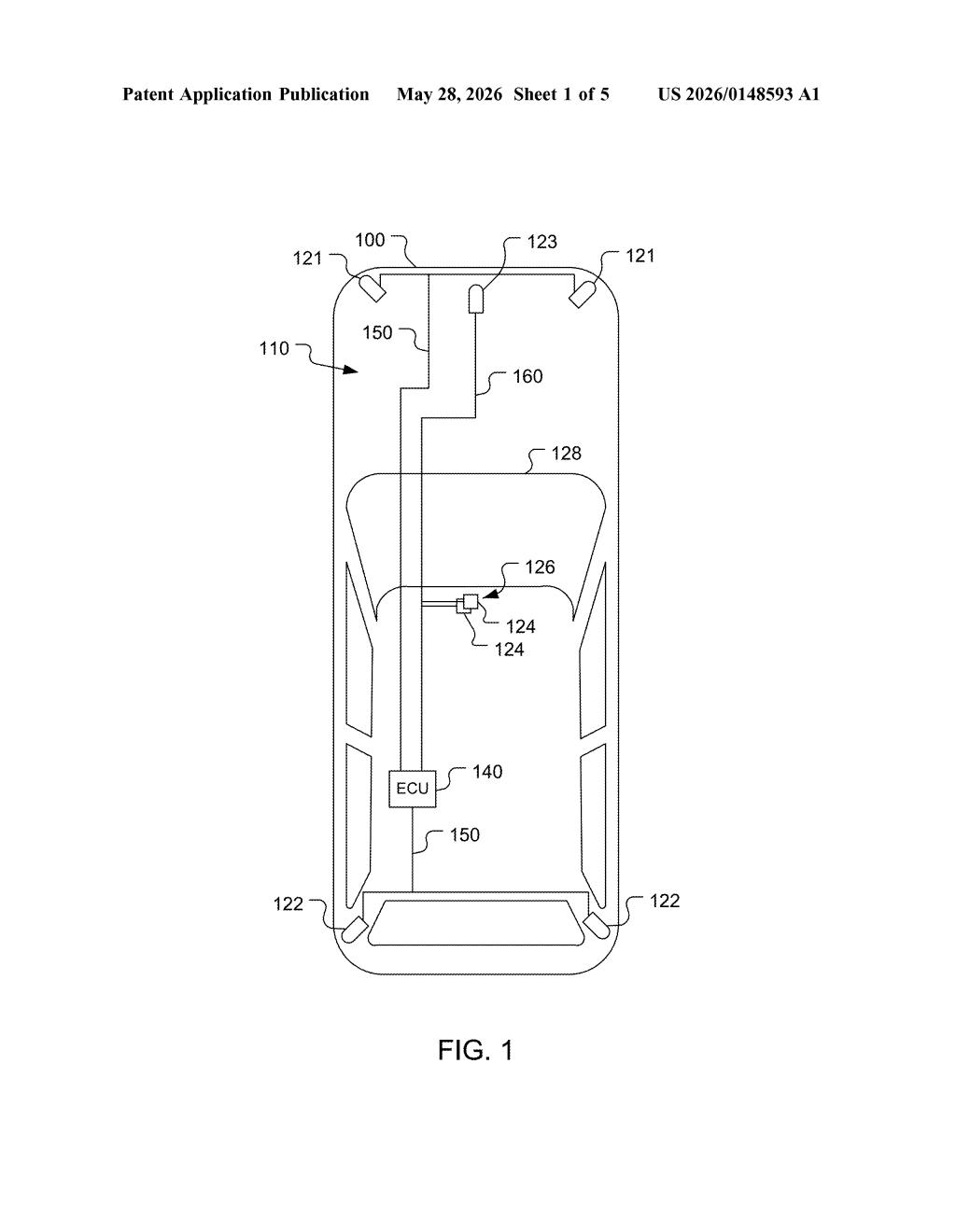
What Qualcomm's AV inconsistency detector actually does
Imagine a self-driving car that's simultaneously doing several jobs at once: tracking pedestrians, predicting where nearby cars will go, and deciding when to brake. Usually these tasks should agree on what's happening around the car. If the pedestrian-tracker says the road is clear but the braking system thinks something is in the way, something has gone wrong — and that disagreement is exactly the kind of moment an engineer would want to study.
Qualcomm's patent describes a system that watches those multiple tasks running inside an advanced driving system (ADS) and scores how consistent their outputs are with each other. When the consistency score drops below a set threshold — meaning the tasks are giving contradictory answers — the system automatically triggers a data recording event.
That recorded data then gets added to training datasets, so the AV's AI models can learn from the confusing edge cases they actually encountered on the road. It's a way to let the car tell engineers, "something weird just happened — you should look at this."
How the consistency estimator flags contradictory AV outputs
The patent centers on a Data Collection Trigger Unit that sits alongside an Advanced Driving System (ADS) and monitors its outputs in real time. The ADS runs many parallel tasks — think object detection, path prediction, speed planning — and each produces its own output stream.
The trigger unit selects one task as the "task to be verified" and uses the outputs of all the remaining tasks as a reference. It then computes a consistency estimate — essentially asking: given what every other task is concluding about the driving environment, does this task's output make sense? A Probability Estimator component converts the cross-task comparison into a numerical score.
When that score falls below a consistency threshold, the system fires a data collection trigger, which instructs a Data Recorder to capture the relevant sensor data and logs it. The collected data is then fed back into training datasets for the ADS — closing a feedback loop that lets the system improve specifically on situations where its own models showed internal disagreement.
The key insight is that you don't need a human to label a failure. The inconsistency between the ADS's own tasks acts as a proxy signal for "something unusual or difficult just happened here" — which is often exactly the data that's hardest to collect at scale.
Why self-triggered data collection could fix AV blind spots
AV training data is expensive and hard to curate. Engineers can't watch every mile of driving footage, so most edge cases — the weird lane merges, the unexpected pedestrian behavior, the ambiguous road markings — get missed. A system that automatically flags and saves moments when the car's own AI is internally inconsistent could dramatically improve the signal-to-noise ratio of training datasets without requiring a human in the loop.
For Qualcomm specifically, this fits neatly into its push to supply the compute platforms that run ADS software for automakers and Tier 1 suppliers. A built-in data flywheel — where the driving AI improves itself by recognizing its own confusion — is a compelling selling point for anyone building an AV stack on Qualcomm silicon.
This is a genuinely clever systems-level idea: using inter-task disagreement as an automatic quality signal for data collection, rather than relying on human annotation or explicit failure events. It won't make headlines the way a flashy perception model would, but it tackles one of the most practical bottlenecks in AV development — finding the right data to train on. Qualcomm filing this suggests they're thinking seriously about the full AV development lifecycle, not just the chip.
There are more where this came from
We read every patent application Big Tech publishes and send you the ones worth knowing. Plain English, free, every week.
Want this weekly breakdown for a company we don't cover? Patentlyze Pro →