
New Nvidia Patent Teaches Self-Driving Cars to Spot Road Debris
A fallen tire, a couch cushion, a chunk of concrete sitting in lane two at 70 mph. These are the kinds of obstacles that have tripped up autonomous vehicles for years. Nvidia's new patent tackles exactly that problem with a system that combines cameras, laser sensors, and AI to detect road hazards in three dimensions and teach future vehicles to recognize them faster.
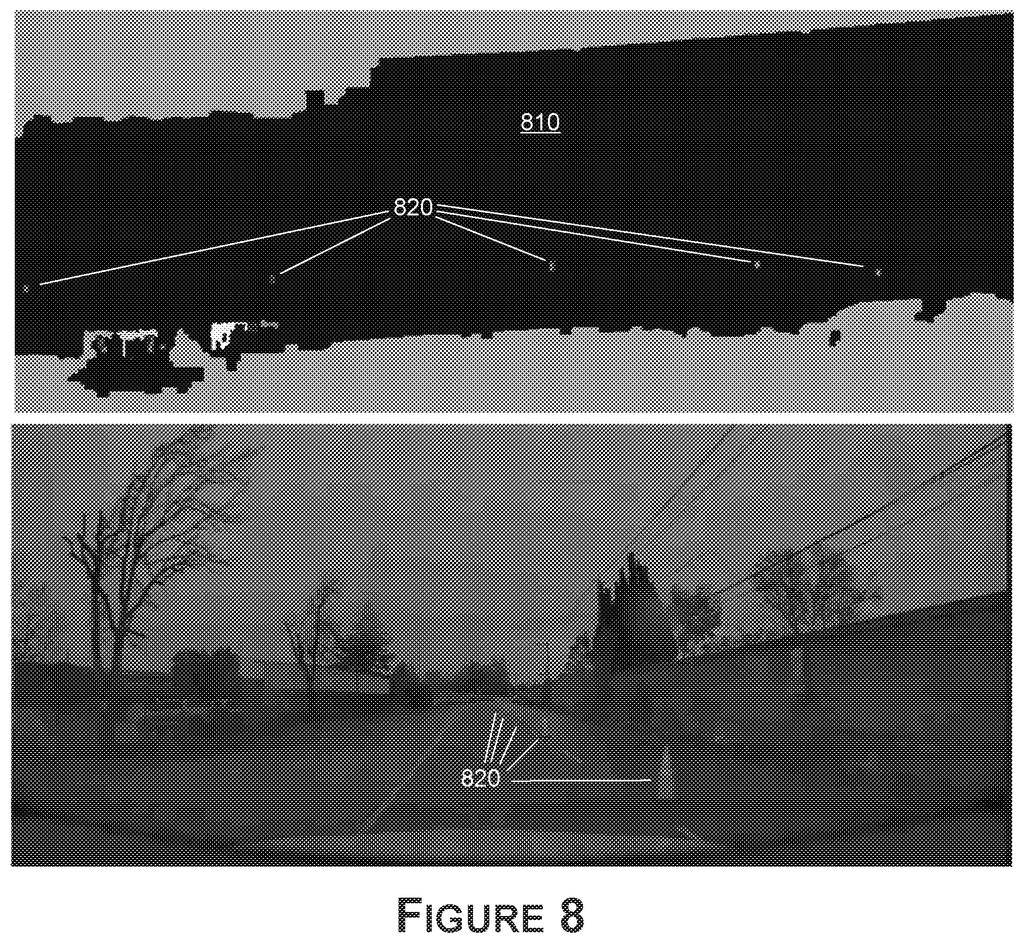
How Nvidia's hazard detector actually works in a car
Imagine a self-driving car approaching a stretch of highway littered with shredded tire rubber. To handle that safely, the car needs to identify each piece, figure out exactly where it sits in 3D space, and decide whether to swerve, slow down, or hold course. That's harder than it sounds when you're moving at speed and the debris could be almost anything.
Nvidia's patent describes a system that fuses data from two different sensors: regular cameras and LiDAR, which is a laser-based sensor that builds a precise 3D map of the car's surroundings. An AI model called a transformer processes both data streams together, pinpointing hazards, estimating their shape, and even categorizing what kind of obstacle they are.
The patent also covers an automated method for creating the labeled training data that teaches the AI in the first place. Instead of having humans manually tag thousands of hours of footage, vehicles equipped with this system can collect sensor data on real roads and generate that training material on their own.
How cameras and LiDAR combine to flag roadway hazards
The core of Nvidia's system is a transformer model (a type of AI architecture originally developed for language tasks, now widely used for image and spatial data) that ingests features from both cameras and LiDAR point clouds simultaneously. LiDAR fires rapid laser pulses and measures how long they take to bounce back, producing a dense 3D map of everything around the vehicle.
The transformer works by querying specific 3D locations in that map and asking, in effect: is there a hazard here, what shape does it have, and what category does it fall into? Those queries return structured detections that downstream vehicle systems can act on immediately, feeding into:
- Obstacle avoidance
- Lane keeping and lane changing
- Merging and splitting maneuvers
A second major piece of the patent covers automated ground truth generation. Ground truth is the labeled, verified dataset that AI models train on. Traditionally, producing it requires armies of human annotators watching video and tagging objects frame by frame. Nvidia's approach uses data-collection vehicles equipped with the same sensor suite to automatically identify static scene points, navigable road boundaries, and hazard objects, then generate that labeled data without manual intervention.
The result is a system designed to both detect hazards in real time and continuously improve the AI's training pipeline as more miles are driven.
What this means for the self-driving safety stack
Road debris is one of the trickiest edge cases for autonomous vehicles. Unlike pedestrians or other cars, debris has no predictable behavior and can look like almost anything. A system that handles detection and training data generation together in one pipeline could meaningfully reduce the cost and time it takes to teach a self-driving model to handle these long-tail scenarios, the rare but dangerous situations that cause the most accidents.
For Nvidia, this also matters strategically. The company already sells the DRIVE platform, which powers autonomous and semi-autonomous systems for dozens of automakers. A patent like this one signals that Nvidia is investing in the perception software layer, not just the chips underneath, which puts it in more direct competition with companies like Waymo and Mobileye that have built end-to-end autonomous stacks of their own.
This is a substantive patent, not a throwaway filing. The combination of real-time hazard detection with automated training data generation addresses two of the most expensive problems in autonomous vehicle development at once. Whether Nvidia ships this as a standalone product or folds it into DRIVE, it's a clear signal the company wants to own more of the self-driving software stack.
There are more where this came from
We read every patent application Big Tech publishes and send you the ones worth knowing. Plain English, free, every week.
The drawings
16 drawing sheets from US 2026/0211121 A1 · click any drawing to enlarge


Want this weekly breakdown for a company we don't cover? Patentlyze Pro →
Be the first to weigh in