
Sony Patents a Dual-Layer Spherical Display System Using Frequency-Synced Shutter Headsets
Imagine sitting inside a giant glowing ball — and whether you're wearing a headset or not, you see a completely different image projected on its surface. That's exactly what Sony is filing patents to make real.
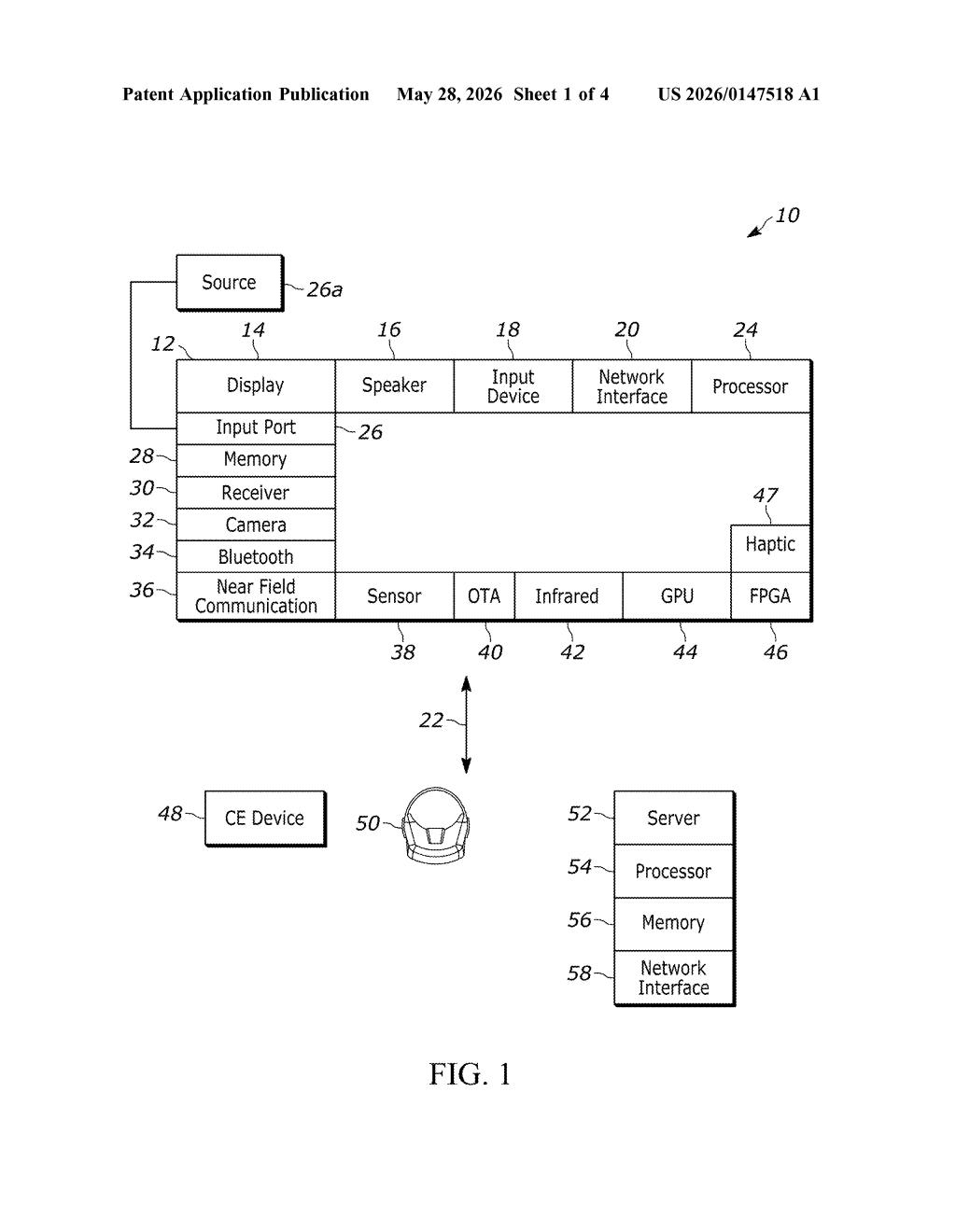
What Sony's spherical display + shutter headset system actually does
Picture a massive dome-shaped room where the entire interior surface is a screen — like a planetarium, but interactive. Sony's patent describes a setup where people inside that spherical display can be split into two groups: those wearing a special headset, and those watching with bare eyes.
The trick is timing. The spherical display flickers between different image layers faster than the human eye can detect. The headset's transparent lenses sync to those flickers, acting like shutter glasses — letting you see only the layer meant for headset wearers, while the people next to you without headsets see a completely different image on a closer layer of the same display.
Sony is essentially layering an extended reality (XR) experience on top of a shared physical screen. You and your friend sit in the same sphere, but your realities diverge based on what's on your face.
How frequency-syncing splits images between headset and naked-eye viewers
The system has three main components working together: the spherical display (a large curved screen with multiple rendering layers), a headset with a transparent display (think shutter glasses with a see-through screen), and a processor system that choreographs everything.
The spherical display is designed with at least two distinct layers at different depths. The nearest layer shows content visible to everyone — the naked-eye image. A farther layer shows content intended only for headset wearers. The processor drives each layer at a specific flicker frequency.
The headset's transparent lenses sync to that frequency — opening and closing (like a camera shutter) in lockstep with the far layer's refresh cycle. This is the same basic principle as classic 3D shutter glasses (where each eye sees alternating frames), but applied here to separate entire audiences rather than just eyes.
- Headset viewers see the synced far-layer content, with XR overlays potentially added on top by the headset itself
- Naked-eye viewers see only the near-layer content, unaffected by the flicker
- The processor manages the data pipeline — receiving content descriptions and instructing each headset when to open or close its shutters
What this means for location-based entertainment and VR arcades
Location-based entertainment — think high-end VR arcades, theme parks, and ticketed experiences — has been searching for a way to serve mixed audiences in the same physical space without requiring everyone to wear the same gear. Sony's approach solves that with a single unified display environment where the headset determines your reality, not which room you're in.
For Sony specifically, this lines up with its PlayStation and PlayStation VR business, but the more immediate application looks like big-venue entertainment. If this makes it into a real product, you could be at a live event where the scoreboard is showing one thing to casual fans and a richer stats overlay to premium headset holders — all on the same spherical screen.
This is a genuinely clever extension of shutter-glass technology into a shared venue context, and Sony is one of the few companies with both the display hardware expertise and the entertainment venue relationships to actually deploy something like this. The frequency-syncing approach is elegant — it doesn't require two physically separate screens or complicated beam-splitting optics. Whether it scales to real installations without unbearable flicker artifacts is the real engineering question.
There are more where this came from
We read every patent application Big Tech publishes and send you the ones worth knowing. Plain English, free, every week.
Want this weekly breakdown for a company we don't cover? Patentlyze Pro →