
Apple Patents a System That Lets Chips Detect and Fix Their Own Stress
Apple is patenting a way for its chips to continuously monitor their own operating conditions — and automatically dial things back before stress causes real damage. Think of it as a nervous system built directly into the silicon.
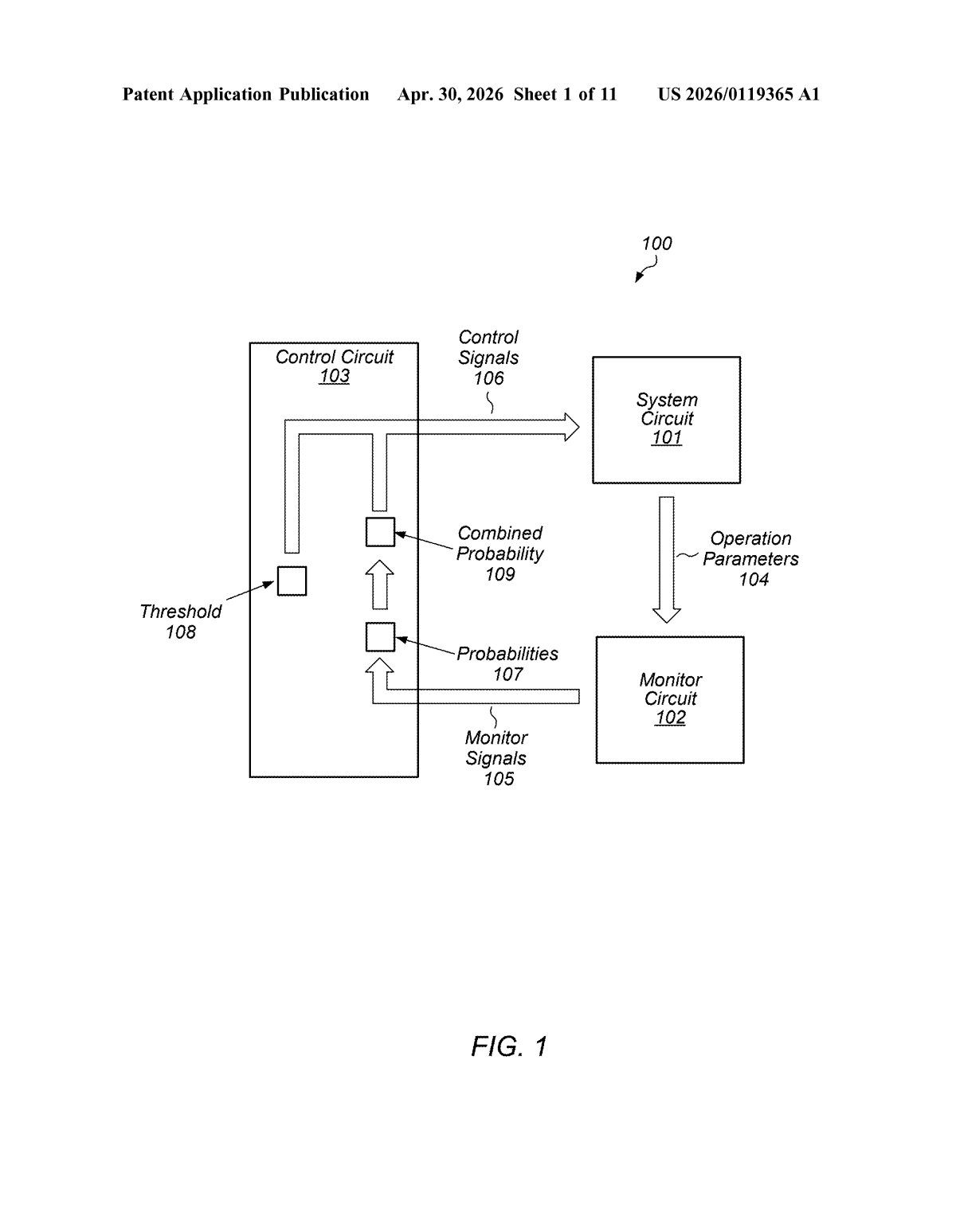
What Apple's self-regulating chip health system actually does
Imagine your laptop's chip is running a heavy video export on a hot day. Normally, the system waits for a temperature alarm to kick in before slowing things down — by which point the chip is already under serious strain. Apple's new patent describes a smarter approach: instead of waiting for a single alarm, the chip watches multiple health signals simultaneously and makes a probabilistic judgment about whether it's heading into dangerous territory.
Think of it like a co-pilot scanning instruments. Rather than one red warning light, you get a continuous read on voltage, temperature, timing margins, and more — all combined into a single confidence score. If that score crosses a threshold, the system quietly adjusts how the chip is running before anything goes wrong.
The result is a chip that isn't just fast — it's self-aware. Your device could potentially run harder for longer, only backing off when the combined picture of its health actually warrants it, rather than at the first sign of any single variable ticking upward.
How the probability engine decides when to adjust a chip
The patent describes a multi-sensor monitoring architecture embedded within a chip or computer system. A set of sensor circuits (called "monitor circuits" in the filing) each watch a specific operation parameter — things like supply voltage, operating temperature, timing slack (how much margin exists before a circuit misfires), or frequency stability.
Each sensor generates a probability value: essentially a confidence score for whether its particular parameter is sitting within a safe operating range. These individual probabilities are then fed into a control circuit, which combines them into a single combined probability — think of it like a weighted health score aggregating all the individual readings.
That combined probability is then compared against a threshold value. If the score drops below the threshold — meaning the chip's overall operating picture looks risky — the control circuit sends out control signals to adjust the system circuit's behavior. That adjustment could mean reducing clock frequency, scaling back voltage, redistributing workloads, or other performance tuning.
- Monitor circuits — each tracks one operation parameter
- Probability generation — converts raw readings into confidence scores
- Combined probability — aggregates individual scores into one health metric
- Control circuit — compares the combined score to a threshold and triggers adjustments
What self-healing chips mean for Apple Silicon longevity
Today's chips already have thermal and power management systems, but they tend to be reactive — they respond to a single sensor hitting a limit. Apple's approach is more holistic: by combining multiple probabilistic signals, the system can catch stress conditions that no single sensor would flag on its own. That's a meaningful shift in how silicon manages its own health.
For Apple, which designs its own chips from the ground up via Apple Silicon, this kind of fine-grained control is a natural extension of the vertical integration strategy. Longer-lasting chips that run closer to their safe limits more consistently could translate to better sustained performance on iPhones, MacBooks, and any future Apple hardware — without burning through battery or degrading silicon faster than necessary.
This is genuinely interesting work in the unglamorous but critical field of on-chip reliability engineering. The move from threshold-based alarms to probabilistic health scoring is a real architectural idea, not just a minor tweak — and it fits perfectly into Apple's obsession with squeezing every bit of efficiency from its custom silicon. Worth tracking as Apple Silicon continues to mature.
There are more where this came from
We read every patent application Big Tech publishes and send you the ones worth knowing. Plain English, free, every week.
Want this weekly breakdown for a company we don't cover? Patentlyze Pro →